
 English
 Français
  Deutsch
 Italiano
 Turkish
 Greek
Greek Serbian
113th birth anniversary of Albanian renowned historian Aleks Buda




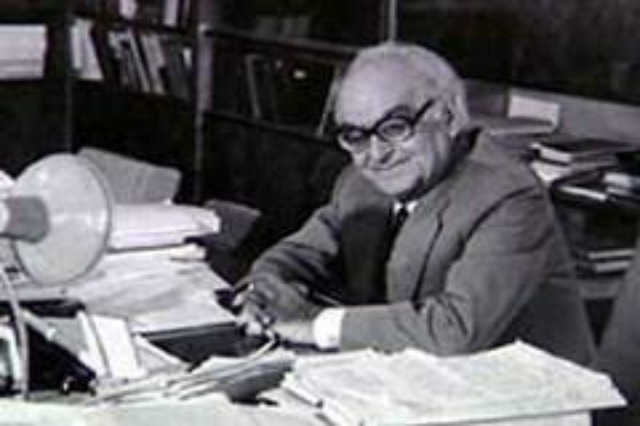
Aleks Buda was an Albanian historian. After completion of his education in Italy and Austria, he returned to Albania. Although his education was in literature, he made a career as a historian during the socialist period in Albania. He was a member and president of the Academy of Sciences of Albania.
Buda was born on 7 September 1910 in Elbasan, Ottoman Empire (modern day Albania). He went to elementary school at Lecce in Italy and completed secondary school in Salzburg, Austria, in 1930. After that he enrolled in the University of Vienna where he studied philosophy and literature, but he returned to Albania without graduating.
Although his specialty was in literature, he made a career as a historian. He was also referred to as the founder of the Albanian post WWII historiography. Buda belonged to a group of most notable Albanian politician historians during the socialist period in Albania. Buda was a member and a president of the Academy of Sciences of Albania. In some sources he was referred to as personal confidant of Enver Hoxha. Buda was the only historian to participate in the Albanian Orthography Congress held in Tirana in 20–25 November 1972.
He participated at the National Conference of Ethnographic Studies held in 1976.
Contemporary historians point to Buda’s work as a source for the Albanian position of the origin of Albanians. He was considered as the leading Albanian scholar of Illyrian history who belonged to group of historians who also pointed out that there is no trace of Illyrians between the 6th century (when they were mentioned in historical documents for the last time) and the 11th century (when Albanians were recorded in historical documents for the first time). Based on the hypothesis of Illyrian origin of Albanians, Buda emphasized that Albanians belong to the oldest inhabitants of Balkans and even Europe.
Buda belonged to a small group of intellectuals allowed by the Albanian communist regime to have access to foreign literature in order to use them to prepare new ideological and theoretical directives for the rest of their colleagues.
He received the “Award of the Republic” of the first degree, the “Order of Freedom” of Ist Class and the “Labor Flag Order” of Ist Class. The President of the Republic of Austria awarded him the “Great Gold Medal” (1990).
Të ngjashme
Latest News
Most read







 RTI
RTI