
 English
 Français
  Deutsch
 Italiano
 Turkish
 Greek
Greek Serbian
128th birth anniversary of Haki Stermilli, an Albanian writer and journalist




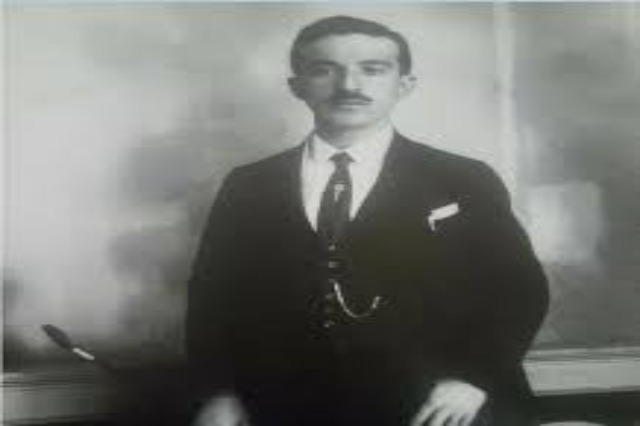
Today is the 128th birth anniversary of the Albanian writer and journalist, Haki Stërmilli. His works dealt mostly with issues related to the rights of Albanian communities outside Albania, republicanism, the emancipation of women and feminism. His best-known work is the novel ” If I were a Boy”.
Born in Diber on the 17th of May 1895, Stërmilli finished his first studies in Bitola. In 1920 along with Avni Rustemi he became one of the founders and the secretary of the youth organization Bashkimi. An anti-monarchist and supporter of Fan Noli he took part in the revolt that overthrew the monarchy, but after its restoration in late 1924 he was exiled. In 1930 he was captured by the Yugoslav authorities and deported to Albania, where he was sentenced to prison for his anti-monarchist activities. During World War II he joined the National Liberation Movement and became the head of the organization in the Dibër District. After the war he was elected a deputy of the Albanian parliament and also served as head of the National Library of Albania until his death in 1953.
Stërmilli’s first works include the novel “The Unfortunate Dibra Woman” and “Love and Loyalty”, which describe the persecution of the Albanian community of his home region Debar by the Serbian army. In 1935 his semi-autobiographical work “The Prison”, a memoir of life in prison and its degraded conditions and effects, was published. The novel ” If I were a Boy”, published in 1936, is his best-known work and the first literary work in Albanian that dealt with the subjects of feminism and the emancipation of women. ” If I were a Boy” became one of the most popular books of the 1930s in Albanian and is considered revolutionary for that period.
It aroused interest and played an irreplaceable role in the mass of readers in all Albanian territories. In the 30s, the 50s and up to the first decade of the 21st century, the novel has had over 12 reprints: in Tirana, Pristina and Skopje, marking an unattainable record in the history of Albanian letters. The novel “puts its finger” on a sensitive area in Albanian social life – the tragedy of a woman’s life.
/k.s/
Të ngjashme
Latest News
Most read






 RTI
RTI