
 English
 Français
  Deutsch
 Italiano
 Turkish
 Greek
Greek Serbian
90 death anniversary of Hilë Mosi, poet, politician and patriot commemorated




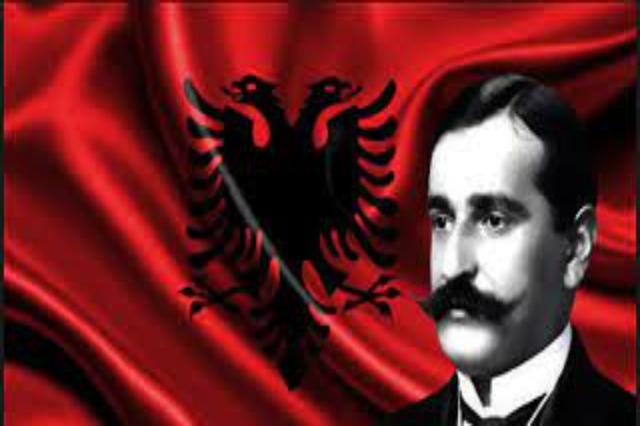
Hilë Mosi, Albanian poet, journalist, writer, translator, deputy, prefect, minister of education, director general of World Security, passed away 90 years ago.
Hilë Mosi was born in Shkodër, then part of the Ottoman Empire, in 1885. He attended an Italian elementary school and later the Xavierian Shkodër Jesuit College before studying from 1904 to 1908 in Klagenfurt, southern Austria in order to become a teacher. In 1911, he took part in the Albanian uprising of northern Albania against Montenegro and the Ottoman Empire. In 1916 he became a member of the Albanian Literary Commission, and in 1920 a member of the Albanian delegation in the League of Nations. He was also a deputy of Shkodër from 1920 to 1924.
In 1924, Mosi was one of the main supporters of the revolution that overthrew the regime of Ahmet Zogu and established a democratic government. Fan S. Noli became the new Prime Minister, while Mosi served as a prefect of Korçë and Gjirokastër. After the restoration of Zog’s regime he was initially exiled but returned to Albania in 1927 after amnesty was proclaimed and served anew in the government as minister of public works. In 1928, he served as director-general of public security and from 1930 until his death as minister of education.
He fought with weapons in his hand, founded patriotic societies and clubs, directed several organs such as “Shqipëtari”, (Istanbul, 1909-1910), “New Albania” (Shkodër, 1913-1914), “Agimi” (Shkodër, 1919), etc. ., being distinguished by the propaganda activity in favor of the national issue and the progress of the country.
During the time when he was Minister of Education, at the end of the 20s, H. Mosi tried for the secularism of the school, thus continuing his early fight against the schools opened by the clergy.
His first writings and poems became popular in 1910 under the pseudonyms Zog Sokoli, Liriasi, etc. He has published several collections of poems, including “Homeland’s voice” (1913), “Tears of love” (1915), etc.
In terms of general spirit, it is close to Frederik Shiroka, with romantic-elegiac tones. In the lyrics, he sang of longing for the homeland and urged the Albanians to unite in the fight against the invaders (“Outside”, “Song of society”, “Brotherhood”, “Masculinity”, etc.).
Some of them were set to music and sung as hymns and battle marches. Hilë Mosi’s love lyrics consist of romantic songs and ballads, where along with joy, happiness and optimism, longing, pain and despair can also be observed. He died in Tirana in February 1933 and was buried in Shkodër.
/k.s/
Të ngjashme
Latest News
Most read








 RTI
RTI