
 English
 Français
  Deutsch
 Italiano
 Turkish
 Greek
Greek Serbian
U.S. Deputy Assistant Secretary of State for the Western Balkans, Kasanof: Cases pursued by SPAK will go wherever evidence leads




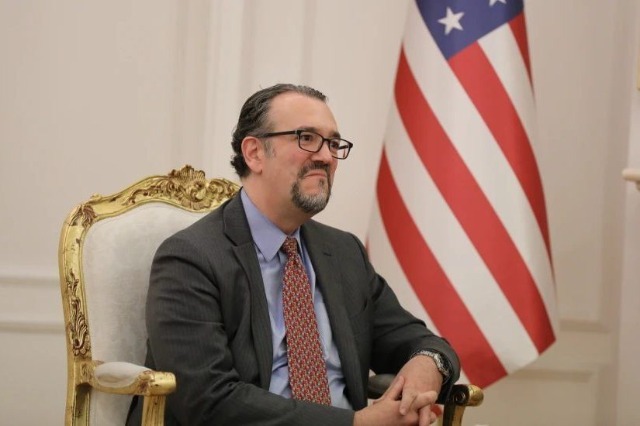
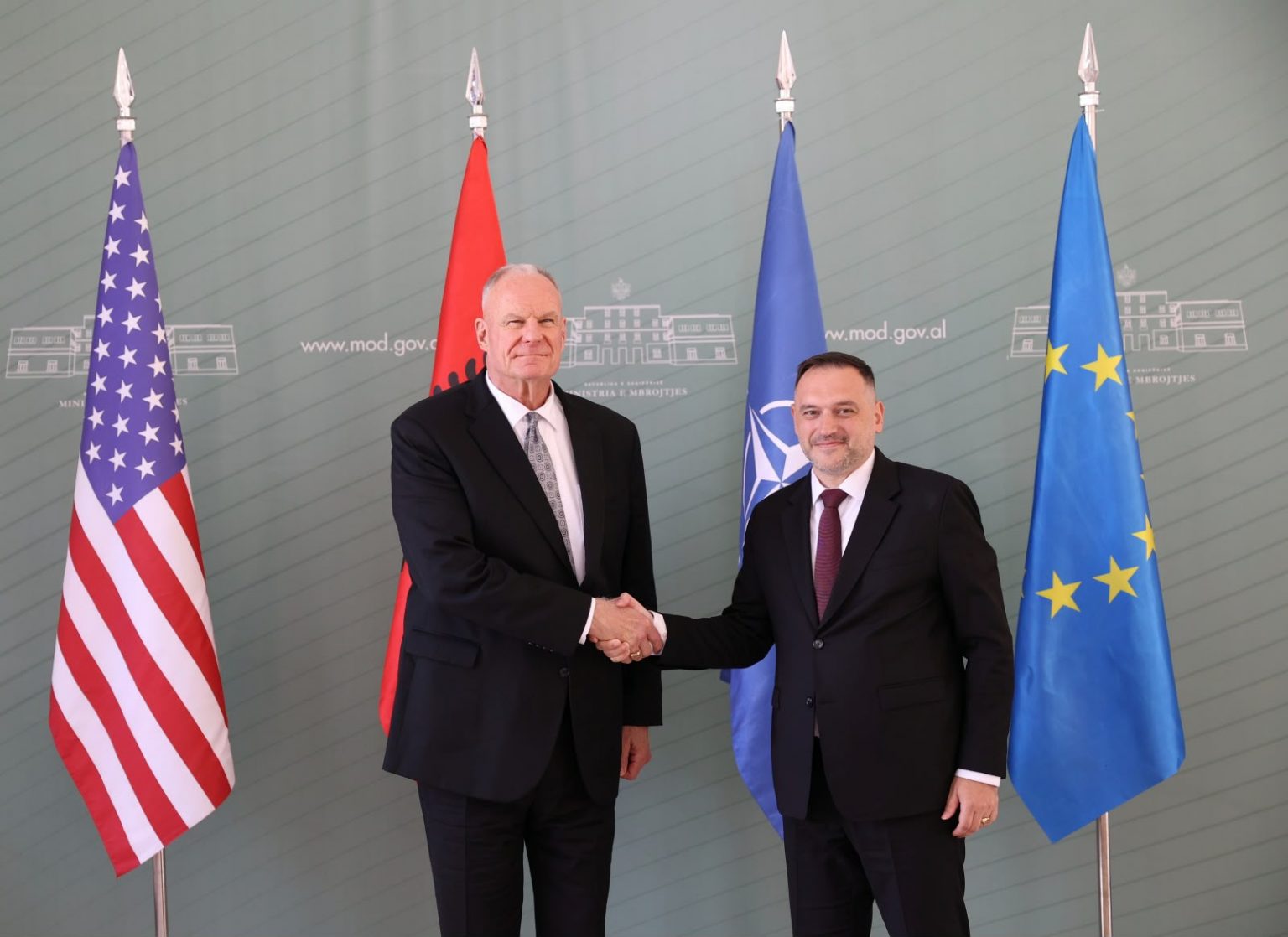
U.S. Deputy Assistant Secretary of State for the Western Balkans, Alexander Kasanof: Cases pursued by SPAK will go wherever evidence leads
In an interview for the Voice of America, Mr. Kasanof highlights that during his meetings in Tirana, he emphasized the importance of the rule of law, underlining that no individual is above the law.
Regarding developments in Kosova, Mr. Kasanof states that he cannot comment on the positions of the incoming administration.
Interview
Voice of America: Mr. Kasanof, this is your first visit to Albania since taking office. Could you share with us what were the key issues discussed with the Albanian authorities?
Alexander Kasanof: First of all, Armand, it’s a pleasure to be with you today. Thank you for the invitation to your program. I want to say it’s a great pleasure to be here in Tirana. This is indeed my first visit here, and I couldn’t be happier to make this important visit at such an important time. You know, we do a lot in partnership with Albania. We support the government and the reforms it is pursuing on the path to EU membership, so I thought it was important to dedicate a trip to Albania in my new role, as you mentioned, to ensure that we had the chance to meet with the government, as well as people outside the government, and express our support for the ongoing reforms, especially in the rule of law and the judiciary sector, as well as our support for the independence and mission of institutions like SPAK, which, as you know, we strongly support, and we want to see them continue their work. For this reason, and some other reasons I’ll talk about in a moment, I thought it was important to come to Albania for these discussions.
We spoke with various officials, including the Prime Minister, about his leadership in the reform process for EU accession. And in this regard, I congratulated him for the government’s ongoing efforts to carry out those reforms and the results they’ve achieved for Albania, including the opening of a second negotiation chapter, which is really commendable.
We discussed the justice sector reforms and the importance of continuing them. We also discussed our partnership in many areas around the world, including within the context of NATO, but certainly also about the work we do together in a number of multilateral institutions like the UN, and how grateful the United States is to have such a partnership with Albania.
On SPAK, I made sure to speak about our continued and very strong support for the work of that institution. It’s worth emphasizing that in my public and private meetings, I spoke about the importance of the rule of law and that no man or woman is above the law, and that the cases pursued by SPAK will go wherever the evidence leads them, and this is something we support not only as a process but also as a series of facts on the ground that help fight corruption and root out organized crime, an effort that Albania is going through and that other countries have gone through, including my own, and it’s an effort we need to win, and therefore it’s important to see the success of SPAK.
So, these are some of the issues we discussed. I truly appreciated all the time I was given by the officials I met with. I look forward to returning.
Voice of America: You mentioned that the U.S. has been a strong supporter of SPAK. However, it seems that other law enforcement agencies are still facing challenges. How do you assess the current justice system in the country, eight years after the justice reform?
Alexander Kasanof: As you know, Armand, it’s important for the United States to continue our support for the government and independent institutions like SPAK, but also others, to move forward with their work on reforming the justice sector and improving the rule of law. It’s a tough challenge. And it’s a tough challenge for every country. And it’s a challenge that requires our continued support. So, it’s unfinished work. Of course, this is also pointed out by some of the reforms the EU has highlighted that need to be carried out here. The United States is trying to help wherever we can, both the government and its reform packages, but also independent institutions to remain independent and take the necessary steps to root out corruption and organized crime, which, as I mentioned earlier, is an incredibly important outcome we want to see realized in Albania.
Voice of America: Mr. Kasanof, former President and Prime Minister of Albania, Sali Berisha, was designated by the State Department in 2021 for major corruption. At that time, he was just a member of parliament, but now he is the leader of the main opposition party. Can this change the relationship between Washington and Mr. Berisha?
Alexander Kasanof: Listen, Armand, normally I don’t talk about individuals designated and the details of those cases. What I would like to emphasize here is that the United States sees designations as an important tool to help the justice system reforms and pursue anti-corruption and organized crime cases. These tools are built to help local agencies on the ground, especially agencies like SPAK, to accomplish their mission, but they are also built to help improve the rule of law and ongoing reforms in the justice system. This is what we emphasize. And this will remain our continued focus.
Voice of America: However, there is a high expectation within the opposition that the new administration of elected President Donald Trump may have a new approach towards Mr. Berisha. And there are voices from the opposition who expect the “non grata” designation to be annulled. Is such a possibility out there?
Alexander Kasanof: I cannot speak for the incoming administration. It would be inappropriate. But, I can reiterate for you that in the current administration, we will continue to focus on these reforms and focus on helping institutions like SPAK to fulfill their mission.
Voice of America: Albania will hold general elections next year. Some of the major concerns in the past have been vote buying, abuse of state funds by the ruling party, and the influence of organized crime in this process. Do you share these concerns, and what are your expectations?
Alexander Kasanof: Our expectations are the same as for any country holding elections. We expect to see the development of free and fair elections and that the will of the people will be respected. We also strongly hope that we will see candidates who are completely free from corruption or connections to organized crime. We think that would be the best outcome for Albania.
Voice of America: At the end of last month (November 29), an explosion in the north of Kosovo damaged key infrastructure for the country’s water supply. How might this affect the already complicated process of normalization between Kosovo and Serbia?
Alexander Kasanof: That was a terrible attack. We condemned it in the strongest possible terms and I will reiterate here that we condemn any such attack. We are helping Kosovo and the government of Kosovo to conduct an investigation. We’ve helped by providing resources for this purpose. And we think it’s critically important that any investigation follows the facts on the ground, carefully examines all the information there, and works with international partners in this context to ensure that a credible investigation is conducted. What I can say is that acts like this are not only horrific but are clearly designed to create instability, and we reject them in the strongest possible terms.
Voice of America: During your earlier visit to Pristina, you emphasized that uncoordinated actions taken by the government there complicate the United States’ ability to support Kosovo successfully. Now that Washington will have a new administration, which didn’t have very friendly relations with the first Kurti government, do you think this will affect the approach to the Kosovo-Serbia dialogue?
Alexander Kasanof: I repeat, Armand, it is inappropriate to talk about the new administration and what its policies will be. This administration, even as it nears its end, will remain focused on assisting Kosovo, supporting Kosovo, not only for the reforms and efforts they are making in the path of integration with Euro-Atlantic structures but also as they work on issues at the core of the EU-mediated dialogue. We are supporting a conclusion…
rtsh.al
Të ngjashme

Latest News

Most read





 RTI
RTI