
 English
 Français
 Deutsch
 Italiano
 Turkish
 Greek
 Serbian
Strengthening Cyber-security Cooperation for a Safer Digital Future




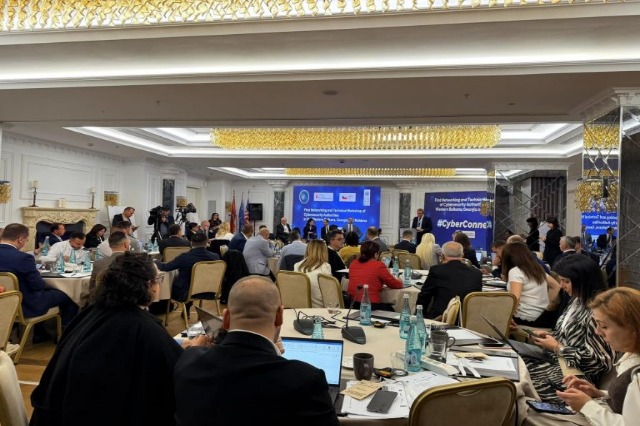
The First Technical Meeting of Cyber-security Agencies in the Western Balkans, Georgia, and Moldova was held in Tirana.
Organized by the United Nations Development Programme (UNDP) in Istanbul, UNDP Albania, and Albania’s National Cyber Security Authority (AKSK), in collaboration with the Slovak-UNDP and Czech-UNDP partnerships, the meeting aimed to enhance networking among cyber-security agencies in the region.
According to UNDP, the technical meeting provided a crucial platform for addressing existing gaps and fostering regional cooperation to strengthen the cyber-security framework. With its extensive policy support experience, UNDP is well-positioned to assist regional economies in aligning their cyber-security legislation with the evolving laws of the EU, especially for those in the process of integration.
A common aspiration among the Western Balkans, Georgia, and Moldova is EU membership. In recent years, the EU has advanced its cyber-security strategy, emphasizing a robust international cyber policy, stronger international partnerships, and the enhancement of cyber-security capabilities. These initiatives align with the EU’s Digital Strategy, which aims to lead digital transformation by 2030.
Latest EC report for the Digital Year 2024 highlighted significant gaps that need addressing in this transformation. The EU’s Growth Plan for the Western Balkans also prioritizes digital transformation across various sectors.
By supporting economies in aligning with these EU initiatives, the meeting is expected to play a vital role in strengthening digital infrastructures and advancing integration goals.
UNDP has identified the human element as a primary challenge in cyber-security. Research indicates that 68% of cyber-security breaches are caused by human error, often due to insufficient awareness training on security protocols.
To tackle this issue, educational and awareness programs are needed to reduce mistakes that can lead to breaches. Despite a global cyber-security workforce of 4.7 million in 2022, there remains a significant skills gap, with a shortfall of 3.4 million professionals.
Prioritizing training and capacity-building initiatives, the seminar aimed to close this gap and cultivate a skilled and diverse workforce in cyber-security.
The partnership between UNDP Albania and Albania’s National Cyber Security Authority emphasizes the importance of collaboration in promoting resilience in cyber-security. It was noted that by strengthening partnerships in critical sectors—including finance, energy, healthcare, and transport—regional cooperation could enhance national defense and increase the security of vital infrastructures.
The meeting in Tirana was described as an important moment in these efforts, providing a forum for participants to share best practices, discuss recent cyber incidents, and work towards establishing a Cyber-security Cooperation Network (CCN). This network is expected to facilitate real-time information sharing and coordinated responses to emerging threats.
Additionally, the meeting laid the groundwork for the Global Cyber Policy Dialogues for the Western Balkans, scheduled for November 19-20, 2024, in Tirana. These dialogues will further contribute to building digital resilience and enhancing cooperation on cyber-security across the region.
By strengthening shared cyber-security capabilities, the Western Balkans, Georgia, and Moldova will be better equipped to address the growing challenges of the digital age, ensuring a safer and more secure future for all.
/a.p./
Të ngjashme


Latest News


Most read










 RTI