
 English
 Français
 Deutsch
 Italiano
 Turkish
 Greek
 Serbian
Priorities of 2025 Draft Budget for Foreign Policy: From EU Membership Process to the Support for Diaspora




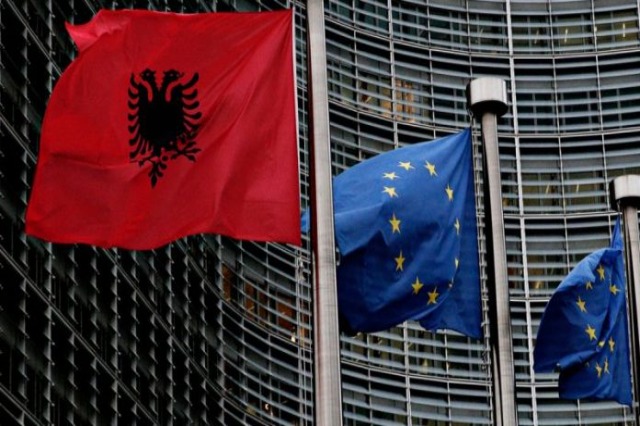
The draft budget for the Ministry of Europe and Foreign Affairs for 2025 allocates funds for diplomatic and consular activities, as well as for managing and administering foreign policies. The total budget amounts to 3,874,300,000 ALL, with a clear allocation of funds for various initiatives, underscoring a commitment to enhancing diplomatic infrastructure and strengthening international relations.
The dedicated fund of 3,564,300,000 ALL for this ministry marks a significant increase compared to previous years, reflecting a commitment to bolstering diplomatic positions and improving governance in the realm of foreign policy. The budget for planning, management, and administration is set at 598,490,000 ALL, highlighting a focus on strategic planning and effective resource management.
With an allocation of 2,957,230,000 ALL, diplomatic support for citizens and businesses abroad emphasizes the importance of providing comprehensive assistance to the diaspora, indicating a commitment to enhancing service quality.
For diplomatic and consular operations, the budget includes 318,580,000 ALL, reflecting the necessity of supporting consular and diplomatic representations worldwide.
The budget report for foreign policy identifies the primary objectives for the Ministry of Europe and Foreign Affairs from 2025 to 2027, which include continuing political and diplomatic engagement in EU member states to advance negotiations for EU membership.
Key goals include strengthening dialogue with EU institutions on common foreign and security policy issues, including the implementation of EU sanctions in Albania; successfully navigating the membership negotiation process across all chapters of the EU acquis, with the ministry leading in Chapter 31 and contributing in Chapters 24 and 30; and increasing Albania’s active role in international organizations in line with the priorities of foreign policy, aimed at promoting peace, security, and addressing shared challenges, thus ensuring dignified representation in the UN.
The ministry will enhance engagement and contributions from its structures and Albania’s Permanent Missions in Geneva, New York, and Vienna, supporting its role as a member of the UN Human Rights Council (2024-2026), the UNESCO Executive Board (2023-2027), the Commission on Crime Prevention and Criminal Justice (2025-2027), and the UN Women Board (2025-2027).
Albania will also continue its proactive engagement following its non-permanent membership in the UN Security Council (2022-2023).
As a NATO member, Albania will maintain its active participation in the steadfast commitment of the Atlantic Alliance to ensure and defend every inch of Allied territory, contributing militarily to NATO’s largest reinforcement in Eastern Europe since the Cold War. Albania aims to strengthen the unity of the Alliance and the essential Transatlantic connection, ensuring NATO remains a pillar of stability for future generations.
The budget also focuses on enhancing relationships with regional countries and fostering regional cooperation, particularly through consolidating ties with Kosovo via government-to-government agreements, implementing joint agreements, and supporting Kosovo’s international recognition and membership in regional and international organizations.
Efforts will be made to strengthen the cohesion of Albanians in the region and to further develop relationships with other countries, prioritizing ties with strategic partners, friendly nations, and allies. Plans include opening embassies in Ukraine, Bosnia and Herzegovina, Azerbaijan, India, Indonesia, and Kenya.
Additionally, the budget aims to bolster the economic diplomacy dimension through new structures, content, and mechanisms, establishing a Board of Investments and Exports and a network of Honorary Trade Attachés/External Advisors. This initiative aims to maximize national benefits in trade and investment, enhance economic interaction with the global market, promote and protect national economic interests, foster sustainable economic development, and seek new markets and partners for trade, exports, and business, while promoting Albania’s image as a tourist destination.
Collaboration with international partners will continue to identify opportunities and implement projects that connect the diaspora with their homeland. Agreements with various countries will focus on facilitating the daily lives of diaspora members, including recognition of driving licenses and social security benefits.
Finally, efforts will be made to modernize consular services in line with the National Diaspora Strategy, aiming to connect the diaspora with their home country, address their needs and concerns, and facilitate solutions in their host countries.
Të ngjashme
Latest News


Most read










 RTI