
 English
 Français
 Deutsch
 Italiano
 Turkish
 Greek
 Serbian
Ekaterina Solovova, Director of EBRD: Albania, a Potential Leader in Energy




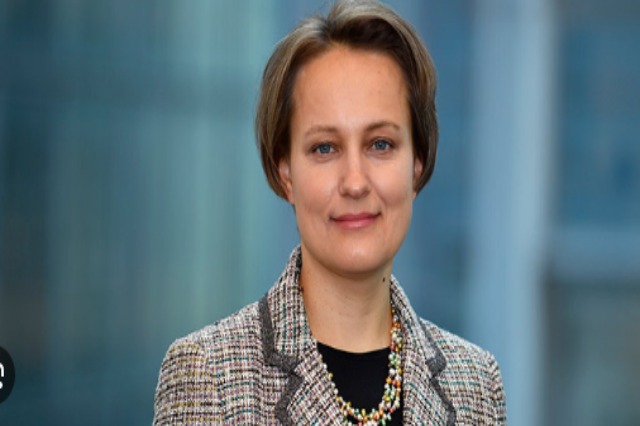
In recent years, Albania has been placing significant emphasis on renewable energy sources, influenced by climate change-induced rainfall shortages. One of the government’s key partners is the EBRD, which has financially supported projects for renewable energy. In a television interview, Ekaterina Solovova, Director of the European Bank for Reconstruction and Development (EBRD), stated, “Albania has the potential to lead in energy.”
“One of our strategic priorities in Albania has been the diversification of renewable energy sources, as Albania has been 100% dependent on energy from hydroelectric power plants. This makes Albania unique in clean energy production but also vulnerable to climate change due to insufficient rainfall.
Regarding energy diversification, we are working closely with the Albanian government on these projects, offering technical assistance and financial support. A prime example is our Renewable Energy program where we advise the government on creating and developing tenders for solar and wind energy. Three significant tenders have been finalized with our technical assistance, two for solar energy in 2020 and 2021, and we closed last year’s tender for wind energy, thus wind parks. These three projects will bring considerable energy production for Albania,” Solovova said.
She emphasizes that all these investments, whether from private or state investors, offer the opportunity for clean energy at competitive tariffs.
Since 1992, the EBRD has invested approximately 2 billion euros in Albania, with almost half of that amount invested in the last 5-7 years, according to Director Ekaterina Solovova.
“This shows that we have increased our activity in Albania in recent years. Around 60% of our portfolio is in infrastructure and the energy sector, while about 30% is in financial institutions, and the rest is in various sectors such as production, natural resources, agriculture, or tourism. What remains important is that the distribution of these investments has been equal for both the public and private sectors; currently, about 60% of the financing is in the private sector, but this may change over the years,” she expressed.
EBRD also supports strategic investments in green infrastructure such as railways, investments in environmentally and socially impactful high-standard roads, and, above all, safety conditions.
/k.s/
Të ngjashme

Latest News









Most read










 RTI