
 English
 Français
 Deutsch
 Italiano
 Turkish
 Greek
 Serbian
“El País”: Albania, the emerging travel destination, welcomes the world




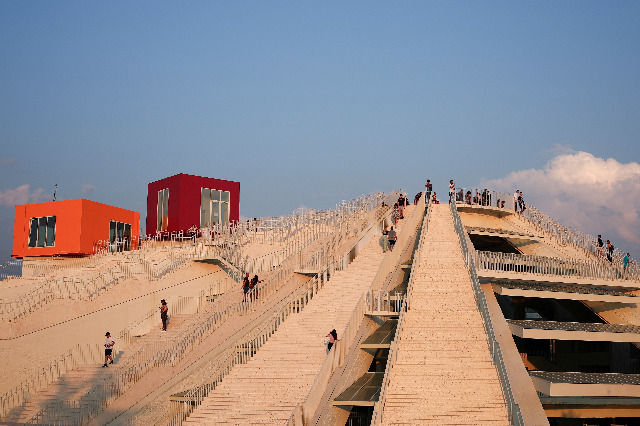
Almost four decades after the death of Enver Hoxha, the leader who isolated Albania from the rest of Europe, tourism has seen remarkable growth in recent months. Journalist Francisco de Zárate highlights this transformation in an article published in the esteemed Spanish newspaper, “El País.
In May, the number of foreign visitors was 2.5 times higher than in the same month in 2019.
The small Balkan country has surpassed pre-pandemic figures since the autumn of 2021, while major tourist destinations like France and Italy are still struggling to reach their previous levels.
Albania offers affordability, crystal-clear waters, and exotic experiences.
These are the cornerstones of a digital marketing campaign that has attracted thousands of tourists to the country this summer. With a population of 2.8 million, Albania has even had to recruit additional workers from countries such as India, Bangladesh, and Pakistan to meet the surging demand.
“Of the five hotels we’ve stayed in, four opened last years and one this year,” cited Marcos Fernández, from Madrid, Spain, who visited Albania in August.
“The whole place is under construction,” he added.
Albania recorded a 45% year-on-year increase in the number of building permits in 2021, reflecting an upward trend that, according to government data, was led in 2022 by the hotel sector, which recorded an increase of 55% in business.
“Out of the five hotels we’ve stayed in, four opened last years, and one opened this year,” said Marcos Fernández, who visited Albania in August, hailing from Madrid, Spain.
“The entire place seems to be under construction,” he added.
In 2021, Albania recorded a 45% year-on-year increase in the number of building permits, indicating an upward trend. According to government data, in 2022, the hotel sector led this trend with a remarkable 55% increase in business.
In addition to the surge in tourism and construction activity prompted by the 2019 earthquake, the construction boom is also attributed to remittances sent by the substantial diaspora of 1.2 million Albanians living abroad, comprising more than 9% of the country’s GDP, according to World Bank estimates.
Traditionally, agriculture has been the primary source of employment in Albania, but it has now evolved into a significant contributor to foreign exchange earnings.
While family micro-farming still prevails in a country that was self-sufficient in the 1980s, productivity has increased in tandem with exports. Notably, foreign sales of melons, watermelons, tomatoes, cucumbers, and citrus, among other crops, have surged by 15.6%.
“Agricultural export data began to rise prior to the pandemic, notably in 2017 and 2018. It then rebounded in 2022 and has remained largely positive in 2023,” highlighted Meleq Hoxhaj, an independent researcher and co-author of a research paper examining the link between globalization and unemployment in Albania.
“Any potential job losses resulting from the rapid mechanization of the Albanian countryside have been offset by the increase in exports,” he added.
Progress
“Albania was at the bottom of the scale in Europe and Central Asia in terms of poverty levels, but in just 30 years, it has ascended to an upper-middle-income status, with nearly all indicators trending positively,” stated Emanuel Salinas, the representative of the World Bank in Tirana.
“Poverty rates have consistently declined, and GDP has experienced rapid growth,” he remarked.
You don’t need to look as far back as the 1990s to witness progress.
“Between 2010 and 2019, GDP per capita grew at an average annual rate of 2.9%,” according to the World Bank.
In just seven years, poverty has decreased from 41.5% of the population in 2016 to 23.9% in 2023.
However, eliminating this figure is not the country’s only outstanding challenge.
Albania currently faces with a problem that countries like Argentina or Venezuela could only dream of: the increasing pressure on the local currency resulting from a substantial inflow of foreign currency through foreign investment, remittances, tourism, and agricultural exports.
A decade ago, it took 135 Albanian lek (ALL) to purchase one euro, but in recent years, it has approached the limit of 120 ALL per euro.
This barrier was once again breached in July 2023 when the Albanian currency was overvalued at 101 ALL per euro.
“To ease this pressure, the Bank of Albania withdrew euros from the market, but it proved insufficient. Although the substantial appreciation of the ALL has slightly reversed, it continues to pose a significant challenge for exporting companies. As an incentive, these companies have received some tax refunds from the government,” explained Hoxhaj.
The Albanian government acknowledges that tax incentives and foreign exchange interventions alone are not sufficient. Consequently, it has embarked on a path to develop digital export services and enhance innovation and competitiveness within the agriculture and tourism sectors.
While this strategy may not yield immediate results, one thing is clear: a revalued currency presents a significant challenge.
/m.ll/
Të ngjashme


Latest News









Most read










 RTI