
 English
 Français
 Deutsch
 Italiano
 Turkish
 Greek
 Serbian
Universities “oriented” by emigration, 18% of students in medicine branches




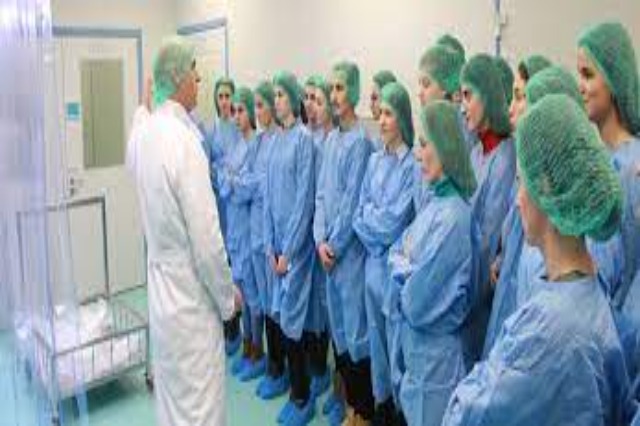
The number of students in higher education has decreased by about 13% from the school years 2018-2019 to 2022-2023, but there is an increase in the branches where you can find work in emigration.
More and more young people are turning to branches related to health services. According to data from INSTAT, in 2023, the total number of students decreased by 17,700 since 2019 with a decrease of 12.7%, but on the other hand, more young people chose branches in the field of “Medicine and Health”.
This academic year, 22,834 people are studying in fields of study related to health. The number of students majoring in health is higher than the needs of the domestic market, but this trend heralds the trends of emigration of professionals in the future.
Sources from the Faculty of Nursing show that most students in their first year enroll in German language classes in order to have the language skills to be employed in the German market when they finish their studies.
Of all the fields of study, the number of students in the last four years increased only in the branches of Engineering and Health, while in some fields there is a sharp decrease in students.
In the last four years, the largest drop in the number of students was in “Arts and humanities” by 45% between 2019 and 2023. Further in the branches “Natural sciences, mathematics and statistics” the number of students fell by 43% for the same period.
Students in the fields of agriculture occupy only 2.5% of the total number of students, while those in the fields of Medicine account for about 18% of the total number of students.
In the “Agriculture, forestry, fishing and veterinary” branches, which is also the main branch of the economy, which contributes to about 19% of GDP and 44% of employment, there were only 3,108 students, a decrease of 38% from 2019.
The number of students in these branches is the lowest of all fields, although there was a modest increase compared to 2021.
Higher education studies are owned by the public sector and the Ministry of Education is the main regulator of study quotas.
In this role, the Albanian government has in hand the orientation of the quotas in the studies for the branches that have the most need, because the education expenses are covered by the taxes of the Albanians.
But the distribution of the total number of students according to branches shows that the lowest number of them is precisely in the main branches of economy, agriculture and services.
Albania has become a net exporter of human capital, with an incalculable loss for the country’s future and sustainable development.
/k.s/
Të ngjashme


Latest News

Most read










 RTI