
 English
 Français
 Deutsch
 Italiano
 Turkish
 Greek
 Serbian
‘Vogue Italia’: Tirana, a new, lively and authentic city far from tourist clichés. A new destination to discover




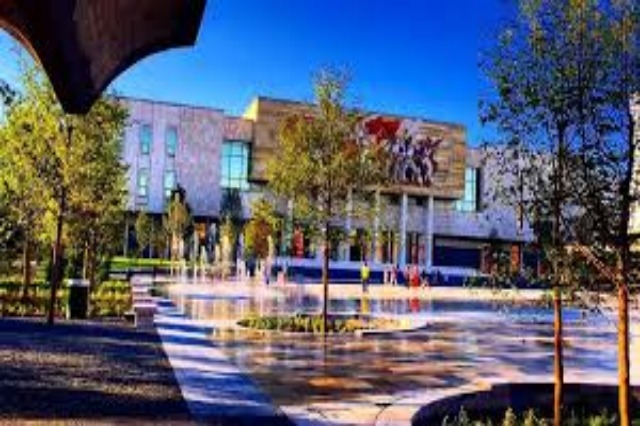
Far from tourist clichés, here is a city full of contradictions and unprecedented suggestions
Unusual, majestic European capital: Tirana is a city with a complex past and a lively and stratified present, but for this very reason endowed with a mysterious and poignant charm. It needs a curious traveler with a passion for the unusual to appreciate all its nuances and most evident contrasts. Crossroads of populations and commercial interests until the Iron Age, it gained importance from the 17th century, always crossed by conflicting aims and interests, above all divided between Central Europe and the Ottoman Empire, to then pass from the domination of Fascist Italy to the isolationism imposed by a communist regime of particular harshness. Then came the 1990s with the scenes of the landings across the Adriatic still etched in the memory of many Italians.
But in the meantime, Albania and Tirana itself have set their own path and dreams, overcoming obstacles, difficulties and corruption, but also relying on its strongest and most rooted energies. Now the capital, surrounded as it is by Mount Daji, among the highest in the Balkans, remains a condensation of very different and contradictory souls, starting from its architecture in which Italian-style villas of the 1920s and Ottoman cobblestones follow one another, magnificent towers, traditional markets and very modern boutiques and international millionaire projects. In the last decade, thanks to a government project, communist-era monuments and buildings have been painted in bright colors, a grand metaphor of an urban reality that has been imbued with new life.
After the devastating earthquake of 2019, which threatened to interrupt this momentum of development, Tirana has recovered again, starting from its most energetic sources. It is actually a city full of young people, who have returned from abroad or have grown up here, rediscover traditions and appreciate them from a global point of view. It is no coincidence that last year the city was declared the European Youth Capital 2022. Even today it is an unprecedented and still growing catalyst for incentives, events and trends. It is precisely for this reason that it is the first city to host, starting on May 8, Fashion Panorama – The Italian New Wave, the project of the Ministry of Foreign Affairs and International Cooperation curated by Vogue Italia and bringing a new generation of Italian designers in a traveling exhibition.
To discover a city that seems to hide its secrets with stubborn jealousy and vague mystery, but which is drowning in longing for the future and accepting stimuli from the most diverse, we asked some insiders who experience it to tell us show the basic places of an unusual and constantly developing Tirana.
Where to stay
“To stay in a charming place and to enjoy refined Mediterranean cuisine, Padam Boutique Hotel & Restaurant is my favorite place”, says Sonila Alushi, an Albanian journalist and activist who has lived in Bergamo for 25 years, but continues to returns to what is his soul place: “Chef Fundim Gjepali, selected in the list of Top 10 Foreign Chefs in Italy, also works at the Antico Arco restaurant in Rome, has wisely chosen a menu to satisfy all tastes”. Housed in a classic Victorian style villa, close to the heart of the city, the stylish and refined restaurant also has a lounge bar set with a large garden, making it the perfect place to spend an afternoon or an evening complete with a music column. The well-stocked wine bar allows you to enjoy fine local wines, while the hotel generally offers comfort and elegance.
Maritim Hotel Plaza is also comfortable and with a refined and essential style, a first-class hotel a few steps from the Parliament, the National Art Gallery and the Opera House, with a rooftop where you can enjoy a 360-degree view of Tirana. Enjoying an aperitif at the Lounge Bar on the 23rd floor means leaving the hustle and bustle of the metropolis and instead enjoying the view of the passionate colors of the sunset and the vibrant lights of the capital in absolute relaxation. Areela, on the other hand, is a recently renovated boutique design hotel, where neoclassical style and a more industrial approach come together, and where innovative comfort and services promise very pleasant stays, right in the heart of the city’s most historic district.
For those looking for alternative experiences, near the big market of the New Market, Hostel Milingona is a truly iconic and picturesque place: its name in Albanian means “ant” and in fact the location is full of life, characterized by all from its colorful and colorful facades. Anyway, making the rounds of the capital towards the wine area around Durrës and half an hour from Tirana airport, it is nice to come across.
Where is there to eat?
How not to start the day if not with a delicious breakfast of beautiful French pastries? The right place is Patisserie Française, a place whose name already smells of Paris, founded by Madame Marie-Thérèse Marchal, a curious French woman who fell in love with Tirana in the early 1990s and first opened a French bakery and then today’s delicious pastry. “For me, it was a magical place where miracles were born”, Sonila always remembers: “Albania in those years was going through a very difficult historical period and could hardly get out of deep poverty, the lady therefore looked like an angel who radiated peace and goodness”.
Among other places in the heart of Sonila is the Gzona restaurant, near Tirana Castle. We are located in a charming village inaugurated in 2018, in which are grouped restaurants, galleries and shops selling typical gastronomic products and local crafts. Sitting around a table and sharing food and laughter is one of the most traditional characteristics of Albanian culture: it’s no coincidence that ‘Gzona’ in the Northern Albanian Geg dialect means “to rejoice together”. In this restaurant, in fact, typical dishes of the oldest national recipes are served, with local products, but reworked with innovative techniques, a bridge between the past and the future that allows traditions to be kept alive.
A few minutes away from Scanderbeg Square, the real nerve center of the city with its statue dedicated to the national hero George Castrioti, who in the 15th century had rejected the Turkish-Ottoman invasion, is Bati, a small but charming fish restaurant. This is recommended by Andrea Ferrari, an entrepreneur of medical-aesthetic tourism who often flies from Milan to Tirana: “To eat in the lively neighborhood of Bllok, a suggestion is of course Kripa, where it goes from Italian risotto to sushi, passing through Florentine”. Here the varied menu, the eclectic and refined atmosphere, but also the attentive service attract the unbridled local youth: “But who really misses Italy, can go to Artigiano Villa, which has its headquarters in a charming villa with a garden”. And it is located next to the Pyramid, a picturesque pyramidal structure that was the mausoleum of Enver Hoxha, the authoritarian leader who ruled Albania from 1941 until his death in 1985.
Also in Blloku you can meet the most diverse people and enjoy gastronomic experiences that smell of internationality: “Almost every day I go to the Çoko bar and bistro to have breakfast with its wonderful eggs benedict”, says Ema, an Albanian journalist and founder of Ema’s Light magazine, which recommends hotels and restaurants in Albania and beyond: “Meanwhile, I greet the lady who meticulously sells the products of her garden in one of the narrow streets in the center, a habit that has accompanied me since I was a child “. In fact, in Tirana you often meet persistent peasants on street corners who go to the city in the early hours of the morning to sell fruits, vegetables, flowers and herbs collected in the fields.
To have a pure local gastronomic experience, then, a necessary stop in Tymi, near the Dine Hoxha mosque: “You eat delicious popular Albanian cuisine and the prices have remained the same as in the past”, says Mauro Santoni, the Tuscan professor who taught for two years in Tirana. A distinctly bucolic atmosphere pervades instead at Mullixhiu, a restaurant set up like a wooden and spartan alpine shelter, situated as it is in the middle of Tirana’s Great Park, with its artificial lake: here chef Bledar Kola, with experience at Le Gavroche and the starred Noma, reworks poor cuisine dishes, using experimental fermentations, forage and wild herbs. Reservation is essential.
What to visit
Right in the central Scanderbeg square, once surrounded by cars and now the very lively heart of the city, you can see two of the most visited places in Tirana: on the one hand, the National Historical Museum with its magnificent facade and the colorful mosaic that represents the victories of the Albanian people, within which the millennia can be traced, starting from the Paleolithic period to the communist one; and on the other hand the Et’Hem Beut Mosque, symbol of the country’s religious diversity and stunning for the wonderful floral decorations inside.
But the most special destinations, in the city, are the ones that are less visible, in fact practically underground. Bunk’Art 1 and Bunk’Art 2, for example, are long-kept top secret bunkers in the city center, used in the past by the state secret police: Today they house a historical exhibition that includes images, accessories and objects, from the communist period and its suppression, revealing the secrets of the State Security. They were born in 2014 and 2017 respectively, with initiation of the Italian journalist Carlo Bollino, former director of the Gazzetta del Mezzogiorno, who convinced the authorities to release many long-classified documents.
From the darkest past to the brightest future with Reja or “The Cloud”, one of the city’s new landmarks, the scene of the most essential selfies. The installation, located in the garden of the National Gallery of Art, was designed by Japanese architect Sou Fujimoto and consists of a structure of airy and light white steel cubes, which create an interior space enlivened by multiple workshops, cinema screenings and other events, to be enjoyed especially in summer. Speaking about cultural initiatives, Mauro Santoni gives another interesting advice: “In Tirana it is not always obvious to find continuous and quality cultural events”, he tells us: “But I really love the Metropol Theater, an avant-garde theater, with almost Shakespearean references”.
For all visitors who want a shopping experience in pure ‘Tirons’ style, a trip to the New Bazaar, considered by many to be the heart of the city itself, is a must. Its creation dates back to the thirties under King Zog, who made it the first market, which however was reorganized over the years to become the orderly and safe market it is today, rich as in bars, bistros, trendy restaurants and the hostel. Here there are more than 150 traders with their stalls, selling everything from meat and fish to vegetables, from honey to cheese, spices, oil, tobacco and souvenirs.
“The advice is to buy mountain tea, which according to the Albanians cures all diseases”, Sonila confesses, referring to this herbal tea made from a wild bush, also known as the drink of poets and philosophers, because it is for consumed alone, but also famous for its anti-inflammatory, antibacterial and antioxidant properties.
Where to have fun
To fully experience the liveliest night life in Tirana, there is only one password: Block! This is the newest and most vital circle, whose name literally means “block”, because it was the exclusive circle of the leaders of the Central Committee of the Labor Party, off limits to ordinary people. Designed as a “garden district” by Gherardo Bosio, an Italian architect who led the renovation of Albanian buildings in the fascist era, today it is the bustling nerve center of young people, who experience it in all its contrasts: starting from bars the most glamorous of cocktails to the most classic beer halls, from franchises. There are also clubs in more intimate places where you can watch live music. There is a strong presence of Italian restaurants, opened by those who, after living for decades in our country, have returned to their homeland. Here the place to be is definitely Radio Bar Tirana: design recovered from the communist period, eccentric furniture, period posters and photos on the walls, friendly atmosphere (in every sense) and above all excellent cocktails: (“Absolutely try the Rakberry, a cocktail based on blackberry brandy”, advises Sonila).
Also in this area is Charl’s Bistro, a lounge bar specializing in music from the 60s to the 80s, which regularly hosts live music performances (in 2009, Ian Paice, the legendary drummer of Deep Purple, also played there). On the other hand, going back towards Piazza Skenderbeu, the Hemingway bar is certainly not to be missed:
“It is an essential place”, continues Mauro enthusiastically: “Managed by three brothers, various cultural events, jazz concerts and in the summer are organized here. In the evenings art-house films are projected on the walls of the opposite building. And you drink the best rum in Albania”. The place resists in a building anchored in the past, the atmosphere remains deliberately decadent here too, amid graffiti and murals, but it is also decorated by lush mimosa trees, ideal for happy evenings.
“After a busy and tiring day, I often meet with colleagues and friends to drink a glass of wine in Vienna, near the Dinamo stadium”, suggests Ema. “The environment is extremely simply furnished, I find it very welcoming.”
Beyond the many bars and night clubs, another pastime much loved by Albanians is that of coffee: both in Italian and Turkish, it is lived here as a ritual of relaxation, being in company and talking. Therefore, it will be difficult to drink it on the counter or on the go. As a result, the city is full of more or less modern cafes, but one to visit without a doubt is Komiteti, a cafe and bar that is also a kind of museum of memorabilia and books from the communist era, mixed with tropical hints. A leap into the past, once again, which is counterbalanced by his always young, varied and stimulating attendance: a rather faithful photograph of this city with many faces.
/k.s/
Të ngjashme
Latest News

Most read










 RTI