
 English
 Français
 Deutsch
 Italiano
 Turkish
 Greek
 Serbian
Shebenik-Jabllanica National Park, Albania’s Northeastern Eco-Tourism Gem




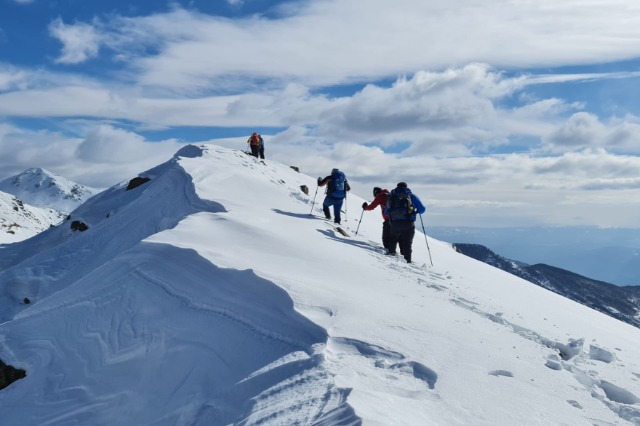
The Shebenik-Jabllanica National Park is located in the northeastern part of Albania, within the forest management boundaries of Librazhd. By decision of the Council of Ministers, it has been declared a National Park with significant eco-tourism value, in line with international conventions for the expansion of protected areas. The park covers a total area of 33,927.66 hectares, primarily consisting of forests, pastures, agricultural lands, and non-productive rocky lands.
Two rivers and several small water sources flow through the park over a length of 22 km, including the Qarrisht River in the north, which merges with the Rrapun River, and the Bushtricë River in the south, which joins the Shkumbin River. The Rrapun River merges with the Shkumbin River at the western outskirts of Librazhd, and the latter then flows into the Adriatic Sea. Within the park, there are over 14 small glacial lakes with majestic beauty, situated at an altitude above 1,900 meters above sea level.

The climate of the park is predominantly Mediterranean, with average annual temperatures ranging between 7°C and 10°C. Annual average precipitation varies between 1,300 mm and 1,800 mm, depending on the location within the park. The park region is home to various rare and endemic species of plants, animals, and fungi.
The park features beech, fir, pine, and oak species, along with types like willow and silver fir in the northern slopes of the park. There are many rare and endemic plant species, which can be found in the Flora and Fauna section. The main plant species include beech, black pine, fir, oak, bush, and less commonly birch, maple, alder, hazelnut, and various wild berries like wild cherry and blueberry.
The park area is believed to host one of the few remaining ranges for species like the Balkan lynx. Key fauna species include the brown bear, wolf, marten, fox, squirrel, ermine, eagle, hawk, the otter, wild boar, roe deer, wild goat, lynx, wild cock, and mountain trout.
Tourism in this area is still in the early stages of development. Visitors are few and self-organized, despite the park’s tourist attractions and cultural heritage. There are numerous natural monuments, declared and undeclared, that tourists and researchers can visit. Notable sites include the village of Llange with its characteristic stone-walled, three-story houses; the Koshorisht Church, built in a cave in the 2nd century BCE; Shebenik’s karstic lakes; the Lake of Fushë Studnes; Vlaska; Fushë Dorezi; the Fir of Fushë Kuqe; the Rrapi of Taksim; Skanderbeg’s Steps; the Bear’s Spring, and many others.

In this area, the community organizes many traditional social-cultural activities, which are a vital part of the local community’s life. These include traditional festivals celebrated in almost every large village, each with its own unique aspects, but all being significant in terms of participation as many community members, guests, and foreigners join in.
Traditional folk costumes vary among villages, as do the folk songs and dances. The main festivals celebrated in this area include the “DOREZ” festival, a significant event with traditional cultural activities in a natural setting. Other notable festivals are the celebration of St. George’s Day in Steblevë, and those in Qarrisht, Rrajce, Lunik, and more.
Të ngjashme



Latest News










Most read










 RTI