
 English
 Français
 Deutsch
 Italiano
 Turkish
 Greek
 Serbian
Hasani at NATO Ministerial in Brussels: Strengthening Cohesion is Key for Western Balkans Security




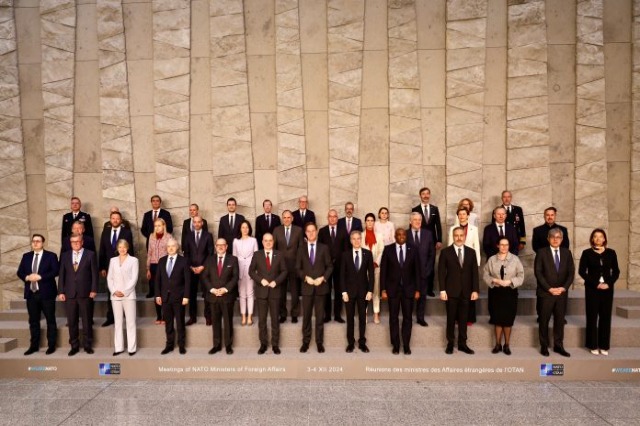
The Minister for Europe and Foreign Affairs, Igli Hasani, attended the NATO Foreign Ministers’ meeting in Brussels, marking the first under new Secretary General Mark Rutte’s leadership, and concluding a pivotal year for the Alliance, which celebrated its 75th anniversary.
In his address, Minister Hasani reaffirmed Albania’s steadfast commitment to the Transatlantic Partnership as the “foundation” of NATO. He also highlighted that Albania is currently investing 2.03% of its GDP in defense, focusing on the modernization of its Armed Forces, with plans to reach 3% by 2030.
As part of the NATO’s biennial report on the Western Balkans, Minister Hasani emphasized the urgent need to strengthen NATO cohesion, particularly in ensuring the security and stability of the Western Balkans. He underlined the importance of effectively countering cross-border threats and enhancing NATO’s preventive and defensive capabilities.
Foreign Ministers approved several key documents, including progress reports on decisions made at the Washington Summit (July 9-11, 2024), and preparations for the upcoming NATO Summit in The Hague in June 2025.
A major focus of the discussions, attended by the new High Representative for Foreign Affairs and Security Policy, Kaja Kallas, was continued support for Ukraine. During a meeting with Ukrainian Foreign Minister Andri Sybiha, NATO Foreign Ministers reiterated their full backing for Ukraine’s efforts to defend itself against Russia’s aggression.
Additionally, discussions addressed NATO’s southern flank, with His Majesty King Abdullah II of Jordan in attendance. Ministers emphasized strengthening NATO’s partnerships with countries in the southern Mediterranean, especially in light of the ongoing Gaza conflict. They also reviewed decisions made at the Washington Summit, including the appointment of a Special Representative for the South.
Ministers further discussed NATO’s strategic approach to Russia and the necessary steps to address emerging security threats, including hybrid challenges.
Të ngjashme
Latest News










Most read










 RTI