
 English
 Français
 Deutsch
 Italiano
 Turkish
 Greek
 Serbian
La Vanguardia: Is it Worth Visiting Albania, the Inexpensive Destination that Aims to Conquer Europeans




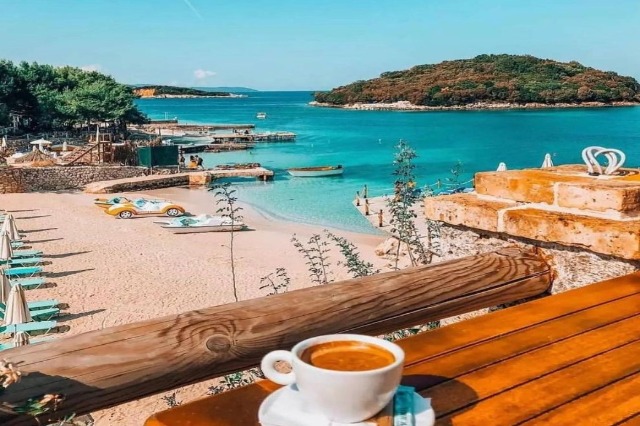
Albania is one of those emerging destinations that regularly appear in the news during the pre-summer season. After the 2020 pandemic, this country experienced an unprecedented tourism boom that has turned it into a highly visited location. The country’s unique history, cultural heritage, and nature undoubtedly contribute to its appeal.
The rapid growth in tourism, however, also has its risks, as the country presents significant contrasts in terms of infrastructure, urban planning, hotel occupancy, and maintenance of tourist sites. What is true is that it is still a relatively inexpensive country to travel to, with a wide range of hotels and dining options—featuring very tasty and plentiful food—at much more affordable prices than other European destinations.Traveling to Albania is often like being transported to a Mediterranean country with the idiosyncrasy of 40 years ago, experiencing a unique blend between the Mediterranean lifestyle and the oriental. It is no coincidence that in its history, Turkey was there for centuries, and the country’s geographical location makes it a crossroads between the East, Orthodox culture, ancient Greeks, modern Italians, and the Slavic neighbors of the Balkans.
They claim to be descendants of the ancient lilies, predating all successive invasions. It’s a complex mix that sometimes becomes explosive in conjunction with the country’s recent history, a communist dictatorship that lasted 46 years and hermetically sealed the state off from the rest of the world.Churches, mosques, and Ottoman houses
Albania has a past that swings between East and West, and this can be seen in its most emblematic and touristic places. Part of the Ottoman Empire, part of the great Greece, neighboring and historical friend of Italy, it offers a blend that is experienced at every step.The city of Berat, a UNESCO World Heritage site, is one of the jewels of the country. Known as the city of a thousand windows, its Ottoman houses cascade down the hillsides, offering a labyrinth of narrow streets where minarets and bell towers peek out. With over 2,400 years of history, the city is crowned by the castle at the top, with a whole area still inhabited, overlooking the monumental ensemble.
Gjirokastër is another place that visitors cannot miss. Also a UNESCO World Heritage Site, the city stands out for its Ottoman fortress houses, which give it a strong character, dominated by a castle and a beautiful bazaar. It is the birthplace of the dictator Hoxha, which allowed it to be respected as a whole. Additionally, the intellectual and dissident Ismail Kadare was born and began writing here.In the city, you can visit various Ottoman houses to see what everyday life was like in these fortified mansions. The architecture of the Ottoman Empire, which extended from the Danube to the Persian Gulf, adopted indigenous nuances, including in Albania as well.
Të ngjashme




Latest News










Most read










 RTI