
 English
 Français
 Deutsch
 Italiano
 Turkish
 Greek
 Serbian
“Lonely Planet”: Visit Albania and Experience a Slice of Paradise




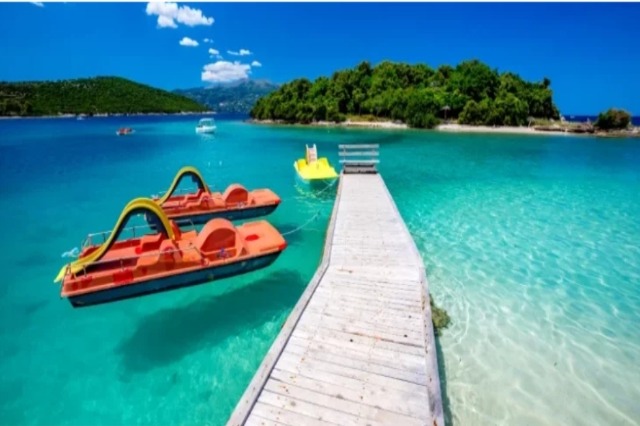
‘You may already be plotting next year’s summer holiday. Perhaps you’re looking at places like Greece, Italy and Croatia, but would prefer fewer crowds or more affordable prices. If so, it’s worth skipping over to their beautiful neighbors, Montenegro and Albania’ reads an article published in “Lonely Planet.
These two Balkan powerhouses – where Adriatic coastlines meet lively small towns and rugged mountains meet the sea – bring their own flavor to a European getaway. While popular tourist regions like the Bay of Kotor and the Albanian Riviera attract big numbers, there are still plenty of tucked-away corners where you’ll easily find space to breathe. The only question is, which destination do you choose? Two of our expert writers have chosen sides, arguing in favor of the country they feel most passionately about. Can they tempt you to come over to their side? Or perhaps they’ll end up convincing you to visit both?
Albania has history, natural beauty and city nightlife
Kosovo-based travel and relocation journalist Shkurta Januzi has spent every summer holiday in Albania since she was a toddler. Here she shares why she loves the country, from its beaches to Tirana and beyond.
Albania is one of those rare countries where you can experience it all: lovely beaches, rugged and breathtaking mountains, little towns that take you back in time, delicious Mediterranean cuisine packed with bold flavors and a warm and welcoming culture.
Emerging from decades behind the Iron Curtain, Albania offers a refreshingly authentic experience. It is free from the crowds you might encounter elsewhere (though the beaches of the Riviera do get busy in summer) and is generally easier on the wallet compared to other European countries.
While Montenegro certainly packs a punch, Albania is ready to compete. Its highest peak, Mt Korab, soars at 2752m (9029ft), towering over Montenegro’s highest peak, Bobotov Kuk. Its 476km (296ft) of coastline means more hidden coves and wild beaches to discover. Plus, with six UNESCO World Heritage sites (compared to Montenegro’s four), 11 national parks (Montenegro only has five), and a mix of historical sites spanning centuries, including the ruins of the ancient Greek city Apollonia (founded in the 6th-century BCE) and the hilltop town of Berat with its Ottoman houses and 13th-century castle, Albania has history and nature in abundance.
Then you have Albania’s stunning Riviera. It stretches nearly twice the length of Montenegro’s coastline, meaning there’s no shortage of seaside hideaways to explore, including lesser-known beaches surrounded by wild nature. Often, travelers can find themselves with a secluded beach all to themselves.
Unlike Montenegro, where the coastline is fully bordered by the Adriatic, Albania has the unique advantage of being washed by both the Adriatic and Ionian Seas. The Ionian’s clear, blue, non-tidal waves lapping at white pebble beaches make southern Albania feel like a piece of paradise on a warm summer’s day.
Looking for one in particular? Try Dafina Bay, one of the most beautiful beaches in Albania, where you can also snorkel in Dafina Cave. Charming nearby coastal Ionian villages like Himarë and Dhërmi, with their whitewashed houses and blue-domed churches, offer a slower pace of life and an authentic taste of Albanian hospitality. For history lovers, the 7th-century BCE ruins of Butrint, a UNESCO site, are close to the white-sand beaches of Ksamil, combining the best of beach and culture in one.
When you want to let loose, head to Tirana, arguably one of the Balkan’s liveliest capitals. The city center is a kaleidoscope of bright murals, quirky architecture and youthful energy. You’ll find Albania’s history written on every corner, whether in the ornate mosques and churches or the iconic Pyramid of Tirana. Originally constructed as a museum to celebrate Enver Hoxha’s dictatorship (1944 to 1985), the Pyramid is now a cultural hub and its observation platform offers panoramic views of the city and mountains.
Tirana’s skyline is evolving quickly, with skyscrapers sprouting up like modern sculptures, including the sustainable Hora Vertikale residential development, made up of 13 stacked cubes, and the ballet-inspired Bond Tower with its bent shape and zig-zag towers. The city’s nightlife hums with excitement, too, offering a mix of cozy bars, lively clubs and cultural events like street raves, and food and film festivals that keep the streets buzzing well into the night – a contrast to the more laid-back pace of Montenegro’s Podgorica.
History, art and architecture are combined in Albania’s legacy of 170,000 bunkers – built during the communist era in a bid by the then-government to fortify the country. Many lie abandoned, but others have found new life as museums and art spaces. In Tirana, Bunk’Art 1 and 2 tell the story of Albania’s communist past and offer exhibitions on history and art, dwelling deep into the life and suffering of Albanian people during this period.
With so much to see and do, the question isn’t whether you should visit Albania, but rather how you will find time to experience everything the country has to offer.
Të ngjashme




Latest News










Most read










 RTI