
 English
 Français
 Deutsch
 Italiano
 Turkish
 Greek
 Serbian
Italian Blog: Visit the Vibrant Capital of Albania – Tirana




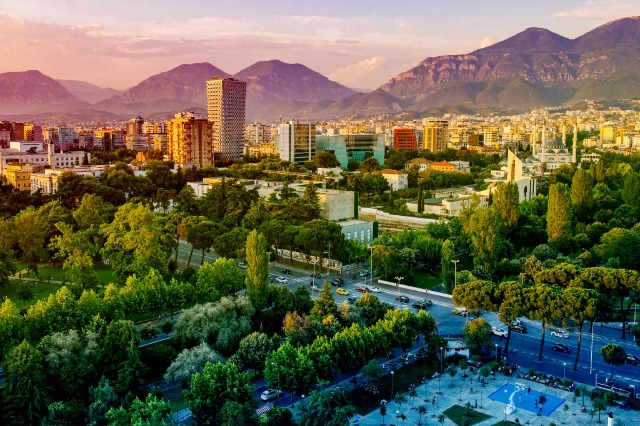
Tirana, the vibrant capital of Albania, can be described as a beautiful and fascinating city.
Today, the Albanian capital is thriving, attracting many young people—including numerous digital nomads—thanks to its affordable cost of living, writes Valentina Borghi in an article published on the Italian blog “beBorghi.”
What to see in Tirana in 1 or 2 days:
1. Skanderbeg Square
Your visit to Tirana should start at its main square, Skanderbeg Square, dominated by the statue of Albania’s national hero, from whom the square takes its name. Some of the city’s most iconic buildings overlook the square, along with a number of skyscrapers. On one side, you’ll find the old Et’hem Bey Mosque with the Clock Tower, and on the other, several fascist-style buildings constructed during the Italian occupation, such as the Bank of Albania. The post-communist era added structures like Hotel Tirana, the National Opera and Ballet Theater, and the large National History Museum, featuring a mosaic titled “The Albanians.” The square was repaved in 2015 with stones sourced from Albanian-speaking regions, including Kosovo and North Macedonia.
2. Et’hem Bey Mosque
The historic Et’hem Bey Mosque is considered a symbol of Tirana, as it is one of the few Ottoman buildings that survived the city’s modernization. Built at the end of the 18th century and completed in 1821, this small mosque is famous for its beautiful frescoes, which adorn both the interior and exterior, depicting idyllic landscapes, waterfalls, and bridges—rare in Islamic art of the time. Closed during the communist regime, it reopened in 1991, symbolizing the spiritual rebirth of the country with a ceremony attended by around 10,000 people. Today, it remains a popular site for tourists.
3. Bunk’Art 2
Bunk’Art 2 offers a fascinating insight into Albania’s history, located in a secret bunker built during the communist regime of Enver Hoxha. The museum provides a unique perspective on the paranoia and control of that period. Hoxha, convinced Albania would be invaded, built over 750,000 bunkers across the country, though they were never used. Bunk’Art 2, constructed to protect the Ministry of Interior’s leaders, now houses multimedia installations and historical documents detailing state oppression and surveillance. Visitors can explore decontamination rooms, reconstructed ministry offices, and detention spaces, uncovering touching stories of resistance and survival.
4. House of Leaves Museum
South of Skanderbeg Square, opposite Tirana’s Orthodox Cathedral, lies the House of Leaves Museum, set in a villa hidden behind a leafy wall. This building was the headquarters of the secret police, known as Sigurimi, during the communist regime. Opened in 2017, the museum showcases espionage equipment, documents, and declassified testimonies from victims of the regime, offering a disturbing yet essential view of life under dictatorship. Visitors can explore hidden rooms and corridors revealing the methods used to control dissidents and ordinary citizens—until 1991, privacy did not exist in Albania, and any conversation could be overheard. The House of Leaves, with its poetic name contrasting the harsh reality of the stories it tells, is a place of memory that invites reflection on the value of freedom.
5. Sali Shijaku’s House
To visit the house of Sali Shijaku, the famous Albanian painter who passed away in 2022, you must pass through a part of Tirana that feels like a small town. Narrow streets with low houses, small shops, and a vibrant local life define this area. Shijaku’s house is a historical residence, considered the oldest in the Balkans. Built in the 18th century, this Ottoman house was carefully restored by Shijaku, and today it showcases his works alongside those of other painters. The beautiful garden of the house hosts a restaurant run by the painter’s family, making it a pleasant spot frequented by locals for coffee or conversation.
6. New Bazaar (Pazari i Ri)
The New Bazaar, or Pazari i Ri, is located east of Skanderbeg Square. Renovated in 2017, this marketplace offers a wide range of fresh local produce, from fruits and vegetables to cheeses, cured meats, and artisanal specialties. The New Bazaar is also a hub for gastronomy and tourism, with pedestrianized streets filled with restaurants and cafes serving traditional and modern dishes in a lively atmosphere. One of Tirana’s most famous and tourist-friendly restaurants, “Odas Garden,” is located here.
7. Pyramid and Postbllok Memorial
One of Tirana’s most controversial and symbolic monuments is the Pyramid, initially designed as a mausoleum for dictator Enver Hoxha. Built in 1988 with a bold, modernist design, the structure today celebrates Albania’s transition to democracy. After the fall of the communist regime, the Pyramid was repurposed as a cultural center and exhibition space, complete with charming bars. You can climb the structure—made up of numerous steps—for a panoramic view of Tirana. At the foot of the Pyramid, across the street, lies the Postbllok Memorial, a set of commemorative monuments honoring the victims of the totalitarian regime.
8. Blloku and Street Art
Blloku, Tirana’s trendiest neighborhood, was once off-limits to ordinary citizens. It was reserved for members of the ruling Communist Party and housed Enver Hoxha’s villa (still closed to the public). Today, Blloku has become the city’s beating heart, especially for young people, known for its cafes, restaurants, clubs, and fashion boutiques. Tree-lined streets create a cosmopolitan atmosphere, combined with colorful buildings and murals that tell the story of its turbulent past. Blloku is perfect for shopping and strolling during the day, while at night it transforms into the center of the city’s nightlife, with some of the most interesting bars to visit.
9. Grand Park and Artificial Lake of Tirana
The Grand Park and the Artificial Lake of Tirana, located south of the city center, represent the city’s green lungs, offering an oasis of tranquility and recreation in the urban heart. The park provides spaces for walking, jogging, and picnicking, while the artificial lake at its center is ideal for running, cycling, or leisurely walks.
10. Bunk’Art 1 and the Dajti Mountain Cable Car
The last two recommendations are located outside the city center but are easily accessible by bus from Skanderbeg Square. Here, you’ll find yourself at the base of the cable car that ascends Mount Dajti (1611m). The climb offers a classic escape for Tirana’s residents, providing panoramic views of the city and the chance to walk amidst greenery. You can also visit Bunk’Art 1, the largest anti-atomic bunker built by Enver Hoxha. While Bunk’Art 2 is two floors, this one covers 2700 square meters, with 106 rooms spread over seven floors. The museum here also highlights the regime’s abuses of power, portraying the hardships faced by Albanians during that era.
Të ngjashme




Latest News










Most read










 RTI