
 English
 Français
 Deutsch
 Italiano
 Turkish
 Greek
 Serbian
The new law on protected areas, Kumbaro: Encouraging economic growth and ensuring biodiversity protection




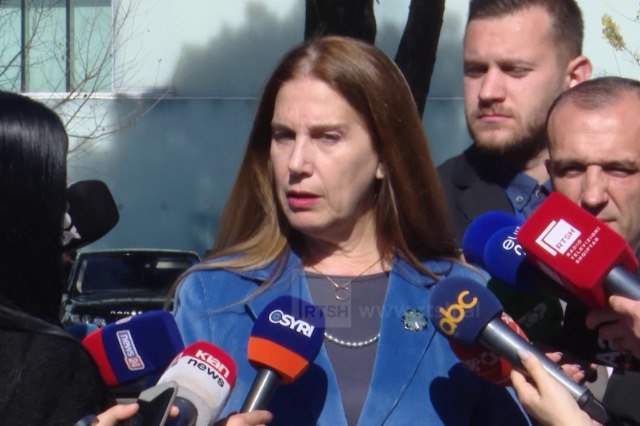
Mirela Kumbaro, Minister of Tourism and Environment, emphasized in a statement to the media from the Assembly that the changes in the law on “Protected Areas” are essentially in the interest of the community that lives in those areas.
“We want to preserve the human connection with the territory, to create their economy in every part of the terror where they are. To promote economic growth in the entire territory of the country. There are ‘Eco-Friendly’ parks in all countries, i.e. environmentally friendly investments. Look at the north of Italy and there you have all the answers,” emphasized Kumbaro.
The Minister of Tourism and Environment emphasized that for the drafting of legal amendments, consultations were carried out with civil society and environmental organizations.
“Meanwhile, for everyone’s information, there have been numerous public consultations through live broadcasts, as well as communication via e-mails and letters. I have also had formal and informal meetings with representatives of civil society, environmental organizations, and experts in the field,” the minister said.
She also mentioned that the government, in cooperation with civil society, declared the “Vjosa” river a National Park.
“We have recognized a great merit in the maturation and emancipation of Albanian society in changing behavior towards nature and biodiversity. I want to recall here the most brilliant example, I would say, which is the maturity of the last wild river in Europe, which is the Vjosa river. Thanks to several years of cooperation between the government, the community, civil society, and the maturation of the awareness of society, including the political class, for the importance of protected areas, the river with its three branches, Bënça, Shushica, and Drino, was declared a national park. This makes it the first national park in Europe of a wild river, as it is the only one left wild in Europe,” she added.
“Moreover, I am bringing here another very important sign of the will of this majority, both the government and the parliament, to vote no further than the month of December on another law that joins Albania as a state in the international union of nature conservation for follow their standards. All this work has gone on in parallel,” said Kumbaro.
The Minister of Tourism and Environment said that the legal amendments do not affect the red lines, which damage protected areas.
“The government has been dealing with that draft law for a long time. I myself have expressed it both informally and in meetings with civil society, but also officially as a government, that there are some red lines that should not be touched, because they affect the essence of the protected areas law itself. I mean here not to affect EU directives, which we also reported in the screening process in June, where we practically received compliments for the work done in the protection of diversity. I want to remember that in 2021, Albania had 17.5% of its territory as a protected area. With the decisions of 2022, we took 21.5% of the territory. Without counting the extent of the Vjosa National Park. Also the natural and marine park of Porto Palermo, increasing the area,” stressed Kumbaro.
“It is not so easy for a small country like Albania to have 1/5 of the territory a protected area. This means, with very strict rules, that those developments that took place in the territory, but also in the protected areas during the transition, cannot take place. Bring here Velipoja, they were protected areas even before 1990, where today we have an urbanized part. I am not mentioning here Ksamil, which used to be a protected area, today it is completely urbanized. These are, let’s say, the flaws of a long transition,” highlighted Kumbaro.
Furthermore, Kumbaro underlined “We, with the EU Delegation and all our international European partners, have been and are in constant communication to explain what I am explaining to you today. We do not have one language for international partners, one for the public and one for ourselves. It is the same communication brought to life and shared with everyone.”
She guaranteed that “the surface of the territories of the protected areas will not be affected. I want to thank the deputies who took into consideration the government’s suggestions and opinion, since the first, there will be no division of the territories of the protected areas with the municipalities. They will continue to be administered by the National Agency of Protected Areas. We cannot delete the sub-zoning of a national park or natural park, but there will be clearer rules. Since we cannot have the same rules in the lagoon, the river, the mountain, etc. Each area has its own characteristics. The rules should be clear to everyone. People have been living in these territories for centuries, who today do not have the right either to add to their dwelling, or to develop an economy, agro-tourism, if it is located there.”
The minister cited that the legal changes give economic breath to the community in these areas.
“So the law that was approved today paves the way for much clearer rules for every part of the territory. Third, only in those sub-areas provided for according to UCNS principles for elite tourism, ecotourism, agrotourism, or higher-level tourism activities, within the very strict criteria approved by the Ministry and the National Council of the territory will be possible to develop with 3-4 very strict filters. From the Agency to the government,” said Kumbaro.
“The government willingness to find the right balance between the sustainable development of tourism and the protection of biodiversity is at a higher level than ever before. It is important that in this small territory of Albania, 28,000 square kilometers, the principle of UCNS, but also of UNESCO when talking about man and biodiversity says: The best protection is when the interests of the local community are combined, because we don’t want that the territories be abandoned to us, as they have been abandoned to us.”
In the end, she pointed out that the new law answers two challenges. “We respond to two challenges: economic growth, but without harming biodiversity. This is done with clear rules for everyone and the public. Both can live in parallel, as we do not invent this. You can look at all the neighboring countries, but also in Europe, where we have natural parks, where we have parks, there are also eco-friendly hotels, ski resorts, and agrotourism, because people where we ask for natural tourism to come, there should be formed and services which must be absolutely friendly to the environment. Look at Austria, the north of Italy, and you will find all the answers you are looking for.”
/m.ll/
Të ngjashme
Latest News

Kolkondas: Where History, Art and Faith Come Together
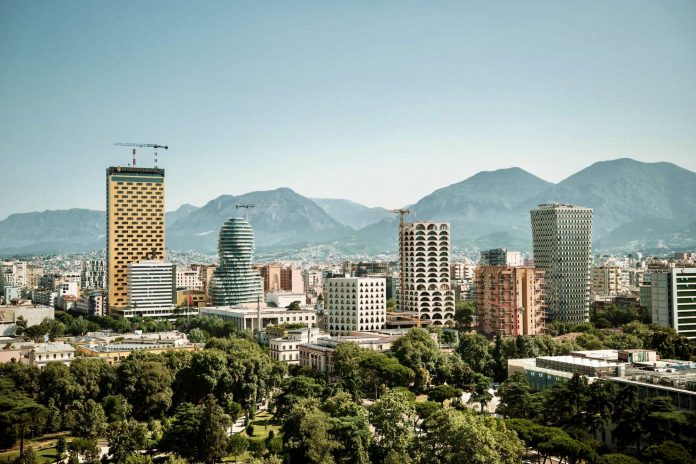
The UK iPaper highlights Tirana’s growing cocktail scene
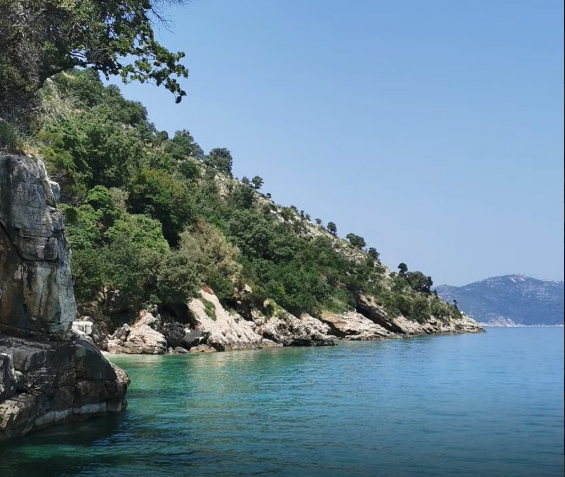
Cosmopolitan UK features Albania in five-day summer trip for women
Most read










 RTI