
 English
 Français
 Deutsch
 Italiano
 Turkish
 Greek
 Serbian
In Geneva, Minister Muzhaqi announced over 4,600 applications for the Coding Program




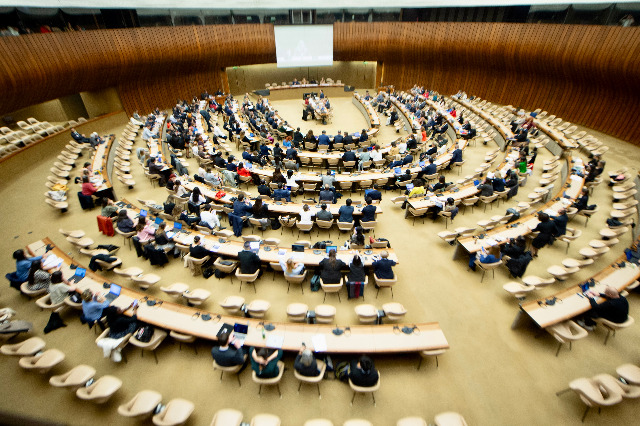
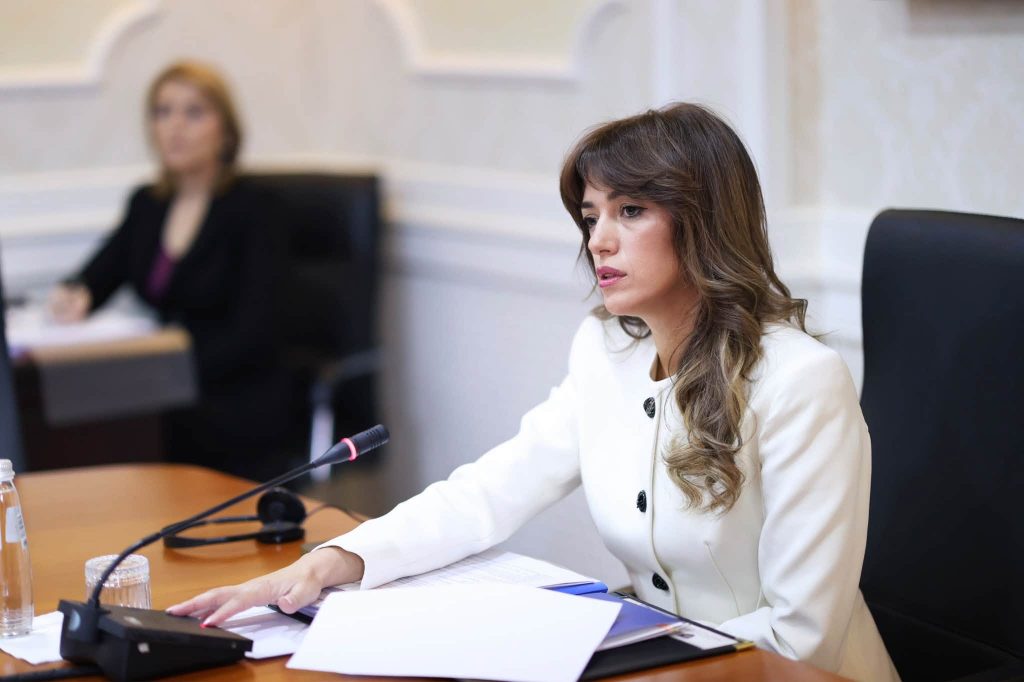
At the 30th International Conference, ICPD 30, the Minister of State for Youth and Children, Bora Muzhaqi, participated in the first panel on demography and democracy, where she presented Albania’s youth policy.
In her speech, Minister Muzhaqi highlighted Albania’s progress in fulfilling the ICPD 25 commitments for engaging, involving, and empowering young people, with a specific mention of the recently adopted Youth Law.
“As the Minister responsible for Youth in the Albanian Government, I am pleased to report significant progress in meeting the ICPD 25 commitments for youth engagement, participation, and empowerment. The Youth Law was approved in 2019, and the corresponding legal framework was completed in 2021,” Muzhaqi cited.
“The new legal framework has played a crucial role in establishing and implementing a comprehensive support system throughout the country. It has empowered our young boys and girls to actively engage and contribute to the development of their communities,” said Muzhaqi.
In the new legal framework, Minister Muzhaqi highlighted the inclusion of financial support schemes for youth infrastructure and organizations.
“The new legal framework includes financial support for youth infrastructure and youth CSOs, enabling increased engagement in youth-related issues at both policy and community levels. We’re now in our third annual funding call, and we’re grateful to our partner institutions – UNFPA, UNDP, and UNICEF – for their support and funding to Albanian CSOs within this process,” added Muzhaqi.
Muzhaqi continued to discuss youth policy, particularly highlighting the National Youth Strategy, which was crafted by and for the youth.
“We have successfully approved the National Youth Strategy 2022-2029, developed through a year-long consultation process involving over 1,500 young people from across the country and around 50 CSOs. The strategy comprises three pillars: youth empowerment, innovation and upskilling, and youth well-being,” said the Minister responsible for youth. He particularly emphasized the second pillar, stating, “The second pillar focuses on fostering innovation among young people and enhancing their skills through high-quality education in ICT and digital development. This contributes to equipping them with the skills necessary for quality employment, increasing their autonomy and life success, irrespective of their social or economic background, and aligns with the objectives 4 and 8 of sustainable development,” emphasized the minister.

“Regarding youth empowerment, we initiated the Coding Program in January 2023. This program offers 50% to 100% subsidies for young people to attend short-term vocational courses in ICT, equipping them with skills for future employment. In just 10 months, we received over 4,600 applications, and 900 young individuals have already joined this program to transform their careers,” remarked Muzhaqi.
“Ensuring the health and well-being of young people is another commitment made in ICPD 25. This includes ensuring access to sexual and reproductive health and rights, particularly for vulnerable populations in Albania. It’s a part of the third pillar of the National Youth Strategy, focused on the well-being of young people,” highlighted Muzhaqi. She then elaborated on the School Sports Teams Program and the After School Program.
“In terms of health, well-being, and social inclusion, we are now in the second year of implementing the School Sports Teams Program, offering free access to sports across Albania. Launched in 2022, it engaged nearly 10,000 children and youth, culminating in a national volleyball and basketball championship. Additionally, the Extracurricular Program provides free after-school activities, including arts, crafts, environment, agriculture, technology, and self-defense empowerment, aimed at promoting community engagement, enhancing learning, preparing for careers, and supporting physical and psycho-social health. This program began in January 2023, covering 200 schools in Albania and offering 1,041 courses with over 10,000 participating students,” explained Muzhaqi.
In conclusion, Muzhaqi moved on Albania’s youth progress, which was acknowledged in the Youth Progress Index in Brussels.
“I’m coming to this conference from another significant event organized by the European Youth Forum, where they unveiled their latest Youth Progress Index. This index assessed data from over 150 countries, focusing on basic human needs, well-being foundations, and opportunities. While the overall results indicate stagnant progress for young people in Europe, Albania stands out as one of the countries with the most significant improvement over the past twelve years. It ranks in the top 3 for the rate of improvement and has gained 8 positions in the absolute ranking. Although these results are promising, I want to emphasize that when it comes to young people, we can and should always strive for more,” stated Muzhaqi.
/m.ll/
Të ngjashme
Latest News
Kolkondas: Where History, Art and Faith Come Together

The UK iPaper highlights Tirana’s growing cocktail scene

Cosmopolitan UK features Albania in five-day summer trip for women
Most read










 RTI