
 English
 Français
  Deutsch
 Italiano
 Turkish
 Greek
Greek Serbian
History of the Berlin Process, achievements and objectives




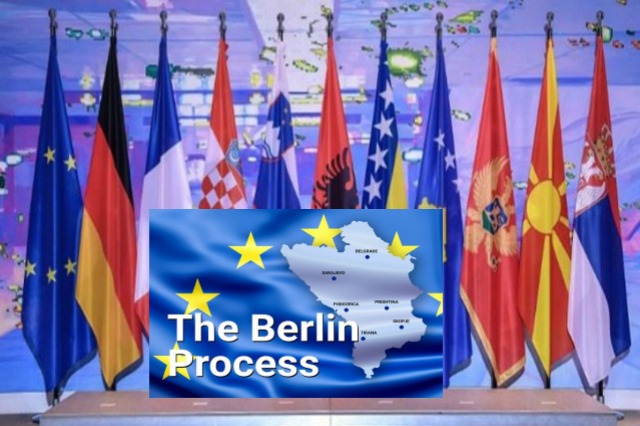
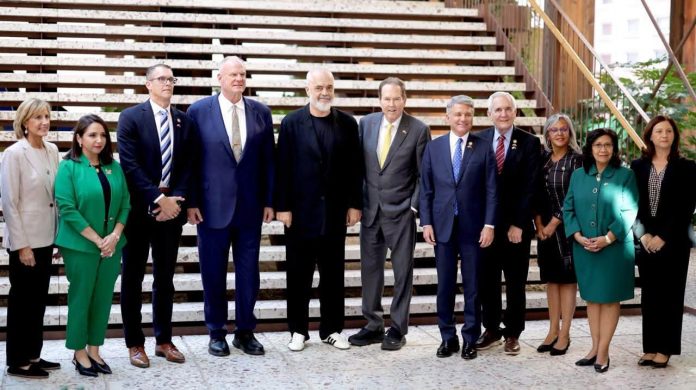
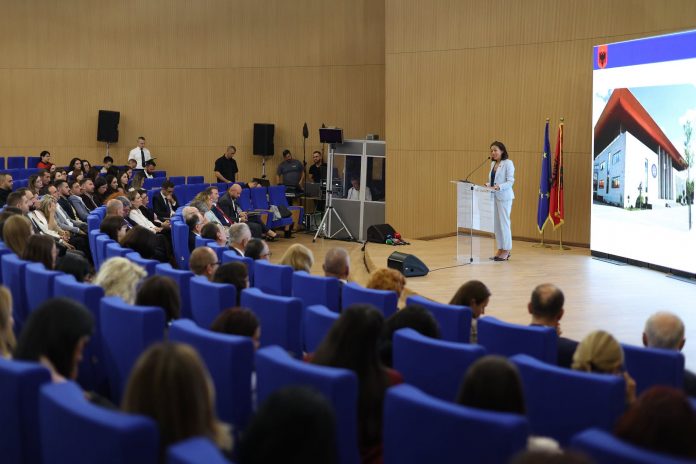
The Berlin Process Summit, which takes place in Tirana today, is the tenth in a series the summits of said initiative and the first in the Western Balkans region, in a non-EU country.
The Summit of the Berlin Process, which is held for the first time in the region and specifically in Tirana, will bring together all the leaders of the Balkan countries, the member states of the European Union and the highest representatives of the EU.
The Berlin Process for the Western Balkans (WB), launched in August 2014, is based on regional cooperation and support for the countries of the Western Balkans in their journey towards EU accession. In addition to the six BP countries (Albania, Bosnia-Herzegovina, Kosovo, Montenegro, North Macedonia, Serbia), the EU and its 10 member states participate in this process, under the leadership of Germany.
The Berlin Process is an initiative aimed at increasing regional cooperation in the Western Balkans and providing assistance for the integration of the countries of the region into the European Union.
It was launched and launched on August 28, 2014, by former German Chancellor Angela Merkel. The goals of the Process were described in the Final Declaration by the German Presidency: “To make additional real progress in the reform process, in resolving outstanding bilateral and internal issues and in achieving reconciliation within and between societies in the region”, as well as increasing “regional economic cooperation and laying the foundations for sustainable growth”.
The Berlin Process is being developed with the support of the European Commission, international financial institutions and the member states involved in the Process – Austria, Croatia, France, Germany, Italy, Slovenia and the UK together with the countries of the Western Balkans. It is an additional aid to the institutional process of EU integration of the states, based on the approval of the Acquis-Communautaire.
It is expected that the leaders of the WB countries, the member states of the European Union and the highest representatives of the EU, are expected to focus on two main topics, (1) Integration of the region in the common European market and improving convergence with the EU, and (2) supporting the green and digital transition in the WB. Furthermore, the signing of the regional agreement for mutual recognition of professional qualifications is expected too.
The Berlin Process is an initiative aimed at increasing regional cooperation in the WB and providing assistance for the integration of the BP countries into the EU. It was launched on August 28, 2014, by former German Chancellor Angela Merkel. The goals of the Process were described in the Final Declaration by the German Presidency: “To make additional real progress in the reform process, in resolving outstanding bilateral and internal issues and in achieving reconciliation within and between societies in the region”, as well as increasing “regional economic cooperation and laying the foundations for sustainable growth”.
The connectivity agenda of the Process refers to human exchanges (social dimension), economic cooperation (economic dimension) and political cooperation (political dimension) of the region. Within this agenda, the Berlin Process has had agreements and projects in the fields of transport and infrastructure, economic cooperation, youth cooperation and cooperation between businesses and between civil societies of the Western Balkans. Within the framework of the Berlin process, the Regional Youth Cooperation Office (RYCO), the Investment Forum of the Western Balkan Chambers (WBCIF) have been created, which are indisputable achievements of the Berlin Process.
Also, the creation of the Green Corridors and the Roaming Agreement (implementation started on July 1, 2021) are important achievements of regional cooperation within the Berlin process. At the July 2021 Berlin Process Summit, the idea of green corridors between the Western Balkans and the EU was approved in principle. It was also decided to draw up the Roaming Agreement between BP countries and the EU, for the reduction of roaming charges.
In addition to meetings of the highest government officials (Summit), the Berlin Process includes meetings of representatives of regional civil society organizations (Civil Society Forum), youth organizations (Youth Forum) and business associations (Business Forum).
1- The Summit of the Berlin Process: Annual meetings of the Prime Ministers and other high dignitaries of the countries of the Western Balkans with their counterparts from the European Union and the Member States participating in the Process.
2- Civil Society Forum: A platform through which the civil society of the Western Balkans provides input to the Berlin Process, elaborating important regional issues and policies and monitoring progress in realizing the goals and initiatives of the Process. Annual and interim meetings, and an online consultation interface, provide opportunities for extensive consultative processes and for expert-recommended formulation of policy recommendations for decision-makers in the region. The Civil Society Forum is coordinated by the European Fund for the Balkans.
3- Business Forum: A forum that brings together representatives of businesses and their associations from all over the Western Balkans with prominent economists and decision-makers from the region, the EU and the Member States. The forum serves as a platform for examining regional challenges and opportunities and for launching joint initiatives.
4- Youth Forum: A platform for exchange and dialogue, where young people, youth organizations, academies and decision-makers from the Western Balkans and EU Member States discuss common challenges and work towards finding common solutions
After the completion of MAP-REA 2017-2020, the Common Regional Market (CRM) was drafted in 2021, which is being implemented by WB6 in cooperation with RCC and CEFTA. The Region’s efforts to reform the Common Regional Market (CRM) agenda are widely recognized and supported, including at the last Berlin Process Summit in July 2021, where leaders supported further progress in regional cooperation through the Common Regional Market, the Green and the Berlin Process.
The four objectives of the Berlin Process
These objectives stated at the beginning of this process remain unchanged: the solution of internal, open bilateral problems between BP countries, the reconciliation between societies in the region, the improvement of regional economic cooperation and, finally, the creation of a basis for sustainable growth of the region.
“The establishment of the Regional Office of Youth Cooperation (RYCO) with headquarters in Tirana is a visible achievement towards the fulfillment of these objectives. The Investment Forum of the Six Chambers of WB (WB6 CIF) is making progress in increasing economic cooperation and creating opportunities for trade and investment within WB”.
Other achievements of the Berlin Process are the Green Corridors, within the region and between it and EU member states, which have facilitated economic growth and regional integration. The implementation of the Regional Roaming Agreement is expected to reduce communication costs between BP countries and with EU member countries by strengthening people-to-people connections.
But addressing open bilateral and internal problems within BP, achieving reconciliation within and between its companies remain challenges for the Berlin Process.
The main achievements of the Berlin Process so far are (1) Establishment of the Regional Youth Cooperation Office (RYCO), (2) Western Balkan Chambers Investment Forum (WBCIF), (3) Establishing of green corridors within the region and green corridors between WB and EU countries, (4) Roaming agreement, (5) Agreement on the reduction of roaming charges between WB and the EU (implementation started on October 1, 2023), and (6) The three mobility agreements are important achievements of regional cooperation within the Berlin process.
Objective of the Berlin Process is (1) Political dialogue, the Berlin Process provides a platform for high-level political dialogue between leaders of the Western Balkans and EU member states. It aims to address regional challenges and promote cooperation in areas such as security, rule of law and good governance. (2) Economic Cooperation, the economic development is an important focus of the Berlin Process. It aims to encourage investment, infrastructure development and regional economic integration among the countries of the Western Balkans, with the aim of improving their economic prospects and facilitating their integration into the EU single market. (3) Infrastructure projects and connectivity initiatives are a central component of the Berlin Process. This includes improving transport and energy links within the region and with the EU, with the aim of increasing economic cooperation and regional stability.
The Berlin Process emphasizes the importance of strengthening the rule of law, democratic institutions and reconciliation efforts in the Western Balkans. These efforts are essential for long-term stability and progress in the region.
One of the main long-term goals of the Berlin Summit is to support the countries of the Western Balkans on their way to EU membership. The process provides a framework for addressing the reforms and criteria needed for EU membership.
The Berlin Process includes regular summits and meetings where leaders and representatives from Western Balkan countries, and the EU member states and other parties, meet to discuss progress and future initiatives.
/a.p./
Të ngjashme

Latest News



 RTI
RTI