
 English
 Français
 Deutsch
 Italiano
 Turkish
 Greek
 Serbian
EC report unveiled: Albania ready for Intergovernmental Conference, here are the issues that remain problematic




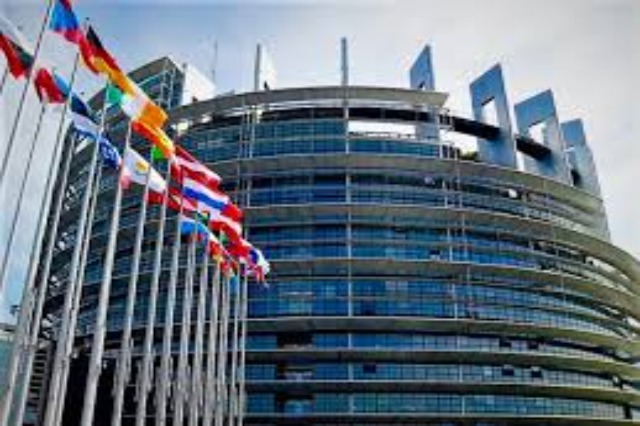
The European Commission will publish today the progress report on Albania and the Republic of North Macedonia, to see if the conditions for holding the First Intergovernmental Conference are met.
In the progress report published by Report TV, the European Commission estimates that Albania is ready to hold the first intergovernmental conference, while the absence of the Constitutional Court, the Media Law and the political climate are seen as problematic. Regarding the June 5 agreement between the political parties, it is considered a positive step.
Excerpts from the EC progress report made public by Report Tv:
Democracy
The political environment continued to be marked by intense polarization. The opposition decided to boycott the local elections of June 30, 2019. These were held while the President had issued a decision to postpone the vote to October. Parliament launched an impeachment proceedings against the President, which ended in July 2020. The country’s political stalemate saw no opening in January 2020, when the ruling majority and parliamentary and extra-parliamentary opposition reached an agreement to advance electoral reform by creating a platform to conclude technical and political talks. An agreement was finally reached on 5 June 2020. Amendments to the Electoral Code were adopted by Parliament on 23 July 2020, in line with the 5 June 2020 agreement and the implementation of OSCE / ODIHR recommendations. In addition, Parliament adopted on July 30th some amendments to the Constitution regarding the electoral system. These changes, which are not related to the implementation of the OSCE / ODIHR recommendations, required further changes to the electoral code which were discussed between the parties in the Political Council, but no compromise was reached before Parliament voted on them on 5 October. Despite the positive outcome of the agreement reached on 5 June 2020, the political dialogue in the country needs to be improved, especially on electoral reform and its implementation.
Elections
On June 30, 2019, Albania held local elections in a strongly polarized political environment. After giving up the bloc of parliamentary seats in February 2019 and months of street protests, the opposition decided to boycott the elections. On June 8, due to security threats, the President decreed the cancellation of his previous decree setting the election date and announced October 13 as the new date. The President’s decree was ignored by the ruling majority and election administration bodies. As the extra-parliamentary opposition tried to delegitimize the election, the international community warned that violence during the election process would be considered unacceptable. Mayoral candidates from the ruling Socialist Party (SP) ran unopposed in 31 of the 61 municipalities, of which the SP won 60 (the remainder was won by a small SP-backed party). Following the election, Parliament launched an indictment against the President for the unconstitutionality of his decision to annul the election date. Parliament’s ad hoc commission of inquiry concluded that while the President had exceeded his constitutional powers, the violation did not provide sufficient grounds for blaming the President. Parliament approved the finding of the ad hoc committee of inquiry on 27 July 2020.
The relevant ad hoc parliamentary committee is still in process.
In the final report from its election observation mission, the OSCE / ODIHR noted that, although the June elections were conducted without major problems, they were held with little care in the interests of voters, as voters did not have a full election of alternative policies. He further recommended: a comprehensive dialogue between political parties to carry out electoral reform; measures to eliminate misuse of state resources; de-politicization of the civil service, including the establishment of independent election commissioners; ensuring the independence and impartiality of the Central Election Commission and the judiciary; prompt and transparent investigation of allegations of election violations.
On January 14, 2020, the ruling majority and representatives of the parliamentary and extra-parliamentary opposition reached a progress agreement to advance the long-running electoral reform. The agreement set up a Political Council, an inter-party platform composed of two co-chairs of the Ad Hoc Committee representing the ruling parliamentary majority and the opposition, and two representatives of the extra-parliamentary opposition, to guide the reform on a consensual basis by implementing the recommendations. OSCE / ODIHR outstanding issues, providing transparent funding to political parties and election campaigns. The target date to reach a consensus within this framework was set at 30 June 2020.
After lengthy negotiations, on 5 June 2020, the Political Council reached a progress agreement to gradually introduce a politicized electoral administration, in line with the recommendation.
/Klara Ruci/
Të ngjashme


Most read










 RTI