
 English
 Français
  Deutsch
 Italiano
 Turkish
 Greek
Greek Serbian
Dora D’Istria: A Pioneer in Women’s Rights and Eastern European Intellectualism




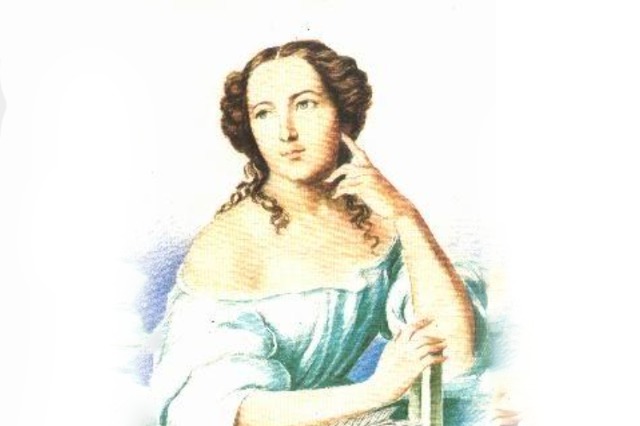
On January 22, 1828, Elena Gjika, known by her pen name Dora D’Istria, was born in Bucharest.
Although born in Bucharest and spending much of her life far from Albania, her Albanian heritage remained central to her identity and literary work.
“Since Skanderbeg’s compatriots are descendants of the Pelasgians, they must not forget that the illustrious Pelasgian lineage had to defend their ancestral land not only from the sultans but also from Slavic invaders,” she wrote, expressing her unwavering connection to her roots.
Elena Gjika was raised in a culturally rich family. Her father, Mihal Gjika, established Romania’s first national museum, while her mother, Katarina Gjika, was an accomplished translator and literary enthusiast.
She pursued advanced studies in literature in prominent academic centers across Europe, including Austria, Italy, and Germany.
In 1849, she returned to Bucharest to marry Russian Duke Alexander Kolstov-Massalski. After several years in Russia, she became widowed and chose to leave the country. She then embarked on extensive travels, dedicating herself to research and writing on a variety of subjects.
Her first published book, Monastic Life in the Eastern Church (La vie monastique dans l’Église Orientale), appeared in 1855, advocating for the abolition of monastic orders. Central to her work was the theme of gender equality. In Women in the Orient (Les femmes en Orient, 1859) and On Women, by a Woman (Des femmes, par une femme, 1869), she focused on the emancipation of women in the Levant and explored the differing conditions of women in Southern Europe and Germany.
Elena Gjika passed away in Florence on November 17, 1888, at the age of 60.
/a.c/
Të ngjashme









Most read









 RTI
RTI