
 English
 Français
  Deutsch
 Italiano
 Turkish
 Greek
Greek Serbian
Honoring Skanderbeg: 557 Years of Albanian Resistance and National Unity




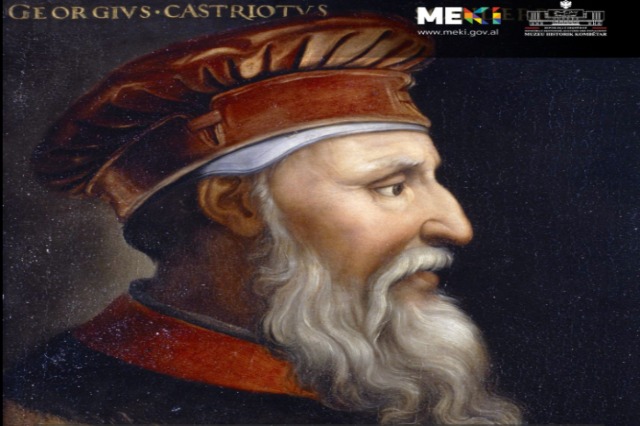
On January 17, 1468, 557 years ago, our National Hero, Gjergj Kastrioti Skanderbeg (1405-1468), passed away. A renowned strategist and statesman, Skanderbeg led the fight for freedom and independence against the Ottoman Empire, striving for the political and state unity of the Albanian people. He represents not only the most significant figure in Albanian history but also an entire era in the nation’s development. His legacy is deeply intertwined with the prolonged struggle against Ottoman rule.
The Albanian resistance, under Skanderbeg’s leadership, marked a crucial turning point in the country’s political organization and the strengthening of national unity. After liberating Kruja on November 28, 1443, he raised the flag of the Kastrioti family. On March 2, 1444, in the Cathedral of St. Nicholas in Lezha, Skanderbeg convened the First National Assembly.
As the leader of the assembly, he stressed the critical importance of Albanian unity. This assembly laid the foundation for national cohesion. The mass mobilization of Albanian forces, which began in Dibra, expanded rapidly across the country, evolving into a full-scale revolt. Within months, several principalities were liberated, and much of Albanian territory was freed. Under Skanderbeg’s leadership, Albanian forces achieved significant victories against the Ottoman armies, notably in the fields of Pollog, Dibra, Ohrid, Domosdovo, the Shkumbin River valleys, the Uji i Bardhë plains, Livadi near Ohrid, and Vajkali.
After years of resistance against Ottoman occupation, Gjergj Kastrioti Skanderbeg died in Lezha. His figure and the war he led became a lasting source of inspiration, particularly during the wars for independence and the National Renaissance.
/a.c/
Të ngjashme
Most read






 RTI
RTI