
 English
 Français
  Deutsch
 Italiano
 Turkish
 Greek
Greek Serbian
Theofan Noli: A Central Figure of the Albanian Nation




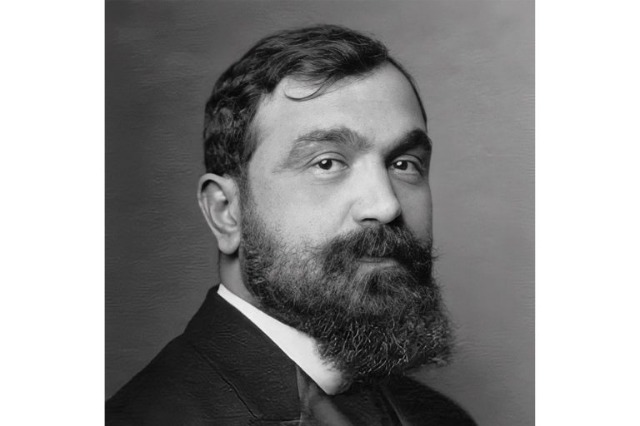
Born on January 6, 1882, Theofan Noli, widely known as Fan S. Noli, is regarded as one of the most influential and multifaceted figures in Albanian history. Noli’s contributions span a range of fields: he was the founder of the Albanian Autocephalous Orthodox Church, a prominent translator, poet, playwright, politician, diplomat, historian, and musician. His legacy encompasses his work in both the political and cultural spheres, leaving a profound impact on Albania’s national identity.
Noli was born the second of twelve children to Stilian and Maria Noli, of whom only six survived to adulthood. His family, Albanian herders, lived in Ibrik-Tepe, an Albanian settlement in what is now European Turkey. Raised in a modest environment, Noli’s early experiences shaped his lifelong commitment to his country’s cultural and political independence.
Though Noli dedicated much of his life to advancing the national cause, he was also deeply involved in literary and translation work, making significant contributions to Albanian culture and intellectual life. His political career began on April 5, 1921, when he was elected a Member of Parliament (MP) as a representative of the Albanian-American Colony in the second legislature (April 21, 1921 – September 30, 1923). His work as an MP marked the beginning of his role in Albania’s political transformation. Noli later served as Minister of Foreign Affairs and played a key role in leading the People’s Party, which advocated for democratic reforms.
Noli became a central figure in the June 1924 Democratic-Bourgeois Revolution, a movement that sought to bring about greater democracy in Albania. After successfully becoming Prime Minister, Noli introduced a twenty-point program aimed at modernizing and democratizing the country. However, following the defeat of the revolution by the Legality Movement, Noli was sentenced to death in absentia. Despite his exile, Noli continued to advocate for Albania’s progress and reform from abroad.
In the 1930s, Noli shifted his focus from politics to musicology and history, returning to two early passions. In 1935, widely known as a clergyman and politician, Noli pursued his interest in music by enrolling at the New England Conservatory of Music in Boston at the age of 53. He graduated in 1938, and his thesis, ‘Beethoven and the French Revolution’, was published, marking a major contribution to the field of musicology. Noli’s work extended beyond music to historical scholarship; he published ‘History of Skanderbeg’, a significant historical opera that remains a milestone in Albanian historiography.
Noli’s academic achievements included earning a first-level scientific degree in music. His fascination with music had its origins in the church. In 1908, he founded the Albanian Orthodox Church in Boston, where he became its leading reformer. His efforts to modernize the church were groundbreaking, particularly his introduction of hymns sung in Albanian, performed by a mixed choir of men and women. This innovation mirrored the style used in Western churches for mass, oratorios, requiems, and madrigals. Noli’s translations of hymns and their performance in Albanian were a monumental cultural and religious achievement, helping to shape the religious identity of Albanian communities in the United States and beyond.
Fan Noli was also a distinguished translator, renowned for his contributions to the Albanian literary canon through his translations of classical literature. His translations spanned works of both Western and Eastern literary traditions, bridging cultures and enriching Albanian literature. Among his most notable translations are the works of William Shakespeare and Miguel de Cervantes’ Don Quixote, as one of the most influential works of Western literature ever written. Noli’s translations of Shakespeare’s plays remain even now a day’s masterpieces of translation in Albanian, as timeless texts. Noli’s translations were marked by his deep understanding of both languages and cultures, ensuring that the essence and beauty of the original works were preserved in his adaptations.
Noli’s work as a translator was not only important for cultural preservation, but also for the promotion of literary excellence in Albania. By making classical works available in the Albanian language, Noli played a key role in broadening the intellectual horizons of the Albanian-speaking population, laying a foundation for future generations of writers, poets, and thinkers. His translations have remained influential, and Noli’s efforts in this field are considered a crucial part of his broader cultural and national contribution.
Fan Noli’s legacy is that of a visionary who shaped Albania’s national identity in multiple arenas—political, cultural, and religious. His contributions continue to influence Albanian society today, and he remains a key figure in the country’s history.
/a.p./
Të ngjashme
Latest News

Most read






 RTI
RTI