
 English
 Français
  Deutsch
 Italiano
 Turkish
 Greek
Greek Serbian
Remembering Gjergj Bashta: A Key Figure in European Military History




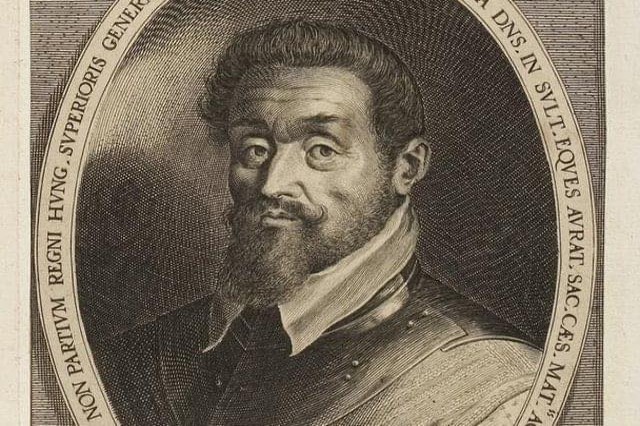
The Center for Studies and Publications for the Arbëresh commemorated the 417th anniversary of the death of the strategist, military theorist, and general with European and global fame, of Arbëresh origin, Gjergj Bashta.
Born in 1544 in Rokaforcata (Roccaforzata), near Taranto, in a family with military traditions, Bashta joined the military units formed under Ottoman occupation, known as “stratiots,” which served in Venetian territories, Italian states under the German Empire, France, Flanders, and more.
Gjergj Bashta completed his studies in the city of Asti, Italy. He organized, led, and fought in numerous battles as the commander of Spanish armies in Belgium, the Netherlands, and France, as well as German armies in Hungary, the Balkans, and Transylvania against Ottoman forces. Bashta transmitted the tradition of using and directing light cavalry, a tactic inherited from Skanderbeg’s army, to European forces in the 16th and 17th centuries.
In a letter from 1759, the Himariotes listed his name alongside those of Pyrrhus and Skanderbeg. In 1907, Albanian-Americans mentioned Bashta in a letter to the Hague Conference, alongside other prominent figures of the Albanian people. The name of Bashta became known to Albanian scholars and readers when historian Dhimitër Pilika brought it to light from Prague archives and published it in the “Ylli” journal in 1966.
Gjergj Bashta wrote three significant military works recognized in Europe: Il maestro di campo generale (The General Fieldmaster) in 1606, Governo della cavalleria leggera (On the Command of Light Cavalry) in 1612, and Sull’arte di dirigere l’artiglieria (On the Direction of Artillery) in 1612. He passed away in the city of Quatre, Belgium, and was buried with ceremony at the Church of the Holy Cross in Vienna in 1607.
/a.c/
Të ngjashme
Latest News
Most read







 RTI
RTI