
 English
 Français
  Deutsch
 Italiano
 Turkish
 Greek
Greek Serbian
Petro Marko: A Modernist Pioneer in Albanian Literature and Unyielding Humanist




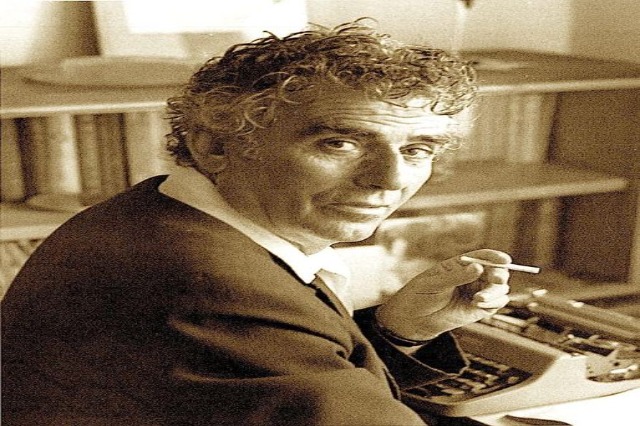
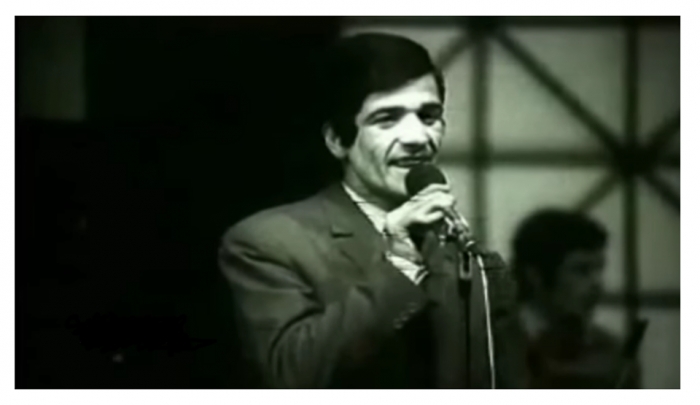
Petro Marko (1913–1991) was a distinguished Albanian teacher, journalist, publicist, and writer, known for his modernist prose that broke the rules of socialist realism, even though his work was created during that period. Born in Dhërmi on November 25, 1913, he completed his primary education in his hometown before attending the Commercial School in Vlora, graduating in 1932. During this time, he was influenced by key figures such as Kolë Kamsi and Ernest Koliqi, and he was taught by many Italian educators.
After completing his studies, Marko moved to Tirana, where, with the help of Hilë Mosi, the Minister of Education at the time, he became a teacher in Dhërmi. Later, he was transferred to the village of Drovjan in Dropulli. During this period, he faced political difficulties and immigrated to Greece, where he initially stayed in Corfu and later moved to Athens, joining his brother Dhimitri. He enrolled in the Faculty of Literature there.
Marko eventually returned to Tirana, where he worked with Branko Merxhani and Ismet Toto on the newspaper ‘Koha e Re’, which was short-lived. He then contributed to various other newspapers such as ‘Illyria’ and founded the magazine ‘ABC’ with Merxhani and others in 1936, though it also ceased publication after just two issues. During this time, he was exiled to Porto Palermo and Llogara but was later released due to the intervention of Merxhani and Toto.
In the late 1930s, Marko left for Spain, joining the International Brigades during the Spanish Civil War. He participated in the Anti-Fascist Writers’ Meeting in Valencia alongside prominent figures like Ernest Hemingway and Pablo Neruda. After the war, Marko moved to France, where he continued his work as an agitator, helping to organize university students in Grenoble with the support of the International Red Aid.
In 1940, he returned to Albania, where he was arrested and imprisoned several times. After the defeat of fascism in Italy, he was freed and became involved in post-war Albania’s literary and journalistic activities. However, his critical writings soon led to his imprisonment again. In 1950, he was released, but in the 1970s, he faced further repression, with his publishing rights revoked, and his son, Jamarbëri, was imprisoned.
Marko’s literary work includes poetry, short stories, and novels
Petro Marko began writing poetry and short prose during his school years in Vlora. The Minister of Education, Mosi, once told him, “Write poems. Poetry is the most human form of thought and heart expression.” He wrote “One Night and Two Dawns,” the poems “Nase Labi,” “The Horizon in the Wallet,” “The Parade of the Hungry,” and the novels “Kodashi,” “On the Roads of War,” “Endless Departure,” and “The Captain’s Daughter” during his time in Italy. In Albanian culture and literature, Petro Marko was a personality of great significance with an unshakable spirit and mind in the face of any storm.
Those who knew Petro Marko closely felt that within him radiated a profound belief in humanity and goodness. Only such a high spirit could endure repeated confrontations with death, which he experienced many times throughout his life. And whenever he stood up, he would start the battle against evil again, with the same strength of belief, with the same radiance of goodness. The reader feels this in Petro’s novels ‘Hasta la Vista’ (1959) and ‘The Last City’ (1960), where his life path, artistically assimilated, is so present. In the 1970s, he wrote the novel ‘A Name in Four Streets’, while he immortalized the difficult period of his life on the island of Ustika in his important novel ‘The Night of Ustika’.
The appearance of Petro Marko as a writer with his first two novels, ‘Hasta la Vista’ and ‘The Last City’, in the 1960s represents a true turning point in the short history of the Albanian novel. This is not about the rounding off of a creative experience, but rather about an interruption and departure from a creatively forced experience within the previous literary currents of Albania. It was an aim for the narrative form of the novel to be liberated, to open up as a vision, a creative universe, and as a thematic spectrum, which was partially seen in the 1940s and 1950s.
Alongside this internal drive, both of the mentioned novels stand out as superior in artistic articulation compared to earlier works in the same genre. These works are significant for their innovative nature, for a nature that demands true changes in literary values. All of Petro Marko’s works were loved and sought after by readers.
The most powerful pages of Petro Marko’s prose reflect the triumph of love and humanism. After all the hell he endured in the stories he wrote, the human spirit in his works remains undefeated by the world’s cruelties. This inner core shines through his characters, and this biblical glow is reflected in both Petro Marko the man and Petro Marko the writer in all of his works.
There is no example in Albanian literature where the human and the creator, Petro Marko the man and Petro Marko the writer, are so intricately intertwined. With his novels, Petro Marko became one of the most distinguished personalities in Albanian culture, bringing true innovations to the Albanian literary tradition.
In his work, there radiates a belief and a natural faith in love and humanism, despite the fact that during his life, he was one of the most persecuted and tormented personalities. In 2000, his wife Safo and their daughter Arianita published ‘Clouds and Stones – An Interview with Himself’, an autobiographical work in which an older Petro Marko questions a younger version of himself; this book, which had remained a manuscript, was something he had longed for.
There is no example in Albanian literature where the individual and the creator are so deeply intertwined as in the case of Petro Marko—the man and Petro Marko—the writer. Through his novels, Petro Marko entered the ranks of the most distinguished figures in Albanian culture, bringing genuine innovation to the country’s literary tradition. His work radiates a profound belief in love and humanism, even though during his lifetime he was one of the most persecuted and tormented individuals. In 2003, the President of Albania, Alfred Moisiu, honored Petro Marko with the “Honor of the Nation” Order.
Të ngjashme
Latest News

Most read







 RTI
RTI