
 English
 Français
  Deutsch
 Italiano
 Turkish
 Greek
Greek Serbian
Mit’hat Frashëri – Albanian diplomat, writer and politician




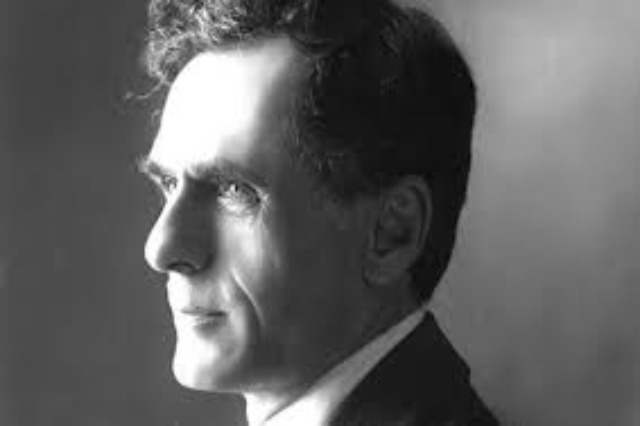
Mit’hat Frashëri, the son of the prominent Albanian National Renaissance figure Abdyl Frashëri, was born on March 25, 1880, in Janina. He is also known by the pseudonyms Lumo Skëndo and Mali Kokojka. Mit’hat barely knew his father, as Abdyl Frasheri passed away young in prison. Raised under the guidance of his uncles, the renowned Albanian Renaissance leaders Sami and Naim Frashëri, Mit’hat received a comprehensive academic education in Istanbul. A patriot and intellectual, Mit’hat always kept in his heart the legacy of his father, who had fought for Albania’s independence and was executed by the Young Turks during his imprisonment.
Until 1905, Mit’hat worked in the Ottoman administration, later moving to Thessaloniki, where he served as the political director of the Thessaloniki Vilayet. He became active in Albanian politics at the end of the 19th century and emerged as a prominent figure in the Albanian political landscape. Mit’hat was part of the Thessaloniki club in Monastir (Bitola), where Albanian patriots gathered.
He played a crucial role in maintaining the unity of the “Bashkimi” club in Monastir, particularly in resolving disputes between the Gegs (mainly from Dibra) and the Tosks, by dissolving the previous leadership on September 20, 1908.
In his journalistic writings, he used the pseudonyms Lumo Skëndo and Mali Kokojka, and for some publications, he signed as Ismail Malosmani. In 1901, he wrote a biography of Naim Frashëri, the “Ashes and Embers”, and the study “Albania’s Future”. His notable works include the 1924 sociopolitical and ethnic essay “Our Wounds”. Frashëri also published several works in French, including The Epirus Affair (1915), The Population of Epirus (1915), The Albanians at Home and Abroad.1919), and Albanians and Slavs (1919).
He translated into Albanian notable works like Lamartine’s ‘Guillaume Tell’ (1898), Franc Hofman’s (Do Good and Cast it into the Sea, 1900), Defoe’s ‘Robinson Crusoe’ (1909), and Gustave Le Bon’s ‘Psychology of Education’ (1923).
In July 1908, Mit’hat Frashëri founded the newspaper “Freedom” in Thessaloniki and published the magazine “National Calendar” from 1897 to 1928. In 1909, he founded the magazine “Knowledge”, initially in Thessaloniki, later in Constanta, and eventually in Tirana.
That same year, he was elected president of the Monastir Congress and vice-chairman of the Alphabet Commission. In 1909, he also participated in the Elbasan National Congress and later in the Vlora National Assembly on November 28, 1912, where he signed the Declaration of Independence as a delegate from Përmet, Elbasan, and Peja.
In Ismail Qemali’s government, he was appointed Minister of Public Works, and in the cabinets of Turhan Pasha Përmeti, he served as Minister of Public Works and Post-Telegraph. Between 1918 and 1920, he was a Minister without Portfolio and was part of the Albanian delegation at the Paris Peace Conference (1919–1920). In 1920, he represented Albania at the League of Nations and served as Albania’s Minister Plenipotentiary in Greece from 1923 to 1925. Between 1926 and 1939, he opened the bookstore “Lumo Skendo” in Tirana.
Persecuted by the communist regime for founding the National Front organization, Mit’hat Frashëri fled to Italy and later to London after World War II, where he established the “Free Albania” Committee. His entire library, comprising around 20,000 volumes—the largest in Albania at the time was confiscated by the communist regime.
He passed away in 1949, in New York. He has been posthumously honored with the “Gjergj Kastrioti Skanderbeg” Order.
/k.s/
Të ngjashme
Latest News

Most read






 RTI
RTI