
 English
 Français
  Deutsch
 Italiano
 Turkish
 Greek
Greek Serbian
In memoriam of the first Albanian scientist, Sabiha Kasimati




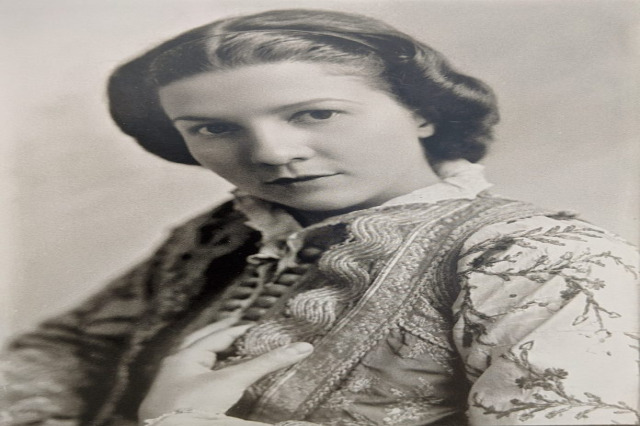
The National Museum of Recordings “House with Leaves” commemorated today the well-known Albanian biologist and scientist, Sabiha Kasimati (September 15, 1912 – February 26, 1951).
Sabiha Kasimati was born on September 15, 1912, in the city of Edirne, Turkey. Upon her family’s return to Albania, she was educated at the French Lyceum of Korça. Due to her excellent academic performance, she was awarded a scholarship by the state to study at the University of Turin, Faculty of Biological Sciences. Sabiha Kasimati completed her doctoral studies in 1941 with outstanding results in the field of ichthyology. That same year, she returned to Albania to contribute to science and education.
In 1943, she was appointed as a scientific employee at the first academic institution, named the Royal Institute of Albanian Studies. However, due to health issues, she had to travel to Italy for treatment, returning in 1945. With the establishment of the dictatorship, she initially worked at the Institute of Sciences, where she resumed her work in the field of ichthyology. In 1948, she completed a study on fish in Albanian waters. However, this study was published in 1955 under the name of the Russian scientist Anatoly Polyakov and two newcomers to the field of ichthyology, Ndoc Rakaj and Ndoc Filipi.
Seeing the political developments in the country, Sabiha Kasimati expressed her dissatisfaction with the governance of the communist state. As a result, she began to be pursued by the State Security. Her name was linked to the explosion at the Soviet Embassy, and she was accused of participating in terrorist organizations and cooperating with foreign agencies, charges she never accepted.
A few days after the incident at the embassy, she was shot on February 26, 1951, along with 21 other intellectuals.
In 2011, coinciding with the 60th anniversary of her murder, the President of the Republic of Albania, Bamir Topi, honored Sabiha Kasimati with the title “Honour of the Nation”.
The “House with Leaves” museum recalls that during the dictatorship period in Albania (with a population of one million inhabitants in 1945 and approximately three million in 1990), about 18,000 people were imprisoned for political reasons, nearly 8,000 of whom were women. More than 6,000 people were executed with or without trial for political reasons, including 450 women.
/m.ll/
Të ngjashme
Latest News

Most read








 RTI
RTI