
 English
 Français
  Deutsch
 Italiano
 Turkish
 Greek
Greek Serbian
Birth anniversary of Ismail Qemali, an important figure of the Albanian nation




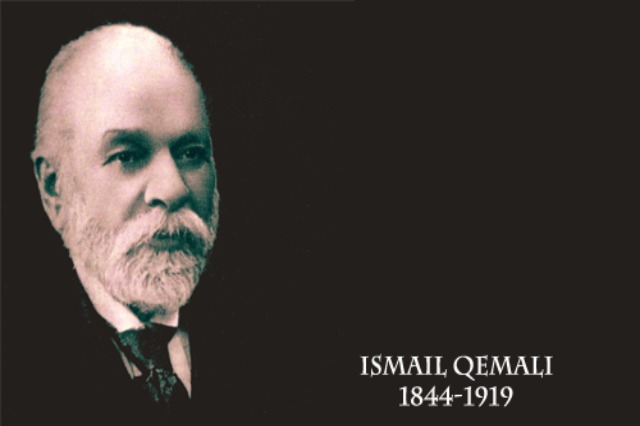
On January 16, 1844, Ismail Qemali, considered the Father of the Nation, was born in Vlorë. Ismail Qemali was born into one of the largest families in Southern Albania.
After completing primary school in his hometown, he continued his studies at the Turkish comprehensive school in Thessaloniki, where his family was interned, and then completed the “Zosimea” gymnasium in Ioannina. In 1860 he worked as a translator at the translation office of the High Gate. From 1862-1864 he served in the local administration in Ioannina and then moved to Tërhalle (Thessaly) and again to Istanbul.
He participated, together with Jani Vreto, Hoxha Tahsin, Kostandin Kristoforidhi, Pashko Vasa and Sami Frashëri, in the first meeting for the assignment of the Albanian alphabet and for the formation of an Albanian cultural society.
Ismail Qemali subsequently had a series of high positions in the Turkish administration such as: chief secretary of the Ministry of Foreign Affairs in Istanbul, governor of the Lower Danube, etc. In 1877, the High Gate accused him of being an opponent of the politics of Sultan Abdyl Hamit II and a supporter of the liberal views of Mithat Pasha (high official of the Empire, reformer, oppositionist). With these accusations, the High Gate sentenced him to 7 years of exile in the cities of Kytahja, Eskishehir and Bursa in Anatolia. In 1900, to escape the Sultan’s persecution, he left Turkey and submitted his resignation to the Sultan, motivating his departure from Istanbul, that in this way he would better express his ideas and devote proper attention to the Albanian issue.
Ismail Qemali stayed in different countries of Europe where he set contacts and cooperated with the political circles of the Albanian National Movement. He became active in the Albanian patriotic movement, participated in the efforts to establish a common alphabet of the Albanian language and to form an Albanian cultural society.
Ismail Qemali also developed intensive political activity in Europe for the recognition of the nation and its rights. He would soon announce in the local and foreign press of the time his political platform for the complete autonomy of Albania from the Empire. He participated in the Young Turk movement, in its progressive wing, which was for the recognition of the rights of the nations of the Empire, but he turned against the Young Turks when they took power and established a military dictatorship. In 1909, he participated in the counter-revolution against the Young Turks and was elected chairman of the Liberal Party (Ahrar). He distinguished himself as the inspirer and organizer of the anti-Ottoman uprising of 1910-1912. Together with Luigj Gurakuqi and other patriots, he drafted the Memorandum of Greece of June 1911 and at the end of that year took the initiative to organize the General Uprising of 1912.
On November 19, 1912, he announced to his compatriots that a National Assembly would be convened in Albania. In this assembly, which was convened under his chairmanship on November 28, 1912, he read the declaration of independence of Albania and raised the national flag. After that, he was appointed head of the Provisional Government and Minister of Foreign Affairs. In his foreign policy, Ismail Qemali became incompatible with any violation of national independence and sovereignty.
Despite the difficult internal and external conditions, the government headed by Ismail Qemali took a series of measures for the organization and construction of the independent state. In all these activities, Ismail Qemali proved to be a far-sighted statesman and diplomat, he resolutely defended the independent Albanian state.
/k.s/
Të ngjashme
Latest News


Most read








 RTI
RTI