
 English
 Français
  Deutsch
 Italiano
 Turkish
 Greek
Greek Serbian
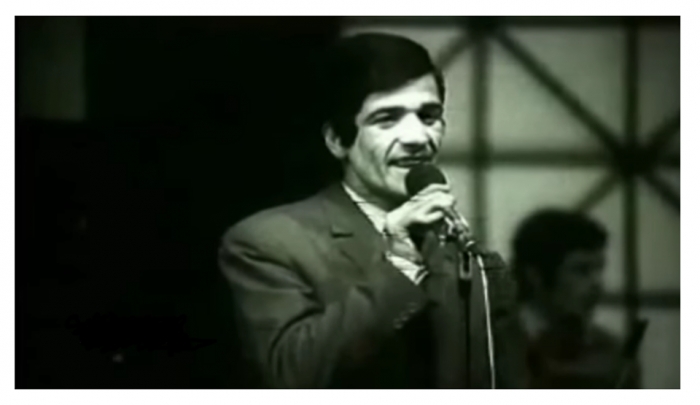
In memoriam of the colossus of Albanian letters, Pashko Gjeçi




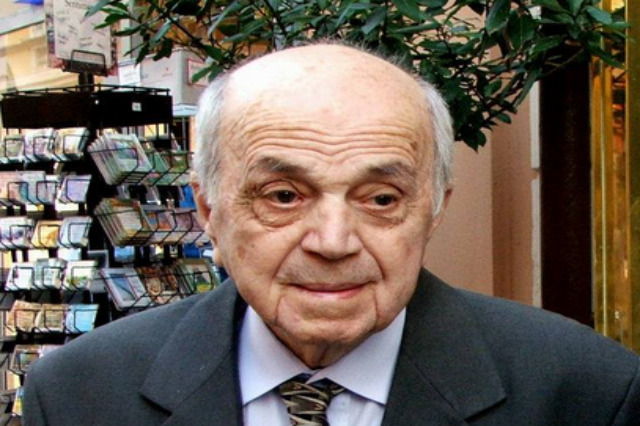
The National Museum “House with Leaves” pays tribute to renowned poet and educator Pashko Gjeçi (September 7, 1918 – January 21, 2010). Pashko Gjeçi is one of the giants of Albanian literature, the exceptionally talented translator who introduced works like Dante Alighieri’s Divine Comedy, Goethe’s Faust, Homer’s Odyssey, and more to the Albanian language.
Pashko Gjeçi was born in the city of Shkodra in 1918. He embarked on his educational journey at the College of the Jesuits, although he couldn’t complete his studies there due to the closure of religious schools during that period. Following his impressive performance in high school in Shkodër, Pashko earned a scholarship in 1938 to pursue higher education in Italy. In 1943, he graduated with distinction from the Faculty of Philosophy and Literature in Rome. His diploma thesis, titled “The Life and Works of Dom Ndre Mjeda,” demonstrated his scholarly prowess.
Forced to work as an assistant-pedagogue, Pashko Gjeçi, motivated and encouraged by Ernest Koliqi to make his own meaningful contributions to his homeland, decided to return to Albania in the same year. The Ministry of Education at that time appointed him as a professor of literature and Latin at the Shkodra gymnasium.
However, after the communists came to power, Pashko’s life took a different turn. He continued to teach at the gymnasium in Shkodra until the middle of 1945, and then he relocated to the city of Durrës. Unfortunately, he was arrested as being involved in an organization, which aimed to violently overthrow the communist government in Albania.
As a result of the trial, Pashko Gjeçi was sentenced to five years in prison, the majority of which he served in Durrës and the Maliqi swamp, particularly during the summer months. Following his release from prison, Gjeçi returned to his hometown of Shkodër. There, he embarked on the ambitious task of translating the renowned Italian poet Dante Alighieri’s works into Albanian.
Between 1968 and 1972, he also took up a teaching position, imparting his knowledge of Latin at the Faculty of Medicine. Additionally, he worked as a proofreader in close proximity to the textbook publishing house until his retirement in September 1978.
In 1976, his translation of “Odyssey” was published. With the fall of the communist regime and the advent of the 2000s, the masterpieces he translated into Albanian not only saw reprints but also found their way into publication for the first time. “The Divine Comedy” and “Odyssey” were reprinted in 2006, while the first part of “Faust” was published in 2008. Rasini’s works “Andromache” and “Atalia” also published in 2010. Pashko Gjeçi’s dedication to literature and translation left a lasting legacy in the Albanian literary.
In the 1970s, the Italian association “Dante Alighieri” recognized Pashko Gjeçi’s Albanian translation of the “Divine Comedy” as one of the top three translations of this literary masterpiece worldwide. This recognition highlighted the exceptional quality and significance of his work.
In 2004, Pashko Gjeçi received a high honor when he was decorated by the Italian President, Carlo Azeglio Ciampi, with the “Order of the Star of Italian Solidarity.” This award was bestowed upon him in recognition of his outstanding translation of Dante Alighieri’s works, a testament to his remarkable contribution to Italian-Albanian literary relations.
To commemorate the 90th anniversary of his birth, the Ministry of Tourism, Culture, Youth, and Sports of Albania awarded Pashko Gjeçi the prestigious National Translation Award “Fan Noli” for his translation of Goethe’s “Faust” (Part I). This recognition further underscored his significant role in bringing world literature to Albanian readers.
Pashko Gjeçi’s impressive journey in the world of literature came to an end when he passed away at the age of 91. His enduring legacy lives on through his exceptional translations and contributions to the literary heritage of Albania.
/m.ll/
Të ngjashme
Latest News
Most read



 RTI
RTI