
 English
 Français
  Deutsch
 Italiano
 Turkish
 Greek
Greek Serbian
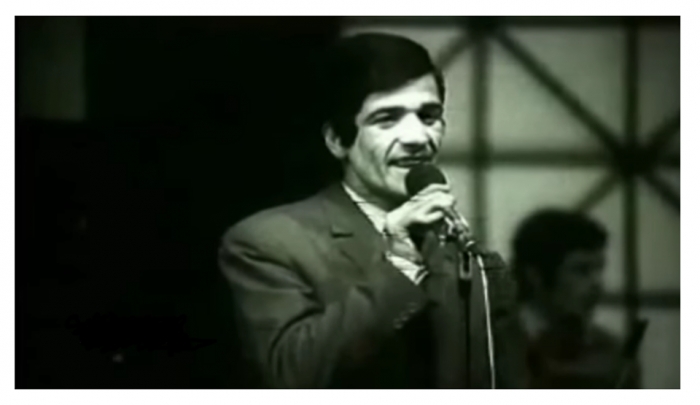
Albanian well-known playwright Ruzhdi Pulaha




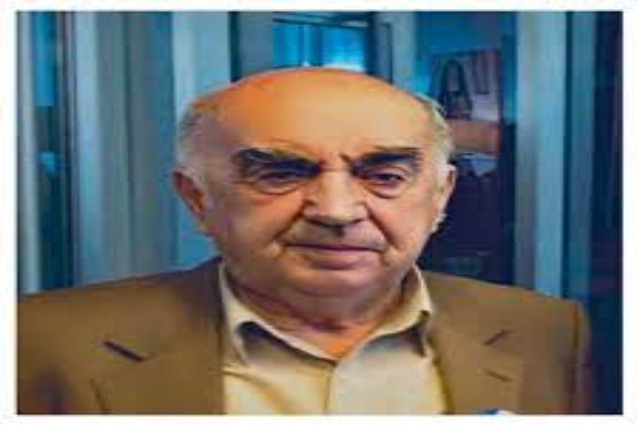
Ruzhdi Pulaha is an Albanian writer who has created mainly in the genre of drama. His plays and comedies have been staged not only in the National Theatre, but also in Korça and other theaters in the country. Pulaha was born in 1942 in Korça.
After studying language and literature at the University of Tirana, Pulaha worked for about ten years at Albanian Radio and Television. In 1975, he was appointed a teacher in Pogradec. After four years, he returned to Tirana, this time as an author at the National Theatre, a function he held until 1986, when he became a freelance artist. In 1992 he was elected Member of the Parliament. At the end of the legislature, he retired from politics. A committed author, Pulaha stands out for his polemical spirit in dealing with the acute conflicts of the day in his plays. The action in these works often provokes heated social and political debates, as in a courtroom. Through them, a cathartic effect is aimed at the audience, which should encourage the spirit of opposition to injustices of any kind.
The style of this author stands out for the simple composition, the clear and flowing action, the concrete and direct dialogue, the excellent drawing of the characters, as well as the high tempo. Strongly attached to realism, he has not attempted to experiment with alternative methods.
Talent and civic commitment have made him successfully overcome the change of the political system in Albania. After several successful dramas before 1991, such as “Maro Mokra”, “Literature teacher”, “In front of yourself”, “Under the stage lights”, “Patient doctor”, “Tomorrow is late”, “Stairs” or comedy, he spends a period of “transition” as the screenwriter of the first Albanian radio novel “Pine Street” (in collaboration with BBC Radio). In 2000, he returned to the stage with “Crazy Time” and managed to become sought after and staged again, with “Shelter of the Forgotten” (2004). In the years 2001 – 2002, he was also the screenwriter of the first Albanian soap opera, “People and Fates”.
Ruzhdi Pulaha is the best-known writer in Albania, he has written very popular films such as “The Lady from the City” and “The Friend from the Village”.
The conflict is provoked by an arbitrary, or administrative action, and then thrown for judgment to the broad mass of people, mainly in the form of a meeting, a social trial, a confrontation, etc., where a call is made for spiritual reformation, for attitudes courageous and socially useful morals, against the corrupt and bureaucratic manifestations of the administration, criticism which sometimes touches even the high ranks of the state (the dramas Tomorrow is Late, The Teacher of Literature, The Stairs, Denunciation etc.), which also marks the most advanced and daring critical position for the time. After the drama “Sons of Bato Gora”, which dealt with the conflict “within us” as well as the corrupting action of the “class enemy”, he achieved a well-deserved success with the brilliant comedy “Lady from the City”, which was first staged at the Theater of Korça (1974) and then in the People’s Theatre (1975), followed by the current comedy “Lady from the village” (1979), which, although it caused humor by creating pleasant situations, excessively embellished its main character, Ollga, turning her into the well-known cliché of the “positive hero”. With the drama Maro Mokra, Pulaha elaborated another type of drama, the epic-heroic one, thanks to a high concentration of dramatic action in the unexpected and courageous behavior of the heroine.
In the dramaturgical typology applied by the author, namely the imposing principles of the solidified aesthetics of socialist realism, the well-known scheme of the successful resolution of the contradictions of the war, always triumphantly, transforming it, as a rule, into a political revolution for the seizure of power and the liquidation of opponents labeled as traitors, collaborators with the occupier, etc. Something different, but always of this format, are also the solutions offered for the contradictions in the economic field, expressed as mainly non-antagonistic conflicts; further the solutions that include the attitude towards work, property, joining or not in the cooperative, etc.
These were necessarily accompanied by the unmotivated “turns” of “lied”, compromised, confused or unconscious individuals into the lap of the “class enemy”, most often as an identifiable physical enemy but also as a hostile ideology; the latter is usually camouflaged and difficult to identify (for example the dramas: The Boys of Bato Gora, Facing Yourself, The House with Two Gates, The Patient Doctor, The Shadow of the Other). Some openly political dramas such as Furnace (1979), Communists (1981), although with clear dramaturgical structures, strong conflicts, mass reactions and honorable situations, became bearers of the political myths of the time: the first by sublimating the historic action of the establishment of the Albanian Communist Party and its militants in the anti-fascist resistance, the second by glorifying the Party of Labor of Albania act in unmasking the Communist Party of China as revisionist and facing the blockade and their sabotage in the field of heavy industry. This type of drama, let’s call it political with chronic and documentary elements, was modified in the “epic” drama, with large masses of people, who required from the author sharpness in the weaving of episodes and an elastic relationship between the hero and others, where warm life lines were inevitably introduced, especially those related to the concerns of the protagonists and their follow-up in the family, in the couple’s relationship, in the trust of a friend or relative.
In “Stage Lights”, “Denunciation”, etc., Pulaha prefers the form of thesis and antithesis, which also create the preferred object of controversy between the characters. The typology that rises above a dramatic character as a pivot and others around, who intervene, explain, influence, disrupt or fix things in his life and deeds – this is another successful structure of his plays. The literature teacher is identified as the most prominent of this type. Through the consistent attitudes of Sami, the main hero, the author stood up and boldly criticized the abusive authority of state bodies, the psychological pressure that was exerted on the honest individual through threats and fear, but the direction and encouragement of the critical spirit came, in fact, from the party dome itself.
Even in the drama “Stairs” (1990), which appeared in the last period of the dictatorship, the corrupt tendency of the people cloaked in power was strongly criticized, giving the sign of the cellular decomposition of the system. However, the direction of this criticism, almost certainly, came from a) the already known conservative and puritanical position offered by communist politics and ideology, or b) from the conservative ethnopsychological tradition, but self-proclaimed as a moral substratum and a mandatory norm of behavior, which , both of them valued the “freedom” of the individual and the “privacy” of his life as a sin, excess, degeneration or immorality.
The merit of the author’s plays is the controversial spirit, the tendency to affirm sound moral values, appealing for honesty and civic courage. Ruzhdi Pulaha can be regarded as the most courageous playwright before the 90s, whose criticism touched the high spheres, especially the state ones, of political corruption. This ubiquitous trend in the dramas of the socialist period was also seen in the dramas after the 90s, when political freedom was guaranteed by law, as in the drama “Denunciation”(crime, corruption in the courts, the will and honesty to overcome and punish them) , the comedy “Crazy Time” (mocking the speculations on pluralism and the creation of all sorts of small and insignificant parties for the effects of profit and fake authority), “Unnamed Time” (the collision of two times in the early 90s, political confusion and social anarchy, the need for national reconciliation, generational contradictions), “Refuge of the forgotten” (dissolving human values from the misunderstandings of “free society”, appeal for love, understanding, reconciliation; the need for respect and attention to the third age, often found in marginal, abandoned and ignored by the emigrant sons).
/k.s/
Të ngjashme
Latest News
Most read





 RTI
RTI