
 English
 Français
  Deutsch
 Italiano
 Turkish
 Greek
Greek Serbian
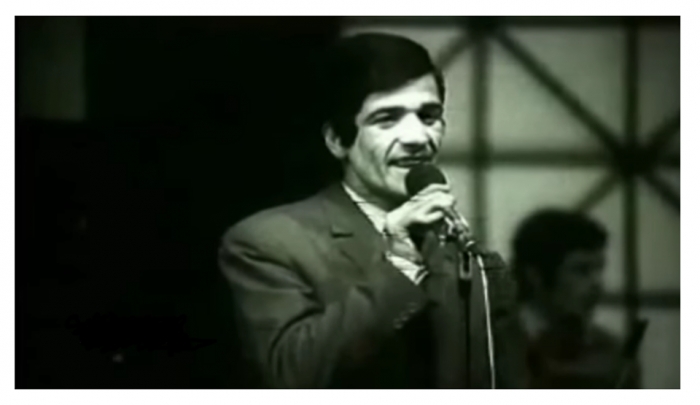
Ramadan Sokoli,the first Albanian musician, composer, writer and ethnomusicologist




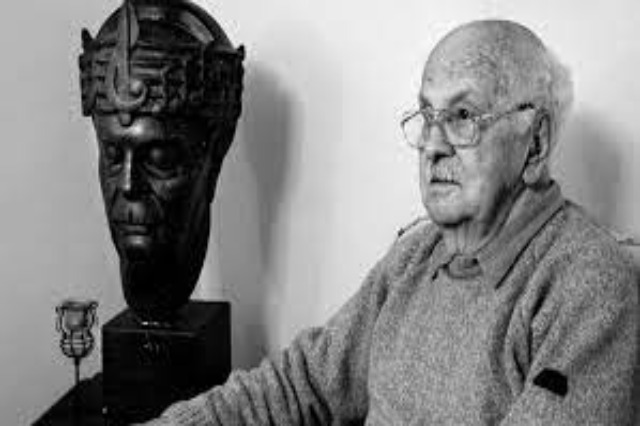
Ramadan Sokoli was the first Albanian musician, composer, writer and ethnomusicologist. He is regarded as one of the greatest researchers of Albanian and Balkan music, especially for his study of late Ottoman music, its mekams and practices.
He was born on June 14, 1920in the Dërgut neighborhood of Shkodra, the son of Isuf of Hodo pashë Sokol and Aishe Juka. His father was a translator at the Yugoslav consulate in the city from 1920 until at least 1936. He completed primary school in his hometown in the years 1927-’31 and from the second grade he learned music notes by playing several musical instruments. He finished high school in the state gymnasium in the years 1931-’39 in that city. From an early age, he was part of the Shkodra City Brass Band, which was famous at the time. Around the age of 16-17, he started composing. He made some songs that would later be sung in concerts or on Radio Tirana.
After the Italian occupation of Albania, he is reported to be among the participants of the first anti-fascist demonstration with students and boarders of Shkodra. The collaborationist authorities exiled his father to Bologna, where Ramadani went to see him often.
After graduating high school with high marks, he won a scholarship to attend the “Luigi Cherubini” Conservatory in Florence for Flute and Composition. During the period of study at that conservatory, Ramadan had a great company with Qemal Stafa, Kristaq Tutulan and Qemal Draci.
Due to the war, in 1944, Ramadan interrupted his studies at the conservatory and returned to his hometown. His older brother, Brahimi, was arrested from the beginning as an exponent of the Legality Movement in the city. After the events of the Postriba Uprising, Ramadani and his father were also arrested, sentenced to four and two years, respectively.They served their sentences in the prisons of Shkodra and the swamps of Beden in the district of Kavaja. In these premises, Ramadani would start meeting the elite of the Albanian intelligentsia for the first time. Regarding this, he said: “Under such circumstances, when I was a political prisoner, I started dealing with folklore. Since some of the fellow sufferers who were there were chosen carriers of folklore, I took advantage of the opportunity to collect some valuable material from them. Right there, researching our national visar, handed down orally from generation to generation, I became convinced that our homeland is the chosen place for folklore trackers”, the famous professor said about the genesis of his future profession.
Throughout the prison period, Ramadani was able to draw from many of his “colleagues” in the cells, a great culture in the fields of folklore and musicology, which served as raw material in the design and subsequent compilation of two textbooks that would become his “patent” in the newly adopted path of ethnomusicology. After leaving prison, they took him as a soldier and sent him to the south of Albania, to the villages of Gjirokastra, almost on the border with Greece. This was also a real life experience for him.
It was the well-known conductor Gaqo Avrazi who intervened to attract him to Tirana and hire him for the organization of the Army Ensemble, and then for the organization of the Philharmonic Choir. After that he worked as Head of Music at the House of Culture of the City of Tirana. During this time, he was involved in the organization of Folk Song and Dance Festivals.
He served in this job for a short time until his biography as a “class enemy” became known and he was soon fired. After that, after several interventions, he was able to resume work in the capital as a music director at the House of Culture from 1952 to 1954 when he was fired again. With great difficulty because he was very much in need of a teaching framework for music, he was arranged as a teacher at the Artistic High School in Tirana with the help of Llazar Siliq. At this school, Ramadani worked without interruption amid numerous vicissitudes until he retired in 1980, without ever being given the opportunity to work at an academic level.
During all these years, Ramadan was engaged without interruption in studies in the field of musicology and folklore, managing to become one of the main and only personalities in this field. At the Artistic High School, Ramadan has taught a number of different subjects such as flute, musical folklore, harmony, music history, solfeggio theory, chamber music, etc. With his initiative, the subject of musical folklore was included in the high school curriculum, for which he wrote the relevant texts, which are still studied today. In this subject, he has also taught at the High Institute of Arts for 10 years in a row, preparing relevant laboratories rich with diverse instruments. He passed away in 2008.
Publications
“Les danses populaires et les musical instruments du peuple albanais”, Tirana, 1958;
“Albanskie narodnie pesni”, Tirana 1965;
“Illuminated Figures”, Tirana, 1965;
“Albanian musical folklore-morphology”, Tirana, 1965;
“Chansons populaires albanais”, Tirana, 1966;
“Flute Method”textbook, Tirana, 1970;
“Dances and music of our ancestors”, Tirana, 1971;
“Albanian musical folklore-organography”, Tirana, 1975, 1984, 1987, 1991;
“The figure of Skanderbeg in music”, Tirana, 1978;
“Folklore traces”, Tirana, 1982;
“Patriotic song”, Tirana, 1985;
“Musical instruments of the Albanian people”, with co-author, Tirana, 1991;
“16 centuries”, Tirana, 1995;
“Antiphonary of Gjergj Danush Lapacaja from Durresi”, Tirana, 2000;
“Words and tales of the Albanian world”, Tirana, 2000
“Beyond 16 Centuries”, Tirana, 2002
“20 piano miniatures”, Tirana, 2002.
/k.s/
Të ngjashme
Latest News
Most read







 RTI
RTI