
 English
 Français
  Deutsch
 Italiano
 Turkish
 Greek
Greek Serbian
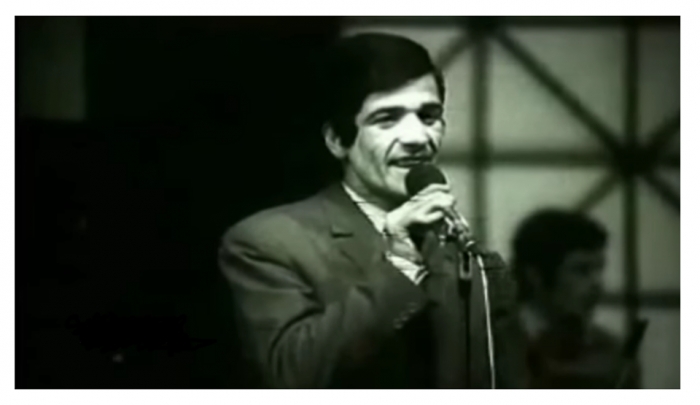
The first Albanian lyrical artist, Mihal Ciko




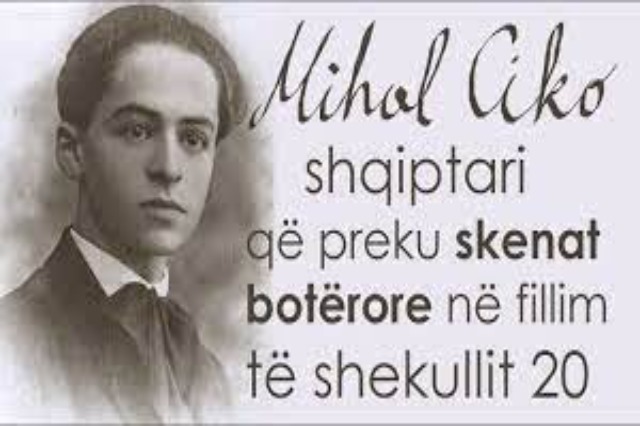
Mihal Ciko was born in the city of Korça, on August 29, 1901. In the early years of the last century, together with his family, Mihal Ciko immigrated to Bucharest where he graduated the Academy of Fine Arts, and for some time he led the choir “Lira” that had been established by the Patriotic Society of the Albanian Colony of Bucharest, collaborating closely with Asdreni and Viktor Eftimiu.
Ciko returned to Albania in the 1920s, after the call made by the Albanian government to its emigrants to come and fight against the Italians in the Vlora War. At the invitation of the Prefect of Korça, Hil Mosi, together with Lasgush Poradeci and Vangjush Mio, they formed the Society of Fine Arts with the choral and theater group, giving performances and concerts in other cities of the country.
In 1921, Ciko started his studies at the Conservatory of “Giuseppe Verdi” in Milan. He graduated in 1926, and worked as a Canto teacher at the “Claudio Monteverdi” Conservatory in Italy. He performed successfully as an opera soloist in some of the most popular stages and theaters of the Italian cities of that time.
Two years after graduation, he defended his master’s degree in Kanto at that conservatory. Mihal Ciko participated as a soloist in various stages and theaters in Italy. Thus, while still a student, he performed in the “Politeama” theater of Verona, in “Kavaleria Rusticana” in the role of Alfio, as well as in “Paliacio” where he played the role of Silvio very successfully. Likewise, in 1924 when he was a student in his third year in Milan, Mihali participated in an international singing competition, where he sang two popular songs. “Poor nightingale, nightingale” and “Bloom flowers, bloom”. The brilliant interpretation of these songs made him receive the first prize.
After finishing the conservatory, since he had no opportunity to practice his profession in Albania, Mihali decided to stay in Italy, performing as a soloist in its most famous stages. Likewise, he was able to work for several years as a teacher of Canto at the “Klau” Conservatory says Monteverdi”. However, he would also go to Romania several times, to perform as a soloist in the Cluj Opera. After finishing his studies in 1926, Mihali returned alone to his hometown to spend his holidays in Korça and during this period, he got to know some new talents, such as Tefta Tashko Koço, Jorgjie Truja, Kristo Kono, etc., and appreciating their talent, encouraged them to study abroad.
During the nearly 20-year period that Mihal stayed in Italy, as a student, teacher and soloist in several operatic pieces, he returned from time to time to his homeland and on one of these trips, he brought from Italy two of the most vocal soloists of that country, Egidio Caldi and Anita de Alba, who performed their successful repertoire for several days in a row, in Korça, Shkodra, Elbasan and Tirana.
In 1942, music director at Radio Tirana
Just a short time after his arrival in Albania, Mihali started working at Radio Tirana, thus becoming its first music director. He worked with great vigor to set up the famous orchestra of this radio station. On this occasion, he invited all the musicians and instrumentalists of the Italian army who were stationed in Albania, including Umberto Rambin. During the years of the Anti-Fascist War, Mihali taught patriotic songs to the Tirana youth, and for this reason he was chosen as a member of the cell of the National Liberation Council that operated on Radio Tirana. For this reason, he was captured and exiled twice by the Italians and then by the Germans.
Ciko, the first Albanian lyric singer and founder of the Philharmonic and Opera
Mihal Ciko remained in the position of music chief of Radio Tirana until 1946, from where he then left, to work with local amateur musicians in several cities of Albania. At that time, MIhali returned again to the city of Korça where he founded the Choir of Trade Unions, collaborating closely with all his former colleagues and other talented young people, staging the Operetta “Dawn” with them for the first time. ” which was the first of this genre in Albania. This operetta was composed by Kristo Kono, whom Mihali had discovered as a talent since Kristo was very young. Thus, Mihal Ciko was not only the first professor of Canto, but also the first director who put the first operetta on the Korça and Albanian stage as well. In 1951, the State Philharmonic was established, where he began work as a lecturer and at the same time as a soloist. Then he would work as a music teacher at the Artistic High School “Jordan Misja” in Tirana and with the establishment of the Opera and Ballet Theater in 1953, Mihali was appointed as a director. The first opera that was staged by the troupe of that theater was “Rusallka” by Derogomizhskij, where Mihali interpreted the role of Mullis, as well as the operas “La Traviata” and “Don Pasquale”. Even in the following years, as part of that troupe, Ciko performed successfully in other operas, such as “Rustikana Cavalry”, “Paliacio”, “Sold Bride”, etc.
In the State Philharmonic, Mihali stayed until 1962, when the Higher Institute of Arts was opened in Tirana. At that institute (then the Conservatory), he worked full-time as a Kanto lecturer, being the founder of that branch, until 1975, when he turned 75 and retired
Mihal Ciko passed away on January 23, 1986, at the age of 86, and the path he started at Radio-Tirana and the Opera Theater was continued by his son, Zhani Ciko, with the same will, passion and dedication, one of the biggest personalities and names of Albanian music and culture.
/k.s/
Të ngjashme
Latest News
Most read







 RTI
RTI