
 English
 Français
  Deutsch
 Italiano
 Turkish
 Greek
Greek Serbian
Edith Durham “The Queen of the Albanian Mountains”




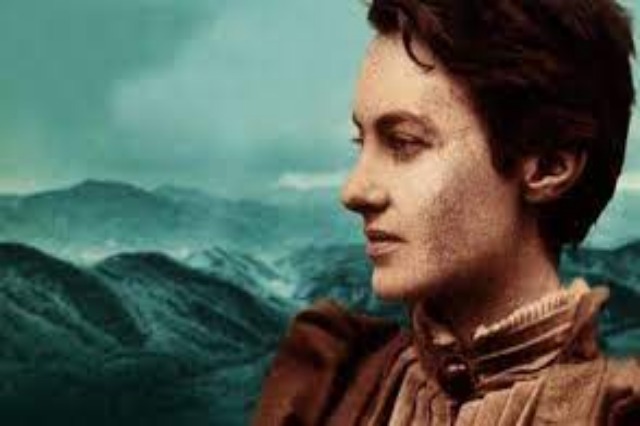
Edith Durham “Queen of the Mountains”, passed away on November 15, 1944.
The British writer managed to steal the hearts of the Albanians and enjoy their sympathy through writings of an anthropological character on the lands of the country at the turn of the XXth century. Durham would also fight in defense of the Albanian cause, when Albania was one of the most isolated and backward areas of Europe.
For 20 years she traveled through the Balkans. She worked extensively painting, writing and collecting the art and folklore of the areas she passed through. Despite this, her writings alone would give her great fame. She wrote 7 books about Balkan issues, the most famous of which is “High Albania” written in 1909.
Edith Durham came from a large and wealthy north London family. She was the eldest of three brothers and six sisters, who were successful in their careers. Edith herself graduated from Bedford College in London (1878-1882) and then studied painting and drawing at the Royal Academy of Arts.
First trip (1900-1901). After her father’s death, Durham had to take care of her ailing mother for years. At the age of 37, with the doctor’s advice, she went on vacation abroad, to calm down. She left England for the coast of Dalmatia and continued her journey to Trieste and Kotor, while at the end she went to Cetinje, the capital of Montenegro. This small and forgotten part of the world would leave deep impressions.
The second trip (1902-1903). Having learned a little Serbian and much more about the history of the Balkans, Durham made a trip to Serbia to collect data for her first book, Through the Lands of the Serbs, London 1904. The book also includes accounts of her visits to Shkodër and Kosovo. It should be noted that those journeys required great courage and perseverance, especially for a woman traveling alone.
The Third Trip (1904). At the end of 1904 she returned for a five-month stay in the Balkans, where she worked for the Macedonian Humanitarian Committee. The impressions of this trip are described in the book “The Burden of the Balkans”, London 1905. The book also includes accounts of her first trip to South and Central Albania – from Manastir to Korça, Leskovik, Përmet, Pojan , Berat, Mirdita, Tepelen, Elbasan and Shkodër.
Fourth Trip (1906-1907). In 1906-1907 she traveled to Montenegro and Bosnia-Herzegovina to collect ethnographic material that was published much later in her book Some Tribal Origins, Laws and Customs of the Balkans, London 1928.
The Fifth Trip (1908). In the summer of 1908, she took another trip to Montenegro and from there she went to Shkodër and then, through the Northern Highlands, she went to Kosovo. She described this trip in her best-known book, High Albania, London, 1909.
The Sixth Trip (1911-1913). Because she fell seriously ill with malaria, Edith Durham spent the winter of 1910 in Egypt, while a year later she returned to Shkodër and took shelter in the Shantoja family. The Struggle for Scutari: Turk, Slav and Albanian, London 1914, focused on the bloody Montenegrin siege of Shkodra, at the time of Albanian independence.
The Seventh Trip (1921). She came to Albania for the last time in 1921, where she met Fan Noli.
For their part, however, the Albanians held Durham in high regard and dubbed her “Mbretëresha e Malësoreve” (the “Queen of the Highlanders)”. She was given an embroidered waistcoat by the government to thank her for lobbying the British government on behalf of the occupied city of Korçë. She was well received in the Albanian Highlands and passed unmolested despite being a lone female traveller. She benefited from the Albanian tradition of ensuring a guest’s safety and from an ancient Albanian custom, the tradition of “Sworn virgins”, women who wore men’s clothes and were regarded as protected individuals.
When she died in 1944, she received high praise for her work from the exiled King Zog, who wrote: “She gave us her heart and she won the ear of our mountaineers”. She is still regarded as something of a national heroine; in 2004, Albanian President Alfred Moisiu described her as “one of the most distinguished personalities of the Albanian world during the last century”.
Much of Durham’s work was donated to academic collections following her death. Her papers are held by the Royal Anthropological Institute, London, her diaries are in the Bankfield Museum, Halifax along with her collections of Balkan costume and jewellery given in 1935. Further gifts of mostly Balkan artefacts were given to the British Museum in 1914 and to the Pitt Rivers Museum, Oxford and the Horniman Museum, London. Some items from her textile collection were displayed in a 2020 exhibition.
/k.s/
Të ngjashme
Latest News
Most read








 RTI
RTI