
 English
 Français
  Deutsch
 Italiano
 Turkish
 Greek
Greek Serbian
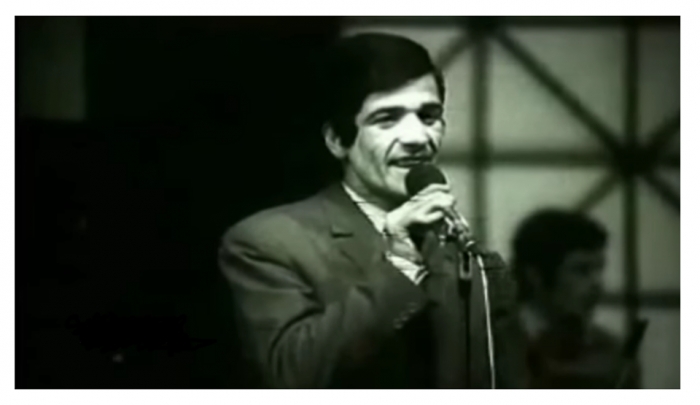
Petro Marko, publicist, writer, anti-fascist fighter, journalist




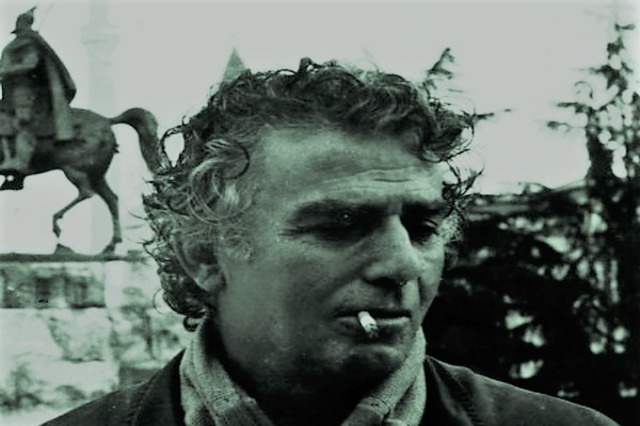
Petro Marko was born on November the 25th 1913 in the village of Dhërmi to parents Marko and Zoica, but was raised by his grandmother Mama Mille. His father had become rich through trade. But he left it small because he fell ill during his exile in the Tyrrhenian Islands. After completing primary school in his hometown in 1924, Petro Marko went to the Commercial School in Vlora, which he graduated in 1932. In that school, among others, the teacher and researcher Kolë Kamsi was the director and Ernest Koliqin was the teacher; school where many Italian teachers taught.
After finishing school, he was brought to Tirana, where he met Hilë Mosi, then Minister of Education. He was appointed a teacher in Dhërmi. Then he moved to Dhuvjan in Dropull.
In 1934 he was part of the Communist Group of Tirana, participating in its meetings without knowing who the chairman was. He is in constant contact with the left-wing press, through Greek newspapers, which Asim Vokshi gave him. From a mix-up, the pretext was found that Petro was giving students communist literature, which was a false accusation.
He was forced to leave for the first time in Greece. He lives in Corfu, where he comes into contact with the political emigrants there, led by dr. Omer Nishanin. Then he leaves for Athens, where he had his brother Dhimitër (Mimo), who had left Himara coast since he was a child. There he entered the Faculty of Literature, where he encountered friction with the dean, over nationalistic views which caused him to be expelled. Through his brother’s employer, he was given the opportunity to enter a non-state school, in the economic-political faculty.
He returns to Albania after the establishment of Mehdi Frashëri’s liberal government, in November, after Branko Merxhani and Ismet Toto call him on the occasion of the opening of a newspaper Koha e Re as a government publication, but fled from there after an article was not accepted. He wandered from one newspaper to another (“Illyria”, etc.), and in 1936 he published the magazine “ABC” together with Branko Merxhan, Dhimitër Godelli, Zavalani, and Migjeni. But the magazine closed after the 1st issue by the monarchist authorities.
After the trial, they sentenced him to 6 months of exile in Porto Palermo, where he spent only 2 weeks. After a few weeks in Llogara[, he was released with the interest of Merxhan and I. Toto. Collaborates in Branko Merxhani’s periodic “Albanian Effort”, which Branko intended to use as an antipode to “Hylli i Dritës”. But he leaves after Merxhani wrote the article ‘Why I am not a Marxist’ forced by the censorship of the time. After he comes out openly with his pro-proletariat ideas in another newspaper, he catches the eye of Musa Juka, who, in order to reconcile him, offers him the post of deputy prefect of Himara. Petro Marko tells him that he will accept it after he goes to Athens and takes some exams.
He meets with Migjeni before leaving (1937), and upon arriving in Athens he takes the ship to Marseille; the ship sank around the Mediterranean. He arrives in Marseille, then finds Llazar Fundo and Ali Kelmendi in Paris then subsequently as part of a group of 113 people left for Albacete where the center of the International Brigades was placed. Joins the volunteers of the “Garibaldi” brigade in Spain, goes to Quintanar de la Republica. Participates in the Meeting of Anti-Fascist Writers in Valencia, where Ernest Hemingway, Pablo Neruda, etc. were also present. Moving from Estremadura, Aragona, and then back to France, where sometimes in Paris and sometimes in Grenoble, he was charged with the agitation in the university youth of Grenoble.
Entered Italy at the end of ’39. After 1,000 or so days, he returned to Albania. He returns to Dhërmi and then in Vlora. In Vlora, he starts writing anti-fascist treaties, in Albanian and Italian. He was imprisoned in Vlora, and in Tirana in May 1940. After March 1942, he was sent to Italy, Palermo and the small island of Ustica. After the liberation of the south of Italy from the Anglo-Americans, he breaks the prison with other prisoners and goes to the liberated Italian areas. In 1944, he was arrested by the Germans, from whom he escaped and that same year he returns to Albania.
At the end of the Anti-Fascist War in 1944, he returned to Albania, organizing the arrival of almost 300 other Albanians at a time when the Albanians were left without any organization. At the end of 1944, he was found in Shkodër at Nush Topalli’s house, when it was being raided by Yugoslav troops. He was invited to stay at the head of the newspaper “Bashkimi” in Tirana from 1945-1947, when from a surprise check they found writings which were not in line with Communist Party and he was released on May 15, 1950. In 1957, he became a teacher at the “November the 8th” technical school. In 1973 he was revoked the right to publish.
His first creative work dates very early, as early as 1930, on December 9, that is, when he was still very young, only 17 years old, he published his first poem “Flag” in the newspaper “Shqipëria e re”, no. 448, p. 4, of Costance (Romania), with the nickname Vlonjati. After this year in the blink of an eye, he writes in almost all literary genres, from poetry to dramaturgy. There are more than 50 press organizations where his influence is felt. Hundreds of poems, stories, fragments of novels, journalistic writings, translations by various authors, especially of Spanish language literature. Translations of Rafael Alberto and Federico Garcia Lorka stand out, as a service full of love and talent, along with 7 other authors, mostly poets.
Petro Marko passed away on December the 27th 1991.
Among his well-known literary works stand out Hasta la Vista, 1958, The Last City 1960, Last Night of Ustica 1989, Clouds and Stones 2000, Ultimatum 2002 and selected short stories 2003.
In 2003, he was awarded with the title “Honor of Nation” (post mortem), by President of Republic, Alfred Moisiu.
Të ngjashme
Latest News
Most read



 RTI
RTI