
 English
 Français
  Deutsch
 Italiano
 Turkish
 Greek
Greek Serbian
National Historical Museum commemorates the 172nd birth anniversary of the great patriot and ideologue of National Renaissance, Sami Frashëri




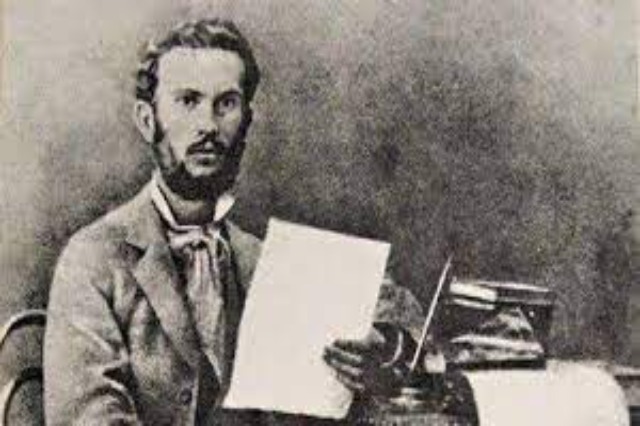
The National Historical Museum commemorated the 172nd anniversary of the birth of the great patriot, illuminist and ideologue of the National Renaissance, Sami Frashëri.
Sami Frashëri was born in Frashër of Përmet on June 1, 1850. He was one of the sons of Halit bej Dakollari. He received his first lessons in his native village. In 1865, together with his five brothers and two sisters, he settled in Ioannina, where he and his brother, Naim, Sami Frashëri graduated from the Greek high school “Zosimea”, where, in addition to general culture, he mastered both modern and old Greek, Latin, French and Italian.
In Tetovo, by Mahmut Efendiu, he learned Arabic, Persian and Turkish. In 1872 he settled in Istanbul where he carried out a wide patriotic activity for the liberation and national unification of the Albanian people and collaborated with the most progressive representatives of the Turkish democratic-bourgeois movement.
He was one of the main organizers of the “Central Committee for the Protection of the Rights of the Albanian Nationality” and with the establishment of the “Society of the Albanian Letters” (1879) he was elected its chairman. He died in Istanbul on June 18, 1904, at the age of 54.
During his lifetime Frashëri admired European culture and its intellectual achievements while he sought respect and dignity for his Albanian background being himself loyal to the Ottoman Empire. As an Ottoman, like many other Albanians he negotiated the daily reality of the multi-ethnic, linguistic and religious realities of his time appreciating and supporting the diversity of the state while also advocating for Albanianism. He was devoted to both vatans (homelands), the wider Ottoman and his special Albanian one. Frashëri moved socially and intellectually through various communities of Istanbul while having an appreciation of Islam and traditions originating from Arabs and the Ottoman sociopolitical and cultural systems. Along with other Albanians, Albanianism with Ottomanism were seen as being compatible.
As a cultural and political activist Frashëri however ran into trouble with the Ottoman government.Over time he developed a disillusionment with the regime of sultan Abdul Hamid II and increasingly turned to Albanianism.Being an Albanian Tosk he felt frustration with his fellow Albanian Ghegs and other conservative and traditionalist Albanians who he thought were more preoccupied with regional and local matters than with the national issues. Frashëri did not want Albanians to be confused for Turks and he worked to foster the national identities of both ethnic groups. At times tensions existed for him when the categories of Ottomanism and Albanianism and of Turk and Albanian were not in balance. As scholar Francis Trix put it he was “an Ottoman reformer [who] could be both an Albanian patriot and, at the same time, a cultural Turk of the highest order”The National Historical Museum commemorated the 172nd anniversary of the birth of the great patriot, illuminist and ideologue of the National Renaissance, Sami Frashëri.
Sami Frashëri was born in Frashër of Përmet on June 1, 1850. He was one of the sons of Halit bej Dakollari. He received his first lessons in his native village. In 1865, together with his five brothers and two sisters, he settled in Ioannina, where he and his brother, Naim, Sami Frashëri graduated from the Greek high school “Zosimea”, where, in addition to general culture, he mastered both modern and old Greek, Latin, French and Italian.
In Tetovo, by Mahmut Efendiu, he learned Arabic, Persian and Turkish. In 1872 he settled in Istanbul where he carried out a wide patriotic activity for the liberation and national unification of the Albanian people and collaborated with the most progressive representatives of the Turkish democratic-bourgeois movement.
He was one of the main organizers of the “Central Committee for the Protection of the Rights of the Albanian Nationality” and with the establishment of the “Society of the Albanian Letters” (1879) he was elected its chairman.
During his lifetime Frashëri admired European culture and its intellectual achievements while he sought respect and dignity for his Albanian background being himself loyal to the Ottoman Empire. As an Ottoman, like many other Albanians he negotiated the daily reality of the multi-ethnic, linguistic and religious realities of his time appreciating and supporting the diversity of the state while also advocating for Albanianism. He was devoted to both vatans (homelands), the wider Ottoman and his special Albanian one.
Frashëri moved socially and intellectually through various communities of Istanbul while having an appreciation of Islam and traditions originating from Arabs and the Ottoman sociopolitical and cultural systems. Along with other Albanians, Albanianism with Ottomanism were seen as being compatible.
As a cultural and political activist Frashëri however ran into trouble with the Ottoman government.Over time he developed a disillusionment with the regime of sultan Abdul Hamid II and increasingly turned to Albanianism.Being an Albanian Tosk he felt frustration with his fellow Albanian Ghegs and other conservative and traditionalist Albanians who he thought were more preoccupied with regional and local matters than with the national issues.
Frashëri did not want Albanians to be confused for Turks and he worked to foster the national identities of both ethnic groups. At times tensions existed for him when the categories of Ottomanism and Albanianism and of Turk and Albanian were not in balance. As scholar Francis Trix put it he was “an Ottoman reformer [who] could be both an Albanian patriot and, at the same time, a cultural Turk of the highest order”.He died in Istanbul on June 18, 1904, at the age of 54.
Të ngjashme
Latest News
Most read





 RTI
RTI