
 English
 Français
  Deutsch
 Italiano
 Turkish
 Greek
Greek Serbian
Isuf Skenderi, the master of preserving the centuries-old tradition of pipe carving




Many special crafts that used to be quite common in the past are now disappearing day by day and those who continue to own them can be considered a real asset to the country’s cultural heritage. Today craftsmen and artisans are few in number, especially those who continue to follow the same tradition of craftmanship from the past years.
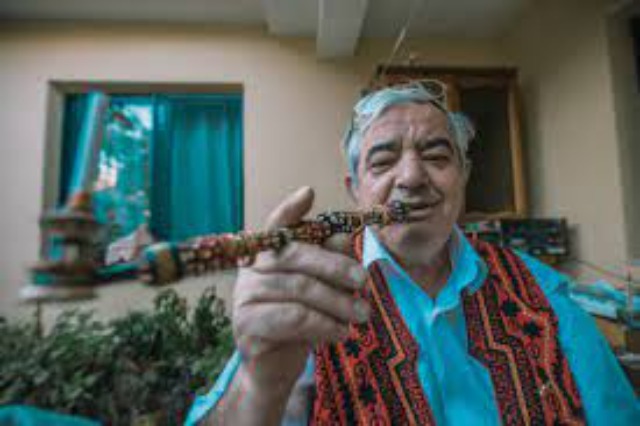
One of them is Isuf Skënderi, the master of pipe making, who is the last from his family to inherit this kind of craft, which is also closely related to art. Isufi comes from the oldest families in Tirana and his passion for making pipes is inherited from his grandfather, the great Isufi, and his father, Ymeri. Although a lot of time has passed and the professions have changed over the years, Isufi has fanatically preserved what his predecessors taught him. Isuf Skënderi belongs to the third generation of pipe and pipe carving masters, and probably the only one in Albania who works with the same tools, as well as his father and grandfather, who once had a well-known shop in the Bazaar of old of Tirana. On the wall of the balcony, under the grape pergola, where he mostly likes to work quietly, he has hung exactly one pipe one meter and 5 centimeters
Isufi points out that his grandfather left behind a weighty name, because his work was recognized and appreciated in early years by other countries as well. “My grandfather conducted his activity in Tirana, but he had participated in every fair that took place in the neighboring country Greece, especially in the city of Thessaloniki, where he received two diplomas for the evaluation of his work. These diplomas were obtained by him in the 1930s and 1931s because pipework was not recognized by the rest of the Balkans. Also, my grandfather participated with his products in Bari, Paris and once went to New York”, said Skënderi.
He further states that at the time his grandfather passed away, his father was 15 years old, but had managed to appropriate the production of pipes. Isufi says that his father, Ymeri, built a special department for the production of pipes in the artistic enterprise “Migjeni” and for his work he was decorated with the motivation “Master of work”. With the destruction of the bazaar and the diruption of private businesses, all the craftsmen gathered at the Artistic Enterprise “Migjeni”. I had another profession. For 23 years I have taught shoe production technology in the vocational school, the only one in Albania, the School of Municipal Economics. With the change of systems and the permission of opening private businesses, I started to deal with the craft of my ancestors, especially after 2002, when with the reforms of the time, vocational education was destroyed. “I quitted and entirely dedicated myself to this profession”, Isufi tells “Secrets of mastery”. 
He is glad that his children have inherited the profession from him and in the middle of a photo album he picks one, where the grandfather teaches his 6-year-old nephew how to use the drill. While in another photo, we can see his daughter, who has also learned the craft. But they have had freedom to choose their own path.
He mainly produces items related to tobacco use: pipes, ash trays, tobacco pipes, but this does not mean that he promotes smoking.
“Smoking is a habit and I try to protect the smoker. Wood has the property of cooling the smoke and not burning the larynx, while a good part of the nicotine remains here. But on the other hand, it also protects the fingers”, says Isufi.
The whole process of making a pipe is manual, from turning, drilling holes, drying, painting with natural paints and carving. Objects produced for the market, mainly bear the “Albania” brand, but it can also be personalized with names, initials, country names and paints as desired.
One of the secrets of the craft is the material but also the preparation of the carving knives. Tree Heather is commonly used. “The wood must be as strong as possible, with a compact structure, so we use heather, maple. Poplar wood is unusable, neither beech, hornbeam, magnoliophyta wood. Their structure does not create the opportunity for you to create beautiful carvings and it is deformed “, says the master, who has pedagogy in his blood and when he explains a process, it seems as if he is giving you a lecture.
Wearing a red vest and white shirt , traditional clothing of Tirana, holding a cigarette in his lips, he feels free to reveal some secrets of the craft. “I am not tired of work,” he says, but there are other things that tire him, such as respecting the rules of trade, creating spaces and facilities for storing the craft. Thanks to his hands, he has managed to educate the children, to create a good life for himself, to participate in fairs not only in Albania, but even in Tehran, but today he feels tired of being the trader of the goods he produces. Tired of the idea of holding a bag and knocking on souvenir shops. “This is a matter of policy,” he said. I know how to do what I know, let the politicians do the politics “, says Isufi, as he continues to carve under the shadow of the pergola.
/Klara Ruci/
Të ngjashme
Latest News










Most read









 RTI
RTI