
 English
 Français
  Deutsch
 Italiano
 Turkish
 Greek
Greek Serbian
Serbia, EU Candidate, Signs 29 Agreements with China “for a Common Future”




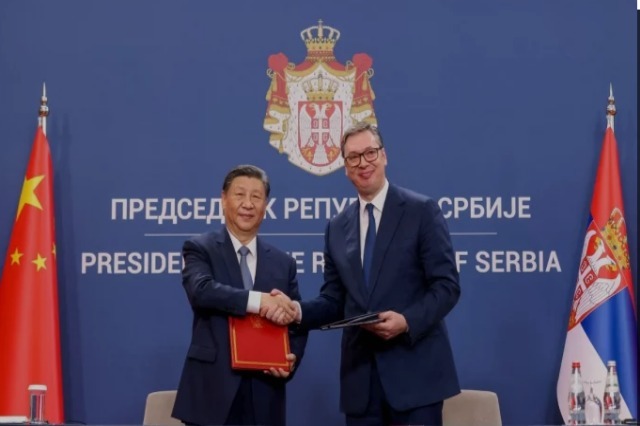
The Chinese president was warmly welcomed by Serbian leadership and people during the visit to Belgrade, reports VOA. After meetings with Serbian President Aleksandar Vucic, it was announced that 29 agreements had been reached to build a “common future”, although no details were provided. The Chinese president also stated that when it comes to Kosova, Beijing supports the Serbian stance to preserve “the sovereignty and territorial integrity of Serbia”.
“A strong friendship” was the phrase repeated several times to describe the relationship between China and Serbia during the meetings of the Chinese president and his Serbian counterpart, Vucic.
“I have seen up close that the Serbian people are a strong friend. You are the best friends of China and the Chinese people,” said the Chinese president before starting the meeting with Serbian leadership.
After the meeting, the Chinese and Serbian leaders came out to the balcony of the Palace of Serbia to greet thousands of people who were brought in by special buses to welcome the Chinese leader.
“Long live the strong friendship between Serbia and China. I ask for the biggest applause for the Chinese president,” said Serbian leader Vucic.
Beyond statements of ironclad friendship, the two leaders announced that they will “deepen the comprehensive strategic partnership between the two countries” and “build a new era with a common future between China and Serbia“.
“We are entering into a community that speaks of the common future of our two countries. This is the highest level of cooperation between two countries, and as President of Serbia, I am proud today to sign such a declaration with the Chinese president,” said Vucic after the meeting.
This makes the Balkan country the first in Europe to agree to such a document with Beijing, although the content of the agreement was not explained in detail, which is unlikely to please the European Union, which has granted Serbia candidate status for accession to the European bloc.
Last year, China and Serbia signed a free trade agreement, which as the Chinese president said today, will begin to be implemented in July.
The China-Serbia Free Trade Agreement will officially come into force on July 1 of this year.
The free trade agreement is not in line with EU membership conditions. Serbia officially wants to join the bloc of 27 countries, however, it has continuously deviated from this path. China has poured billions of dollars into Serbia in the form of investments and loans, especially in mines and infrastructure.
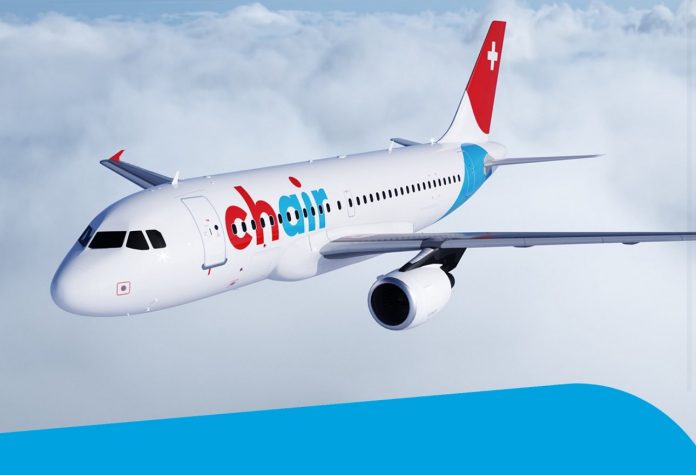
The two countries signed 29 agreements today, ranging from the expansion of Serbian agricultural articles to be imported to China, to the start of direct flights from Belgrade to Shanghai and later to Guangzhou.
Critics say Serbia could serve as a Chinese Trojan horse and as Beijing’s gateway to Europe.
The Chinese president arrived in Serbia on a symbolic date, the 25th anniversary of the bombing of the Chinese Embassy in Belgrade by NATO during the Kosovo war, when three Chinese citizens were killed.
The incident helped to create close political ties between China and Serbia by holding a similar stance on Kosova. This became clear again in Belgrade.
“China supports Serbia’s efforts to maintain sovereignty and territorial integrity, for the issue of Kosova,” said the Chinese president.
Today, during a press conference, US Special Envoy for the Western Balkans Gabriel Escobar said that the Chinese president’s visit aims to increase tensions between Serbia and the West.
“I think this visit is to increase tensions between Serbia and the West and this visit does not help. The United States has said that the bombing of the Chinese embassy in 1999 was an accident. We have apologized and believe we have also paid compensation to the families of the victims. Unfortunately, the visit is deliberately timed to coincide with this day,” said Escobar.
The Chinese president began his visit to Europe with meetings in Paris with President Emmanuel Macron and the President of the European Commission, Ursula von der Leyen, where the main topics were trade and Russia’s war in Ukraine. From Belgrade, the Chinese president traveled to Hungary on Wednesday evening. Like Serbia, Budapest is seen as one of China’s closest partners in Europe.
/According to VOA/
Të ngjashme

Latest News
Most read




 RTI
RTI