
 English
 Français
 Deutsch
 Italiano
 Turkish
 Greek
 Serbian
History of rail transport in Albania




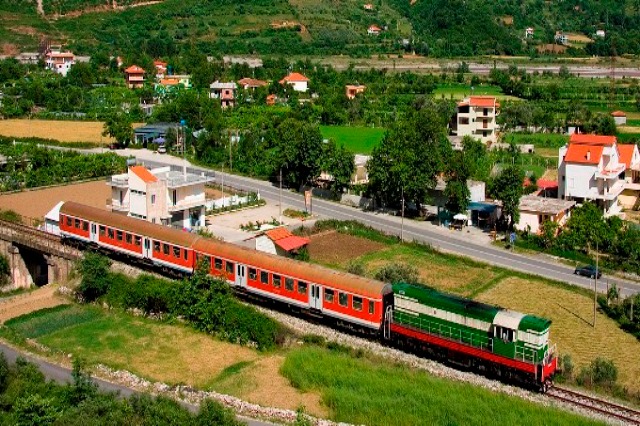
The first railways in Albania were built in 1916-1917 by the Austro-Hungarian army. The railway network of that time, with a gauge width of 650 mm, was called the Decauville line. This network started from the city of Shkodër and continued towards Lezhë and Vorë, heading to Tirana. In Vorë, the railway branched towards Durrës–Kavajë–Rrogozhinë–Elbasan and ended in Librazhd. From Rrogozhina, crossing the Shkumbin River, the railway continued through Lushnjë–Fier–Levan. In Lushnjë, there was a railway branch that went to Berat. The entire Decauville railway network in Albania was about 400 km long. During the withdrawal of the Austro-Hungarian military troops, all materials of the Decauville railway network in Albania were dismantled and transported to Austria through the ports of Durrës and Shëngjin, as part of a specific military plan drafted by the Austro-Hungarian army.
Construction of railways with a standard gauge width of 1435 mm between the tracks began in 1947 with the construction of the Durrës–Peqin railway, 44 km long. In 1948, the construction of the Durrës–Tirana railway line, 37 km long, began and was completed in 1949. In December 1950, the construction of the Peqin–Elbasan railway line, 33 km long, was completed. Railway construction continued in subsequent years as follows: On May 1, 1963, the Vorë–Laç railway, 30 km long, was completed. In October 1968, the Rrogozhinë–Fier railway, 54 km long, was completed. In March 1972, the Elbasan–Librazhd railway, 22 km long, was completed. In March 1974, the Librazhd–Përrenjas railway, 27 km long, was completed. In March 1975, the Fier–Ballsh railway, 25 km long, was completed. In July 1979, the Përrenjas–Guri i Kuq railway, 28 km long, was completed. In April 1981, the Laç–Lezhë railway, 19 km long, was completed. In November 1981, the Lezhë–Shkodër railway, 35 km long, was completed. In January 1985, the Shkodër–Bajzë–Hani i Hotit border railway, 36 km long, was completed. In October 1985, the Fier–Vlorë railway, 34 km long, was completed.
In October 1987, the Milot–Rrëshen railway, 25 km long, was completed, which no longer exists as the Milot–Kukës highway has been built over its route. Albanian Railways were built during the period of centralized planning economy, where the government imposed very strict restrictions on other types of transportation. Economic changes in the 1990s dramatically altered transportation demands, presenting extraordinary challenges for the railway.
/k.s/
Të ngjashme




Latest News










Most read










 RTI