
 English
 Français
 Deutsch
 Italiano
 Turkish
 Greek
 Serbian
Candidates for RTSH Council Share Their Vision and Expertise




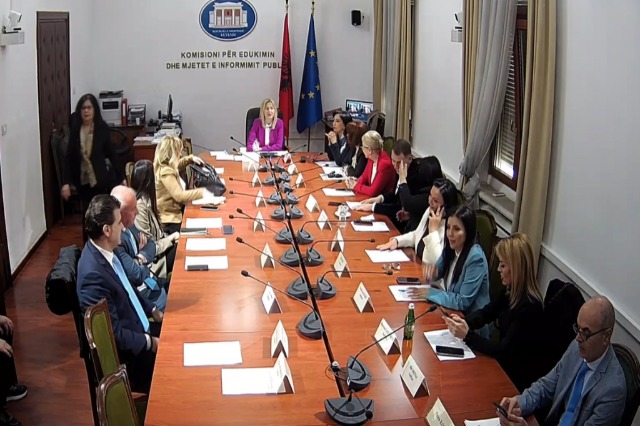
The Education and Public Media Committee is holding a hearing session today with several candidates for membership on the Supervisory Council of RTSH (Albanian Radio and Television).
The chairperson of the committee, Ina Zhupa, explained that the hearing process follows the dismissal of the previous council members. “I hope these hearings will meet the high level of professionalism we expect from the future members of this council,” she said at the beginning of the session.
Zhupa posed the same question to each candidate: why have they applied for this position, and what additional contributions will they bring to RTSH?
One of the candidates, Agim Bajko, said, “My 20 years of experience in both print and electronic media provide a valuable foundation for this position.”
Another candidate, Alfons Zeneli, stated, “My contribution to this council will be effective because of my extensive experience within RTSH, particularly my knowledge of the various channels and how the operations of television function.”
When discussing his reasons for running, Alket Braho emphasized, “I believe I meet all the formal criteria, but this is not the most important reason. I am confident that my professional background will allow me to make a significant contribution to Albania’s public broadcaster. RTSH has always played and must continue to play an essential role in informing the public, educating citizens, and promoting our cultural traditions and national identity.”
Candidate Arben Derhemi remarked, “There are several key areas I believe need improvement at RTSH, especially in the fields of art, culture, and film production. RTSH, as a public broadcaster, must be accountable to its audience and remain politically and professionally impartial. Additionally, I believe RTSH should focus on improving the quality of its programming, which plays a crucial role in educating the entire population, especially the youth. We must remember that RTSH is ultimately accountable to the public, which is why it is called the public service broadcaster.”
/a.c/
Të ngjashme
Latest News

Most read










 RTI