
 English
 Français
 Deutsch
 Italiano
 Turkish
 Greek
 Serbian
Albanian Development Bank to Accelerate EU Integration Through Sustainable Development and SME Competitiveness




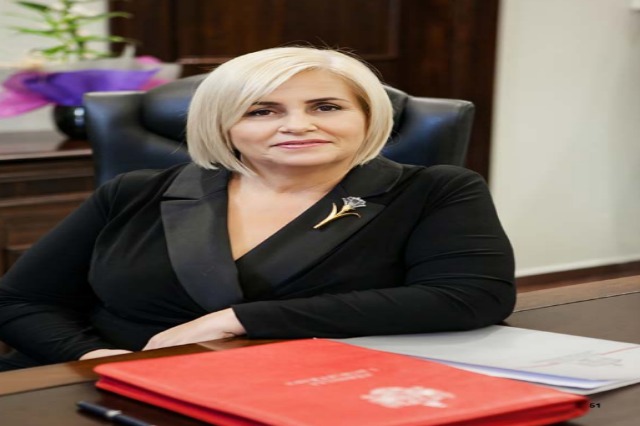
The Albanian Development Bank will play a vital role in speeding up Albania’s European Union integration by focusing on sustainable development and boosting the competitiveness of small and medium enterprises (SMEs), which contribute 80% of the added value to the Albanian economy.
Milva Ekonomi, former Minister of Agriculture and Rural Development, discussed the creation of Albania’s first Development Bank and its focus on supporting SMEs in an interview with Albanian News Agency,ATA.
“The Albanian government and society are committed to seeing Albania’s flag in the European Union by 2030. To achieve this, the government is working to meet the obligations and criteria required for the integration process in various sectors,” said Ekonomi.
She highlighted that Albania has made significant strides in its EU integration process.
“After successfully passing the screening process, we are pleased to present the opening of each chapter (out of six in total), with the key issues addressed in each chapter,” she added.
“Recently, the Market Chapter was opened, which is the third and one of the most important chapters for making Albania’s economy competitive with that of the EU. This has led institutions to recognize the need for a development bank with financial instruments, particularly to support SMEs. SMEs represent 80% of the added value in the Albanian economy and employ over 80% of the workforce. However, their access to credit is four times smaller than that of large businesses,” Ekonomi noted.
To create a competitive economy, with SMEs as the backbone of development, the government plans to provide funding through a development bank focused on sustainable business growth and expanding the reach of “Made in Albania” products in the open market.
From an economic perspective, Ekonomi stated that the Development Bank will enhance competition in the banking sector by offering low-interest loans.
“We have 11 second-tier banks, but the Development Bank will enter the market with commercial banks, owning 51% of its assets in government shares and reinvesting its profits. This bank will ‘pressure’ the banking market by offering low-interest loans, allowing SMEs greater access to financing and growth,” she explained.
“SMEs must increase productivity, and this goal can only be achieved by adopting modern technologies. The Development Bank will support both the market and the overall Albanian economy,” Ekonomi added.
She also pointed out that the Bank of Albania, with its new financing program offering 25 billion lek in loans for SMEs and agriculture, has brought the best European experience to this sector. Alongside the expertise of international institutions and discussions with stakeholders, this program is shaping the model for the creation of the Albanian Development Bank.
Ekonomi emphasized that the fund allocated to the SME program now covers 70% of collateral, more than ever before, meaning the program not only helps SMEs but also benefits agricultural businesses.
“Albanian agriculture must meet several key objectives. We are committed to reaching 1 billion Euros in exports by 2030, which can be achieved by mechanizing agriculture, expanding irrigated and drained areas, increasing greenhouse spaces, and applying climate protection measures. The guarantee fund from previous years and the government’s allocation of 70% of collateral will enable credit for agriculture,” she stressed.
In conclusion, Ekonomi said that, together with Albanian producers, the country can further improve agricultural quality and move closer to EU integration.
This financing instrument (the SME and agriculture program), she said, will serve as a model for the Development Bank, supporting the alignment of Albanian production with the open market.
/a.p./
Të ngjashme

Latest News









Most read










 RTI