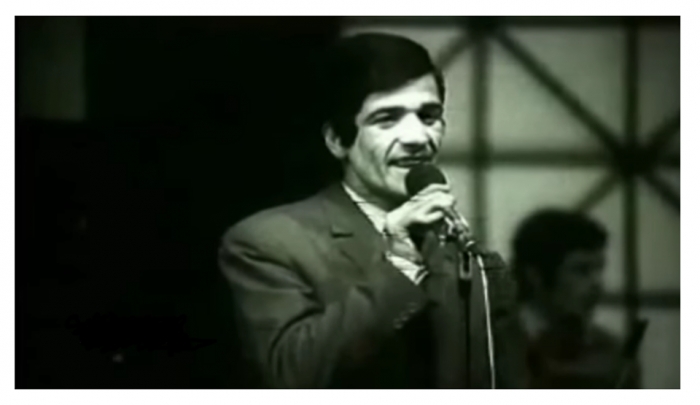
On February 6, 2007, Albania bid farewell to one of its most revered artistic figures, Kadri Roshi, a name etched into the golden chronicles of theater and film.
Born on January 4, 1924, in Ballsh, to a family of Libohovan descent, Roshi’s early years were marked by hardship. He lost his mother at the tender age of two and became an orphan by twelve, yet his resilience and passion for the stage would carve an extraordinary path in Albanian culture.
His artistic journey began at 21 on the stage of the People’s Theater. In 1951, he graduated in Prague, returning home to breathe life into unforgettable characters at the National Theater, where his legacy took root.
Kadri Roshi is believed to have portrayed nearly 180 roles in theater and film, leaving behind an indelible mark in the hearts of art lovers. His mastery ranged from the cunning slave Aesop to the fierce guardian of the Albanian language in the National Renaissance, from the devoted caretaker in Red Poppies on the Walls to the unforgettable Mere in The Man with the Cannon.
His cinematic presence illuminated films such as The Death of the Husband (1991), Apasionata (1983), Face to Face (1979), The Advisers (1979), General Gramophone (1978), The Man with the Cannon (1977), Threads That Break (1976), Endurance (1976), The Green-Covered Mountains (1971), and The Eighth in Bronze (1970).
For his invaluable contributions to Albanian art, Kadri Roshi was honored with the Career Award at the 1995 Artistic Film Festival, the Grand Honor Award in 1997, and the prestigious title of Honor of the Nation in 1999.
A legend of the stage and screen, his presence may have left the physical world, but his artistry continues to echo through the corridors of time.
/a.c/

 English
 Français
  Deutsch
 Italiano
 Turkish
 Greek
Greek Serbian















 RTI
RTI