
 English
 Français
 Deutsch
 Italiano
 Turkish
 Greek
 Serbian
Kukes, the city of traditions




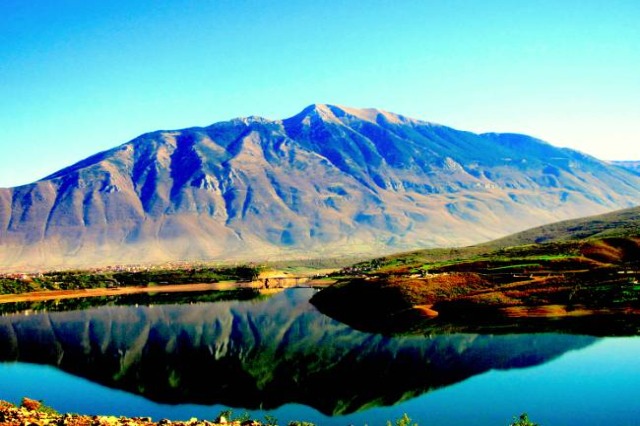
The beginnings of life in Kukes date back to the Neolithic period (6000-4000 BC). A series of archaeological discoveries prove the uninterrupted habitation of this region since the Neolithic period.
Its position at the crossroads of medieval and new roads has made it possible for this region to be populated since early times, leaving us a great cultural heritage. The Cultural Monuments announced in this area are of an archaeological, historical and one of an architectural nature. In addition to the mountainous nature, the city of Kukes also offers cultural potential, including all the material and spiritual heritage that is put at the service of tourism.
Kukes can also be considered as the cradle of popular culture. The cultural heritage of the city includes three ethnographic regions; Luma, Gora and Malziu, which are known for prominent elements in terms of traditional clothing features. It is worth mentioning the Luma women’s wrap dress, vest, waistcoat, that of Gora, as well as the dress of Malziu, which in appearance has a resemblance to the dress of Tropoja. The collection also includes some Luma socks crafted in the village of Vila. These socks are made during wedding preparations. They are expertly created using wool from the native Ruda sheep, which is a 100% Kukës and Dibër breed.
Men’s costumes consist of close fitting woolen trousers with black cord trim called “Tirqe”. Shirts with long sleeves, open neck and embroidered with a light design with white threads. Vest – the vest consisted of a piece of black or brown silk and embroidered neckline, chest and sleeves with thick gold silk threads.
Today, there are many people who wear these costumes during ordinary days. These costumes unfold in all their beauty only during folklore festivals, other popular celebrations, or weddings.
The traditional costume is considered by the people as an identitying element that distinguishes it from other provinces of Albania. Folk costumes, especially women’s, stand out for their beauty, elegance, rich color and variety. They are unique in their kind. The diversity of women’s costumes is so great that within the circle of kuksi, they differ fundamentally from one another.

Women’s handicrafts are the ones that have withstood time the most until today. An important place in women’s handicrafts is the preparation of traditional folk costumes for women and men. They have been preserved original and are a clear expression of Kuksian identity.The carpets and tapestries produced by Kuksi women are of a high quality, beautiful and very popular in the Albanian and foreign markets.
Two decades ago, these products were exported from Albania to several European countries, and were in high demand.

As for the songs, they are performed with cifteli, lute and fiddle, dahire, a unique musical instrument from the Kukes region. While dances are mainly accompanied by bagpipes and cifteli. The Albanian dance and the sword dance of the Luma men are unique.
The city of Kukës is also known for the production and processing of carpets and tapestries, which are traditional woolen rugs made with looms.
Kukes is located among four provinces with a highly developed folklore. The inhabitants preserve well the cultural traditions of the areas they came from. This is evident in the wedding ceremony and lifestyle. In the city of Kukes, folklore is very developed and the tradition is widely applied. Typical for the regions of Luma and Malziu in terms of musical folklore is homophony, the accompaniment of men’s songs with cifteli.
The half-circle dance is typical of the area of Luma and Gora, while the double dance is typical for Malzi. Meanwhile, the “Dance of Kukes”, which stands out for its dynamism and artistic content, is also worth mentioning. As for the dramatic folklore, it is accompanied by verses sung by the viewers, and it is related to the seasons and days of the weather.
The architectural heritage occupies a special place revealing to us once again the rich heritage of this district. Architectural monuments can be classified into two main categories: buildings where important historical events took place and memorials dedicated to important historical figures.
Kukes presents real opportunities for the development of tourism. It has already become a tourist destination both in winter and in summer, due to its suitable natural conditions and the beautiful natural landscape it presents, as well as for its cultural and historical assets. In the city of Kukes you can enjoy several types of tourism, such as mountain, landscape, cultural, rural and religious tourism.
Meanwhile, there are many local and foreign tourists, passionate about mountain climbing, who have enjoyed the beauty of the mountains in recent years. One of the main destinations is the Korab-Koritnik nature park. A little-known miracle is the Jezina cave, located near the village of Bele-Kukes. Tourist spots such as Sasati, Kroi i Kuq, Kroi i Bardhë are also frequented, which have begun to be visited not only during the summer, but also during the autumn and winter seasons.
As for rural tourism, it has the opportunity to develop thanks to the many natural and cultural assets that rural areas contain, where traditions, customs, rituals, etc. are preserved and kept alive. Typical areas where rural tourism can be developed are the area of Shishtavec, Bicaj, Lake Fierze. Together with the development of rural tourism, gastronomic tourism also comes to the fore, which is the element that closely affects the area in which the traditional cuisine of the region stands out, such as: fish from Lake, homemade brandy made from grapes or plums, the famous boza, white sheep’s cheese (Tea), the famous yogurt, chestnut honey, dried, baked meat, flia, corn dumplings, pita (pie), etc.
Kukes was nominated for the Nobel Peace Prize in regard to hospitality and sheltering thousands of refugees during the Kosovo War. It was the first time a town was nominated for such a prize. In 2017, the city applied to become the “2018 European Green Capital”.
/k.s/
Të ngjashme



Latest News










Most read










 RTI