
 English
 Français
 Deutsch
 Italiano
 Turkish
 Greek
 Serbian
Green light from the government for the financing of Corridor VIII railway, Phase I – Albania




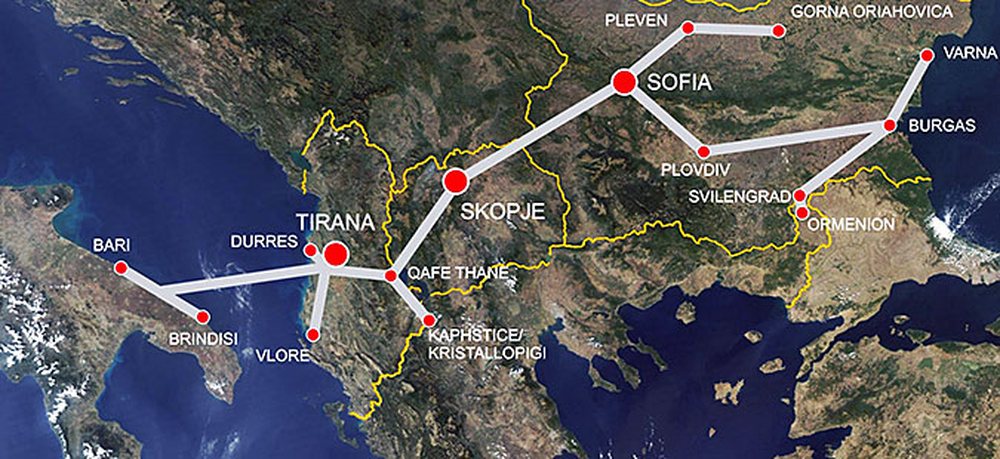
On Wednesday, the Council of Ministers gave the green light to a key draft law. It approved the ratification of the financial contract between Albania and the European Investment Bank (EIB) for the project “Corridor VIII Railway Infrastructure, Phase I – Albania.” The financial contract and the related grant agreement with the EIB will now go to Parliament for final approval. This move brings Albania one step closer to modernizing its railway system and strengthening regional connections.
Strategic Investments in Corridor VIII
The railway project forms part of the European Union’s Global Gateway strategy. It aims to rehabilitate the existing line and boost train speeds to 120 km/h. Because Corridor VIII belongs to the core Trans-European Transport Network (TEN-T), it ranks high in financing priority.
Albania and North Macedonia are working together. They plan to upgrade current rail lines and build missing links. Their shared goal is clear: reduce travel time and shift more freight and passengers to sustainable transport.
Besides the infrastructure itself, the investment also supports reforms. These reforms aim to make the Albanian rail sector more competitive and more efficient.
Major Funding for Road Projects
Corridor VIII is not just about trains. The 2025 state budget earmarks around €88 million for its road network. This makes it the top priority for road transport development in Albania. Funding for 14 separate road sections along Corridor VIII represents 26.6% of the country’s total road transport budget.
Eight of those sections will fund the expansion of the Elbasan–Qafë Thanë road axis. The total value of this investment stands at 3.4 billion ALL. Meanwhile, another six sections—linking Durrës, Elbasan–Papër, and Papër–Ura e Grykshit—will receive 5.4 billion ALL. The combined cost of these six segments reaches 15 billion ALL, or about €150 million, covering a total of 35 kilometers.
Some parts of the corridor are already complete. These include the Tirana–Elbasan road, the Fier bypass, and the Vlora bypass—all easing east–west traffic. On Albania’s side, Corridor VIII will exit toward North Macedonia at the Bushtricë Bridge in Përrenjas. This route avoids the steep terrain of Qafë Thanë and ensures a smoother connection.
Ongoing Work and Site Inspections
Just a few days ago, Prime Minister Edi Rama and Deputy Prime Minister Belinda Balluku visited a major construction site along the corridor. There, workers are building two tunnels with a total length of 1.1 kilometers. These tunnels will connect Elbasan and Librazhd, drastically improving mobility between the two cities. Balluku called the project essential to the success of Corridor VIII.
A Corridor with Regional Impact
Corridor VIII plays a key role in Pan-European transport. It combines both road and rail routes. Its mission is to ease the flow of goods and people between EU countries and the Western Balkans, connecting them further to the Black Sea and the Caspian Sea.
In Albania, the corridor stretches for about 154 kilometers. It links the Italian Adriatic ports with Bulgaria’s ports of Varna and Burgas, passing through Albania and North Macedonia. This makes Corridor VIII a true backbone for regional trade, transit, and integration.
Të ngjashme



Latest News









Most read










 RTI