
 English
 Français
 Deutsch
 Italiano
 Turkish
 Greek
 Serbian
Antigonea of Gjirokastra, the historical, natural and culinary city




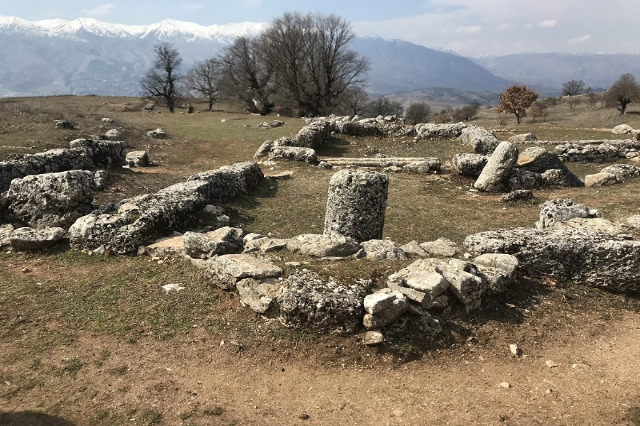
There is a city in Albania that was born out of love for its wife but as well as humankind’s thirst of territorial wars destroyed it.
That’s the story of Antigonea, the short-lived city that lasted 150 years, whose name is associated with the wife of King Pyrrhus. Founded in 295 BC, Antigonea declined as an important center after Rome severely punished the Epiriotes who fought against it.
Since that time, the city did not rebuild again. Then, in the 6th century AD, the Paleo-Christian church was the only one built inside it. In 1960, the archaeologist Dhimosten Budina discovered ruins of the ancient city.
Today, Antigonea has an area of 45 ha and a territory of over 90 ha, which represent an interesting tourist destination, although still is not very frequented. However, foreign tourists have shown a considerable increase of interest because they read about its history and are eager to explore it.
Especially, German and French tourists chose to visit the ancient city, which is located only 14 km to the east of Gjirokastra and they also enjoy its wonderful nature and traditional cuisine of the area. The area carries great curiosities because of its history, nature and culinary, which set out very well its enrich past even nowadays.
The archaeological park is one of the largest in the country, but also Mrs. Fatbardha’s pancakes and her other specialties with spinach and wild cabbage pie have gained a lot of popularity.
Mr. Flamur has built the only agritourism in Antigonea, with the support of the Albanian Government and the European Union. For him, the food should not only be healthy but also is strictly typically Albanian.
In this way, the locals show tourists that prevails love for nature, history and life for the ancient city.
/m.ll/
Të ngjashme




Latest News










Most read










 RTI