
 English
 Français
  Deutsch
 Italiano
 Turkish
 Greek
Greek Serbian
Shtjefën Gjeçovi: Guardian of Albanian Tradition and Identity




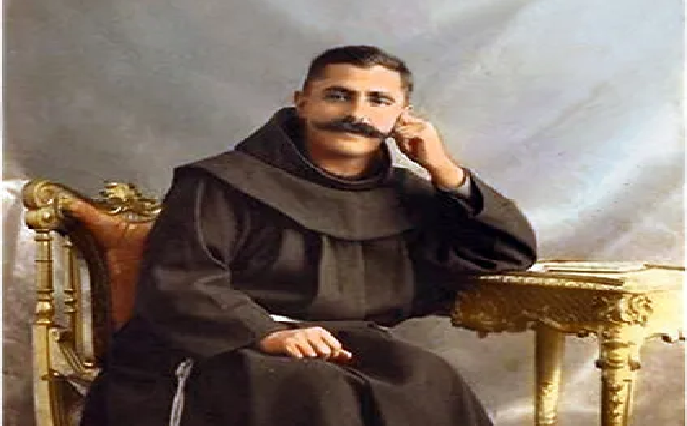
Shtjefën Gjeçovi, born Hilë Gjeçovi on 12 July 1874 in Janjeva, shaped the cultural and spiritual life of the Albanian people. He worked as a Franciscan friar, teacher, folklorist, archaeologist, and publicist. Above all, he is remembered for collecting and codifying northern Albanian oral traditions, which later became the “Kanun of the Highlands”. At the same time, he encouraged interfaith dialogue during a period of religious and political tension in the Balkans.
Early Life and Education
Gjeçovi was born to Mati and Prenda Gjeçovi. His family originated from Kryeziu in the Puka region. In 1884, he began his religious path at the Franciscan college in Troshan, Shkodër. Later, he continued his studies in Fojnica, Derventa, and Banja Luka. Eventually, he graduated from the Franciscan Institute in Kresheva, where he studied alongside Pashk Bardhi. In 1896, he became a priest and held his first Mass in Troshan.
Pastoral Mission and Teaching Work
After ordination, Gjeçovi served in several regions, including Zllakuqan, Laç-Sebaste, Gomsiqe, Theth, Rubik, and Zym in Has. In each posting, he combined religious service with education. Despite school closures by the Yugoslav authorities, he continued teaching the Albanian language. Meanwhile, his fieldwork in ethnography and archaeology drew unwanted attention from the state. Nevertheless, he persisted. On 14 October 1929, unknown assailants killed him in Kodër Rrezina. According to later accounts, the motives were likely political and religious.
Folkloric and Ethnographic Contributions
From an early age, Gjeçovi showed deep interest in Albanian folklore and customs. He travelled across northern Albania, especially the highlands of Mirdita and the Albanian Alps. During these expeditions, he collected poetry, stories, and laws passed down orally. Unlike others, he followed scholarly methods that were advanced for his time. As a result, his research appeared frequently in journals such as “Albania” and “Hylli i Dritës” (The Light Star).
Even as a student in Bosnia, he had begun this work. Together with Lovro Mihacevic, he co-wrote a historical study on the Archdiocese of Tivar. Shortly afterward, he published twelve poems under the pen name Lkëni i Hasit — “The Lake of Has”.
The Kanun of the Highlands
Above all, Gjeçovi is known for compiling the “Kanuni i Malcis” [The Kanun of the Highlands]. Between 1897 and 1924, parts of the Kanun appeared in print. However, the full version came out in 1933, four years after his death. It included 1,263 articles across 12 chapters. The Franciscan Order published it. Even today, the method he used to compile the text remains uncertain. Nevertheless, the Kanun stands as a key element of Albania’s customary law tradition.
Drama and Translation
Gjeçovi also wrote original plays, including:
Dashtunija e Atdheut – “The Love of the Homeland” (1901)
Kushtrimi asé Mark Kuli Kryeqitas – “The Call or Mark Kuli, the Top Marksman” (1903)
Shqiptari Ngadhënjyes – “The Triumphant Albanian” (1904)
Katër të Lumtun asé Edipi i Shqipnis – “The Four Blessed or Oedipus of Albania” (1926)
Although he completed these works, many exist only as manuscripts.
In addition, he translated several major works into Albanian. These included:
“Attilio Regolo” by Metastasio (1912)
“The Maid of Orleans or Blessed Joan of Arc” by A.F. Bergamo (1915)
“Saint Anthony of Padua” by N. Dal-Gal (1912)
Moreover, he translated excerpts from “Quo Vadis” by Henryk Sienkiewicz, Socratic sayings, and parts of “Scritti su Parga” by Ugo Foscolo.
He also produced prose works such as:
Mnera e Prezës – “The Bell of Preza” (1902)
Rrafgime – “Wanderings” (1903)
In addition, he published ethnographic studies, including:
Përralla popullore – “Folk Tales” (1903)
Doke dekësh – “Death Customs” (1907)
Rrnesa e kombit shqiptar në malcina – “The Survival of the Albanian Nation in the Highlands” (1908)
Doke darsmore në kanu – “Wedding Customs in the Kanun” (1910–1911)
Vajtorëja – “The Mourner” (1917–1920)
Sadly, many of his manuscripts were lost after his death.
Archaeological Fieldwork
Gjeçovi’s interest in archaeology intensified over time. In 1924, he published the study “Thracian–Illyrian Heritage” in “Hylli i Dritës”. That same year, together with Simon Shuteriqi, he discovered the historic bell of Sopot in Bërzeshta. In 1925, parts of his archaeological collection appeared at the World Missionary Exhibition of Franciscans in the Vatican. Later, the Franciscan Monastery in Shkodër preserved his collection as a museum.
Final Reflections
Shtjefën Gjeçovi remains a towering figure in Albanian cultural history. Through his tireless efforts, he preserved the language, laws, and traditions of his people. His life combined scholarship, service, and sacrifice. Even today, his work allows the voice of the Albanian highlands to speak with clarity, pride, and dignity.
Të ngjashme
Latest News






Most read









 RTI
RTI