
 English
 Français
  Deutsch
 Italiano
 Turkish
 Greek
Greek Serbian
Martin Camaj, the Censored Writer, Scholar and Linguist




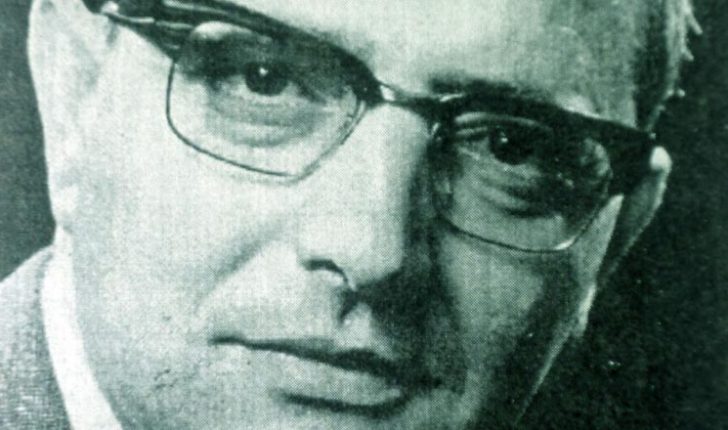
Martin Camaj was born on 21 July 1925 in Temal, Dukagjin. Like Fishta and Harapi, Camaj was among the authors censored during the totalitarian regime. Though he studied at the Saverian College, he followed a path independent from religion. After completing his education, he worked as a teacher in northern villages.
Due to his political beliefs, which clashed with the regime’s ideology, Camaj was forced to leave Albania. At first, he joined resistance groups opposing the communists, and later lived in hiding before fleeing to neighbouring Yugoslavia.
Between 1949 and 1955, he studied Slavic studies, Romance languages and Albanology in Belgrade. With support from his former Italian teachers, he then moved to Rome. There, he completed his dissertation in 1960 on the ‘Language of Gjon Buzuku’.
In 1961, Camaj began lecturing in Albanology at the University of Munich. From 1971 to 1990, he led the department of Albanology affiliated with the same university.
His literary work spanned poetry, prose, and scientific research on the Albanian language and dialectology.
His legacy includes nine poetry volumes, three novels, and a collection of novellas. Some of his published works are Nji fyell ndër male /A Flute in the Mountains/ (Prishtina, 1953), Kanga e vërrinit /The Song of Pastureland/ (Prishtina, 1954), Djella (Rome, 1958), Legjenda /The Legend/ (Rome, 1964), Lirika mes dy motive /Lyrics Between Two Years/ (Munich, 1967), and Drandja (Munich, 1981).
He passed away on 12 March 1992 in Munich.
/a.p./
Të ngjashme
Latest News






Most read









 RTI
RTI