
 English
 Français
 Deutsch
 Italiano
 Turkish
 Greek
 Serbian
Vuno: Where Mountain Stone Meets the Whisper of the Sea




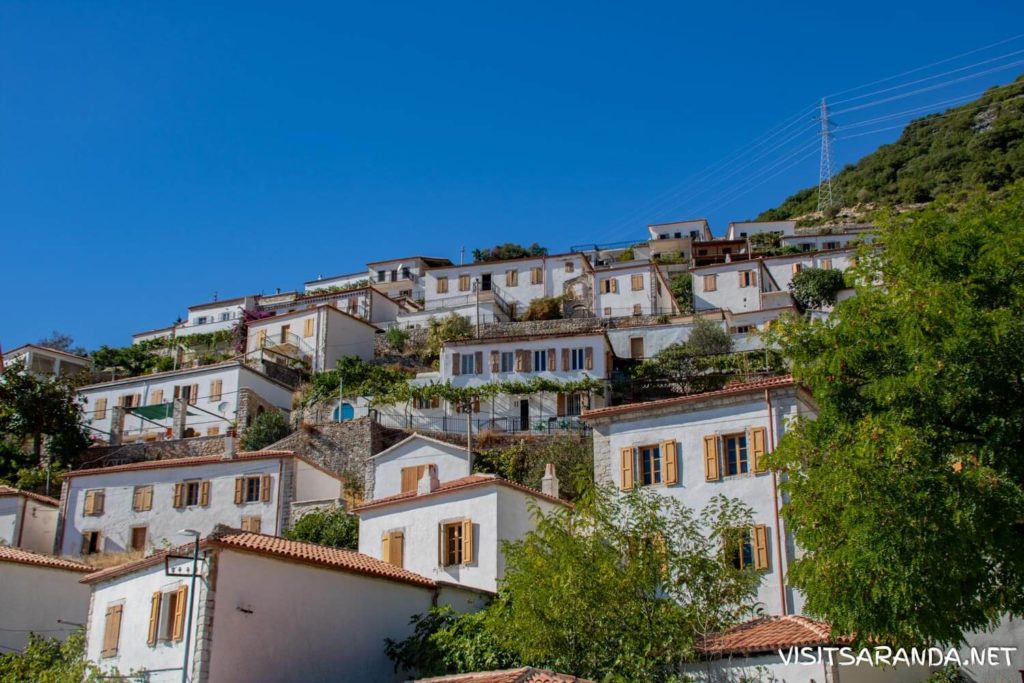
Vuno sits high above the Ionian Sea, along the road between Himarë and Dhërmi. The village blends mountain stone with centuries of history. Its name comes from the Greek word Vounó, meaning mountain.
The people of Vuno are Orthodox Albanians. They are proud of their faith and strong community ties. Old stone houses climb the hills. Narrow alleys lead to quiet churches. Some of these churches date back to the 14th century.
Vuno has a long and proud past. In 1720, it refused Ottoman control. In 1912, it welcomed Greek forces during the Balkan Wars. Later, it joined the Albanian struggle for independence and freedom. During World War II, many locals became resistance fighters. Three were named “People’s Heroes of Albania.”
Greek and Albanian influences shaped Vuno. It once had Greek schools, supported by the diaspora. Later, Albanian became the official school language. Still, the people held on to their identity and traditions.
Today, the village remains quiet and proud. Many older residents speak only Albanian. Some younger people also speak Greek, due to migration. The dialect spoken here belongs to the southern Labërish family.
In summer, Vuno becomes a hidden gem. Tourists head to Jali Beach nearby. But those who stop in the village discover more—stone paths, sea views, and silence filled with stories.
Vuno is more than a place. It is memory, faith, and endurance—alive in every stone.
/a.c/
Të ngjashme




Latest News










Most read










 RTI