
 English
 Français
 Deutsch
 Italiano
 Turkish
 Greek
 Serbian
Qeparo: Where History, Sea, and Stone Embrace the Mediterranean




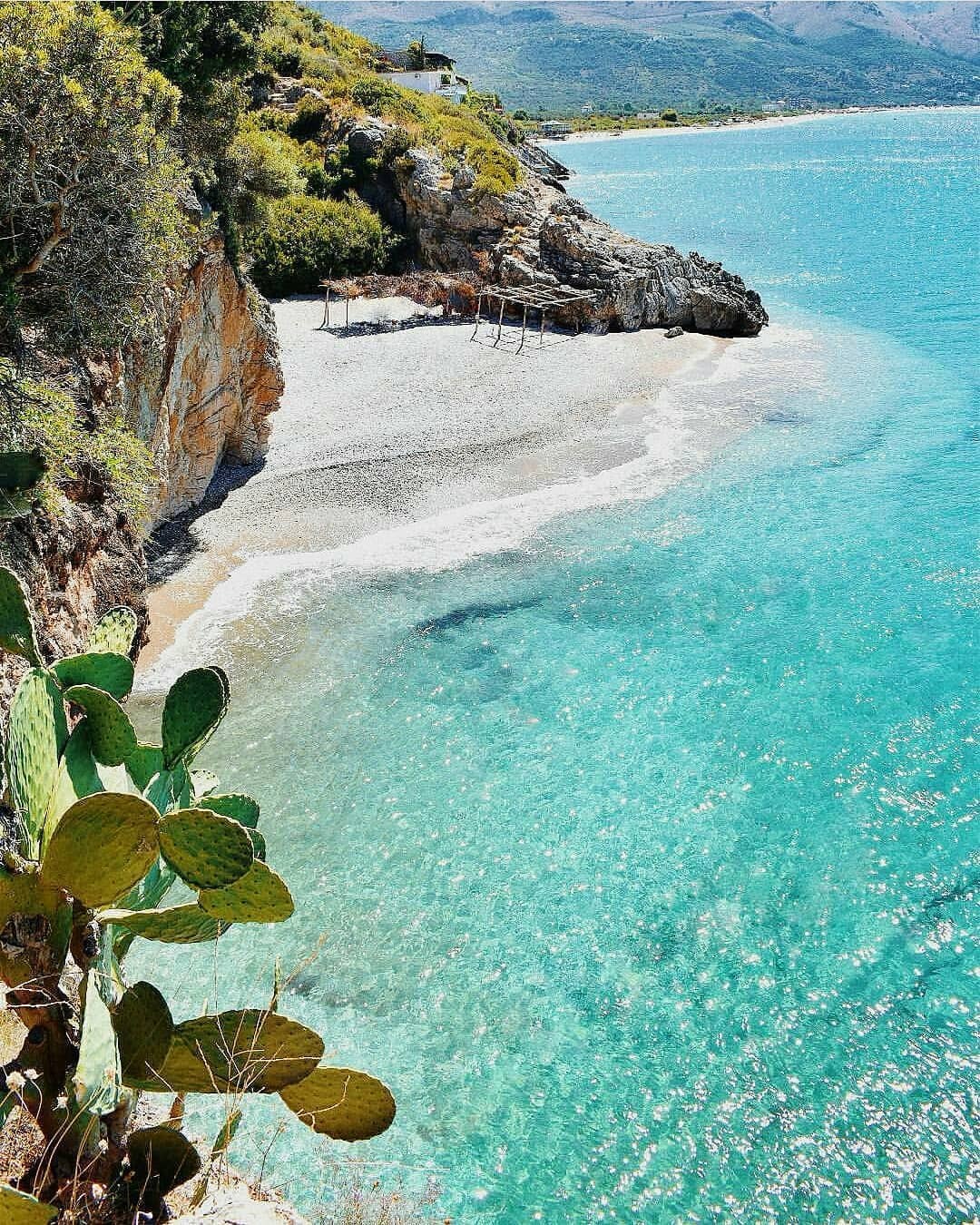
Just beyond Panoramis Bay, Qeparo immediately reveals its charm. First, the green valley spreads wide. Then, the golden beach and the new village appear before your eyes. Above all, the ancient Karosi Castle watches over the old village. Meanwhile, further inland lies peaceful Kudhës, adding depth to the landscape.
The village’s name comes from the cypress tree. Nearby, Skaloma Beach invites visitors with fine sand and clear, shallow waters. In addition, the small bay shelters an ancient stone pier. Also, the Frank’s Cave and the towering “Big Nose” cliff add an air of mystery.
The road winds through olive groves and leads directly to the heart of Qeparo, where the monastery of Saint Demetrius rises proudly. Built in 1881, its Byzantine church holds a priceless wooden iconostasis that captivates all who enter.
From Lera Pass, the view takes your breath away. Here, two peninsulas—Panormos and Palermo—embrace a calm, blue sea. Ancient amphorae and pottery tell vivid stories of old sailors who once found refuge here. Indeed, “Panormos” means a natural harbor where ships anchor safely during storms.
The air smells of thyme, pine, and salty sea breeze. Truly, it feels like a gift from the gods. Today, docks stand at Palermo and Armeridhe. At Armeridhe, fresh spring water flows into the sea, thus giving the beach its name—“source of fresh water.”
Moreover, ancient tectonic shifts raised cliffs up to 115 meters. These natural walls, in turn, helped build strong castles. On Palermo peninsula, Ali Pasha’s fortress, called Kastri, commands the land. This fortress, designed by a French architect, rests on older ruins and continues to amaze visitors.
Near the castle stands the church of Saint Nicholas. Although Ali Pasha ruled fiercely, he respected Christian faith and rebuilt this church, demonstrating surprising reverence.
Qeparo’s Gjyri Beach lies between Suge Hill and Kukum Mountain. At Kukum’s peak, archaeologists found a 4000-year-old fortification, which reveals the area’s deep roots and long history.
The winding road between old and new Qeparo invites exploration. The old village sits atop hills, full of cobbled streets and stone houses. Meanwhile, the new village rests peacefully beside the sea. A river flows between them, flooding the valley in winter and nourishing olive groves—locals affectionately call it their “piece of Egypt.”
Old Qeparo holds eight historic churches. Among them, Saint Mary’s Church shines with its carved wooden iconostasis and 27-meter bell tower. Nearby ruins whisper timeless tales of faith and resilience.
Qeparo’s neighborhoods each carry unique family histories. Some trace back to Corfu and Epirus, while others descend from local clans who defended the land for centuries.
Together, the stones, trees, and sea tell stories of settlers, pirates, and brave villagers. Indeed, towers and walls still stand, quietly watching time pass.
For travelers, Qeparo is a true Mediterranean dream. Here, nature, history, and culture blend effortlessly in fragrant air and shimmering waters. Ultimately, it calls you to wander, listen, and breathe its timeless spirit.
/a.c/
Të ngjashme

Latest News










Most read










 RTI