
 English
 Français
 Deutsch
 Italiano
 Turkish
 Greek
 Serbian
Medieval Wall Built Over Mysterious Ancient Burial in Gjirokastër




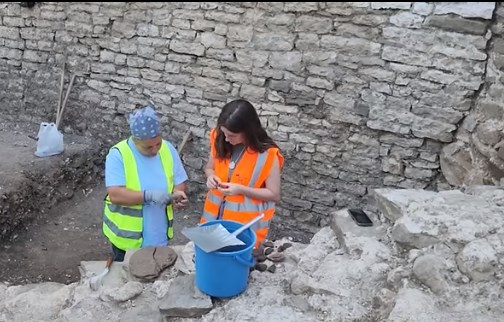
Archaeologists have uncovered a rare and mysterious burial during the final phase of excavations at Gjirokastër Castle.
They found the skeletal remains of a man inside a wall from the Late Antiquity period. Nearby, they also discovered a horse skeleton.
Experts believe the structure dates back to the 6th century AD. It once formed part of an early fortification. Later, builders reused it as a foundation for medieval walls.
Pamela Llapaj, head of the excavation team, confirmed the find.
“We discovered a Late Antiquity wall, one of the oldest fortifications. It was later destroyed and reused during the Middle Ages,” she said.
The human remains were placed inside the wall itself—an unusual location for a burial.
“Alongside pottery fragments, we found a human skeleton and a horse skeleton,” Llapaj said. “Their position suggests a symbolic or ritual burial, possibly linked to a military figure.”
The discovery raises new questions about burial customs in the region during that era.
Llapaj added, “Although the dig is now complete, the findings are important. We’re uncovering earlier settlement phases previously unknown to historians.”
The discovery builds on earlier research by archaeologist Damian Komata. He had previously identified a wall section within the castle gallery.
Further anthropological and stratigraphic studies will follow. But even now, the discovery enriches the historical narrative of the area.
Finding a man—possibly a warrior—and his horse in such a setting could offer fresh insights into ancient rituals and forgotten customs.
Experts believe these findings may help shed light on one of the least understood periods in Albania’s past.
/a.c/
Të ngjashme



Latest News







Most read










 RTI