
 English
 Français
 Deutsch
 Italiano
 Turkish
 Greek
 Serbian
Sejko: Lek’s Strength Reflects Export Growth, Tourism and Remittances




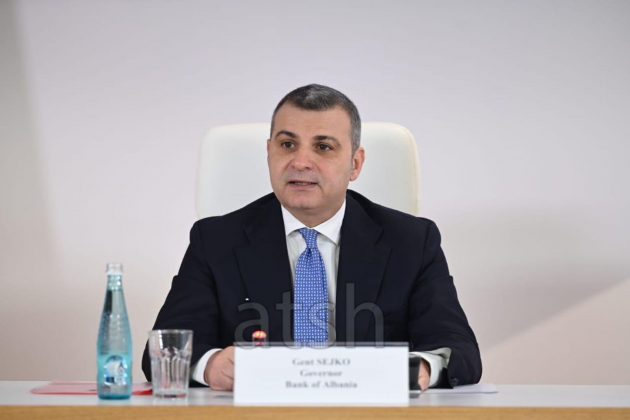
The appreciation of the lek against foreign currencies since 2018 reflects structural changes in the Albanian economy. These include export growth, the expansion of tourism, and increased remittances.
This is what the Governor of the Bank of Albania, Gent Sejko, stated in a recent media interview. He focused on the latest monetary and economic developments in the country, including the stronger lek, Albania’s SEPA membership, and upcoming economic challenges.
According to Sejko, the strengthening of the lek in the local exchange market relates directly to real economic dynamics.
He underlined that the growing economy has helped reduce inflationary pressures. It has also maintained price stability and lowered the trade deficit.
Meanwhile, the Bank of Albania has stepped in with strategic foreign currency purchases. As a result, the country’s foreign exchange reserves have strengthened.
Sejko also called Albania’s SEPA membership a major step toward Europe.
“A key development is Albania’s formal accession to SEPA,” he said.
He confirmed that by October 7, 2025, the country’s banking system will be fully operational within the SEPA framework. Consequently, this will cut cross-border transfer costs and ease financial flows with EU countries. In total, Albanian citizens and businesses could save up to 20 million euros annually, thanks to fees up to five times lower. Transparency and payment security will improve as well.
In addition, the Governor outlined the key priorities and challenges facing the Albanian economy.
“Formalizing the economy and reducing cash usage, expanding financial inclusion for individuals and businesses, and attracting foreign investment using modern payment infrastructure and macroeconomic stability, these remain our core priorities,” Sejko emphasized.
/a.p./
Të ngjashme

Latest News









Most read










 RTI