
 English
 Français
  Deutsch
 Italiano
 Turkish
 Greek
Greek Serbian
Laver Bariu – The Nightingale of Përmet




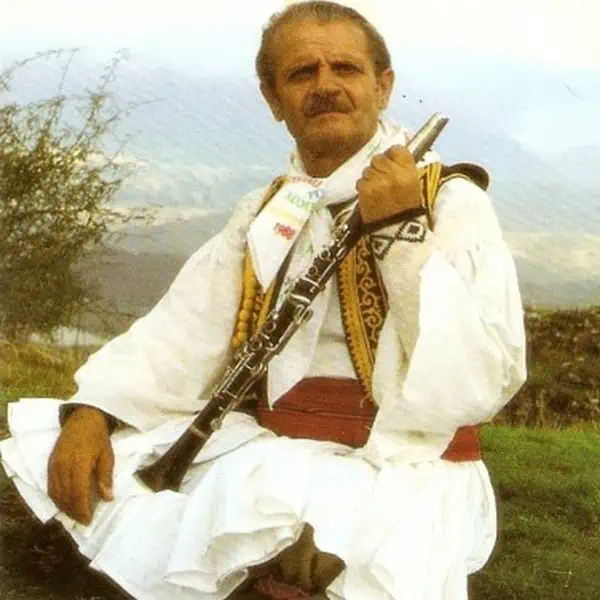
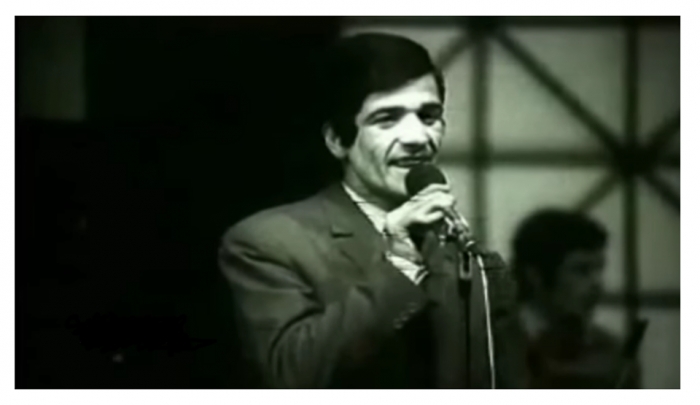
Laver Bariu (Përmet, May 2, 1929 – January 26, 2014) was one of Albania’s greatest folk musicians. He became famous as a clarinet player, singer, and leader of Sazet e Përmetit. His music carried the soul of southern Albania to the world.
From the beginning, Bariu showed natural talent. First, he built simple instruments from branches and wheat stalks. Then, in 1935, his family moved to Korçë. There, he listened to the best folk musicians of the time. Soon, he trained with his father’s lute and learned other instruments. At only 10, he played his first clarinet piece with his father.
Later, in 1944, the family returned to Përmet. There, Bariu met Vangjel Leskoviku and performed with him for a year. After 1950, he formed his own group. Two years later, he won first prize at the National Folklore Festival in Tirana. In 1954, he recorded his first song with saze. That moment opened a new chapter.
Step by step, his clarinet kaba and Radio Tirana recordings brought him wide fame. He performed at nearly all national folklore festivals. Over time, his saze ensemble grew stronger with clarinet, lute, accordion, drum, and violin. With it, he created new melodies and reimagined old songs. As a result, Toskëria folk music gained a fresh identity. People called them the “Nightingales of Përmet.”
Moreover, Bariu passed his knowledge to younger generations. He trained clarinet players in Përmet and nearby villages. Many still call him the last great master of the southern saze. His ensemble was considered the most complete in southern Albania between 1950 and 1990.
He also worked with many well-known singers, including Behije Roçi, Mentor Xhemali, and Ylli Zeqiri. In 1977, his group recorded the soundtrack for Viktor Gjika’s film Gjeneral gramafoni. Later, in 1989, he appeared in the documentary Këngët e zemrës.
Even in the 1990s, Bariu stayed active. He recorded CDs in Albania, Greece, and Australia. He also performed at the Gjirokastër Folklore Festival and abroad. In 2001, the President of Albania honored him with the title “Grand Master of Work.” Përmet also named him an “Honorary Citizen.”
Today, his music lives on. His recordings are kept at Radio Tirana, Albanian Television, and the Institute of Folk Culture. Swedish Radio also preserved his performances at the folklore festival in Falun, Sweden.
Therefore, Laver Bariu remains not only a guardian of tradition but also a master who shaped Albanian folk music into timeless art.
Të ngjashme
Latest News

Most read






 RTI
RTI